A year ago I started a set of posts about my allotment, the first on the 1st of August, the last on the 1st of January 2026. That’s as far as I got. Nothing much was happening at that time of year but I started another post at the beginning of March and never published it. Then my life somewhat went of the rails.
A year and a bit on from that first post then, I am going to try to pick up where I started a year ago. The only show in town right now is drought. Is 2026 going to go down as an exceptional drought year or are we seeing a new weather pattern emerging? We simply don’t know. My understanding of the current situation is that the El Nino pattern that is driving the current heatwaves and drought in Europe is only at the wind up stage and will be felt full force next year.
To say that is concerning is a massive understatement. When you grow your own vegetables you realise how vulnerable food production is to extreme weather. Small scale growers have an easier time than farmers and other commercial growers. I can irrigate on a small scale, such as to get young plants established, grow a diverse range of crops, look after my soil more closely, erect shade netting if required and so on.
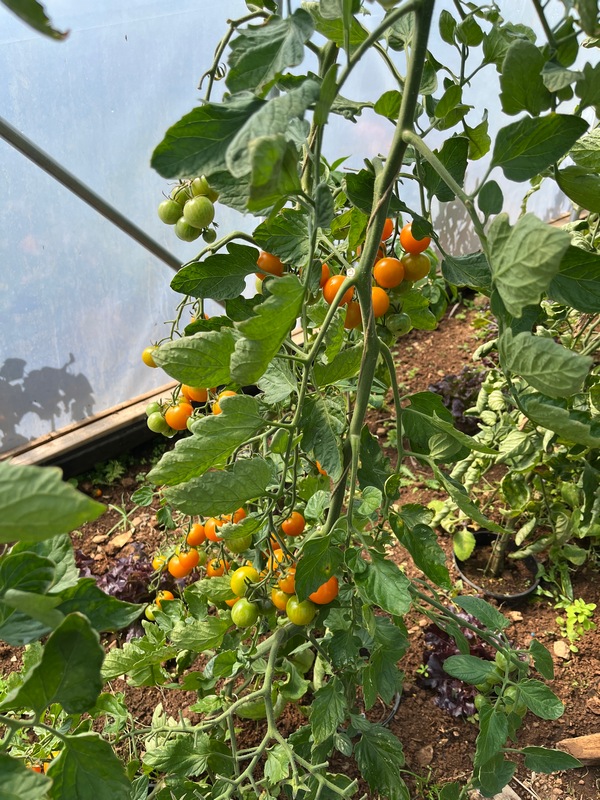
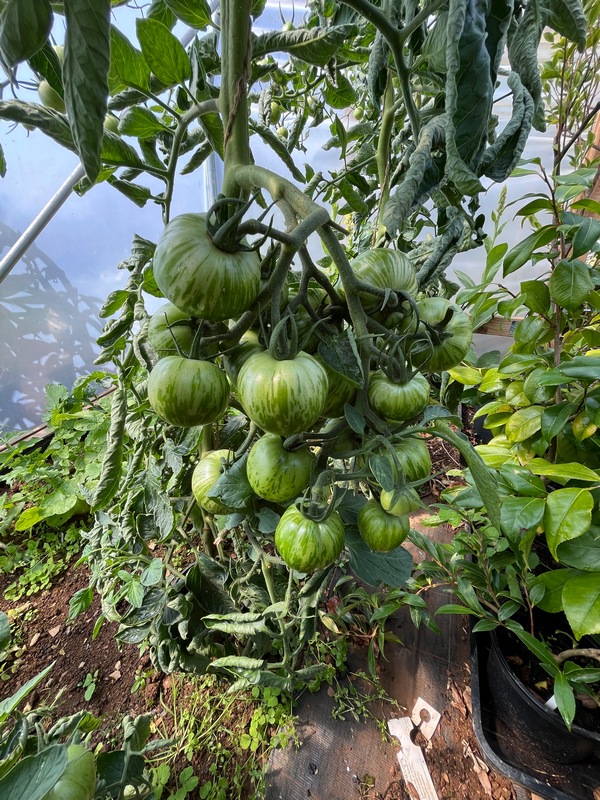
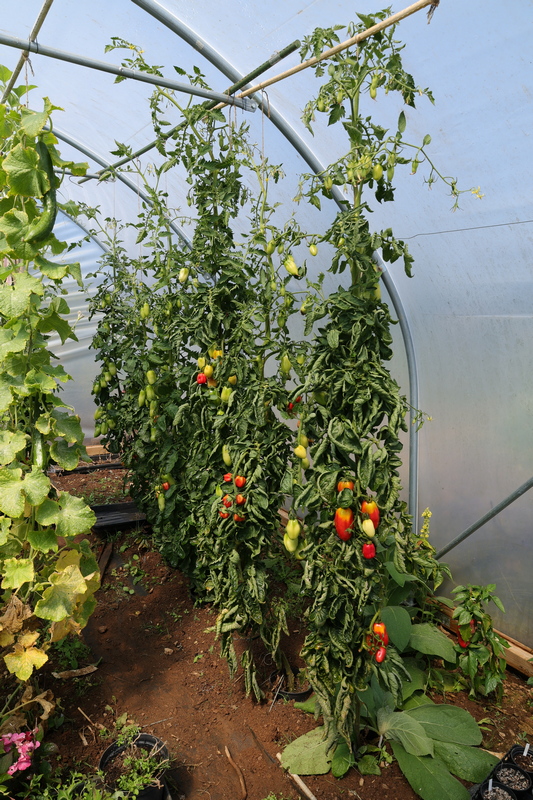
We’re now at the peak of the growing season and I’m harvesting a variety of crops. In my tunnel I have tomatoes, cucumbers and sweet peppers. Outside I’m harvesting lettuce, carrots, onions, courgettes, runner beans, kale, chard, beetroot and potatoes.
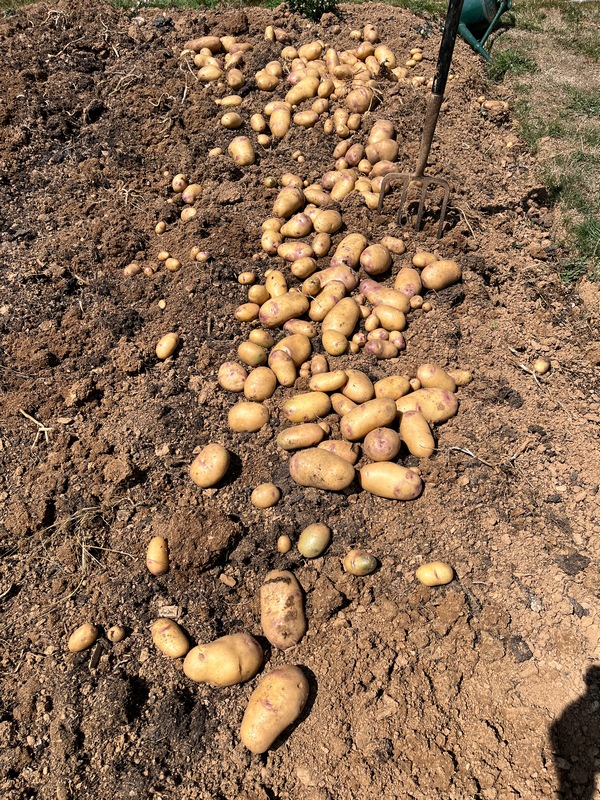
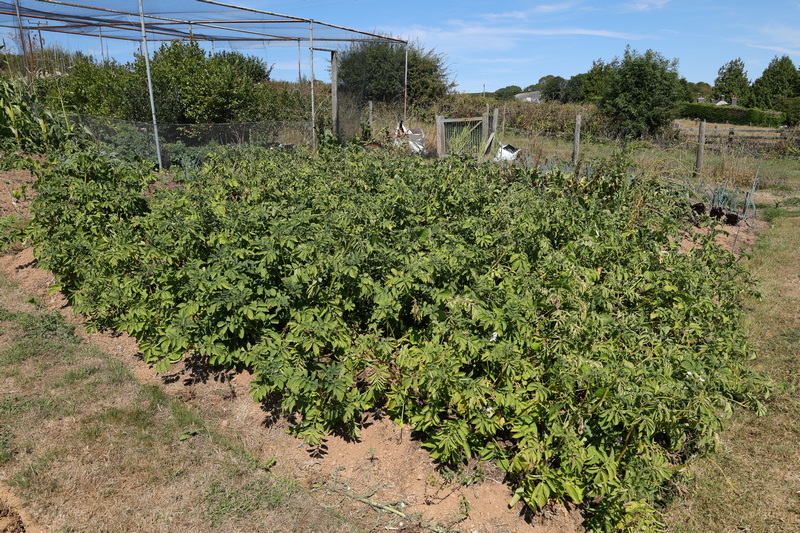
My second early potatoes, Kestrel, have been lifted and put into storage. I got a reasonable crop, relatively few potatoes in number but of a good size. Java, my maincrop variety, is still green and leafy with just a few spots of blight but the few roots I’ve lifted haven’t a lot on them. Lack of water has meant they simply haven’t put on any size.
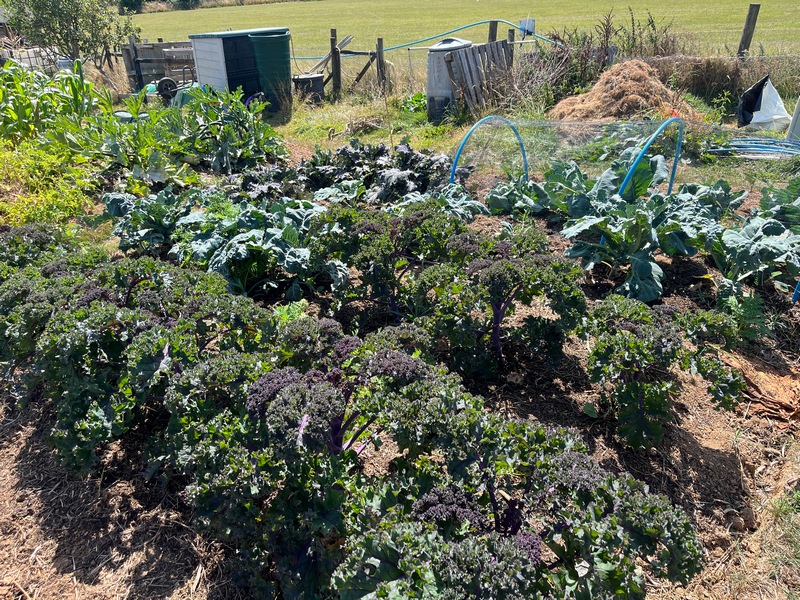
Carrots are OK if a bit dry; beetroot are the best I’ve ever had. Chard has been good but is pretty desperate for water. Runner beans are tough and going stringy very quickly. I sowed a few in late June which are flowering and I’m hoping will give me beans into the autumn when it may be cooler and wetter and the beans nicer to eat. I’m leaving what I have now for seed.
I’m drying out my onions in preparation for storage having produced a decent crop of the variety Santero from seed, chosen for its resistance to downy mildew which caused problems on the allotment site three years ago. For some reason I didn’t get seed of red onions which was an oversight I’m regretting.
My peas are long gone, half the potatoes have been cleared, the onions will be gone in a few days. I’m getting areas of bare ground which I really don’t want. I have sown Phacelia and surplus runner beans which are growing away to occupy the ground and afford some protection to the soil surface. Any shredded garden or allotment waste has been spread on bare ground for the same reason. I’ve had lots of dry runner bean seeds to spare in the last couple of years and they seem to me an excellent cover crop; relatively drought resistant, fast growing and leafy, nitrogen fixing. I used them in the same way last year where I have my maincrop potatoes growing and quite a few have survived the winter to come back this season, growing through the potatoes and producing the odd flower and probably beans too if I looked closely. It’s all material that can be cut, shredded and used for mulching if and when it gets killed by winter cold.
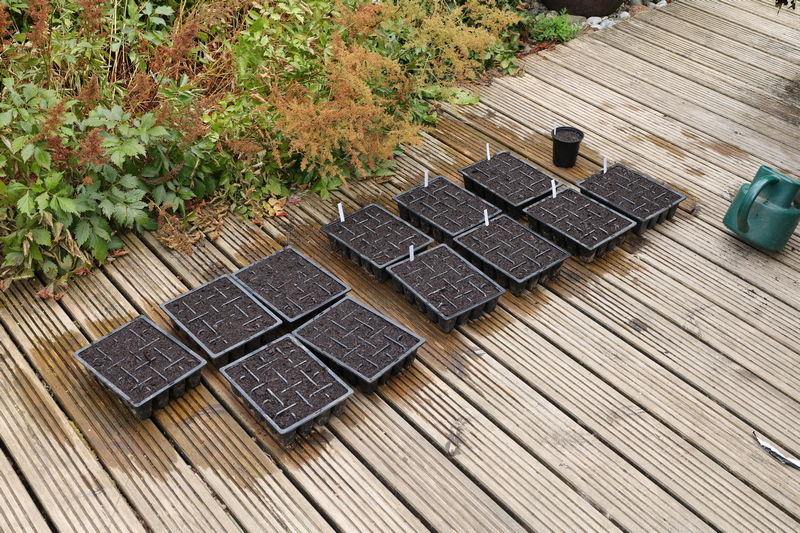
It being so dry I’m not confident that green manure/cover crops will be easy to get going sown in the ground but I don’t want to wait until the rain comes so I’ve sown Phacelia, Buckwheat and forage rye in small cells and am hoping there will be better conditions when they’re ready to go out. It’s a long winded way to do it but at least it’s doable on a small scale. All three are last year’s seed, I know the Phacelia is good and will soon find out about the other two.
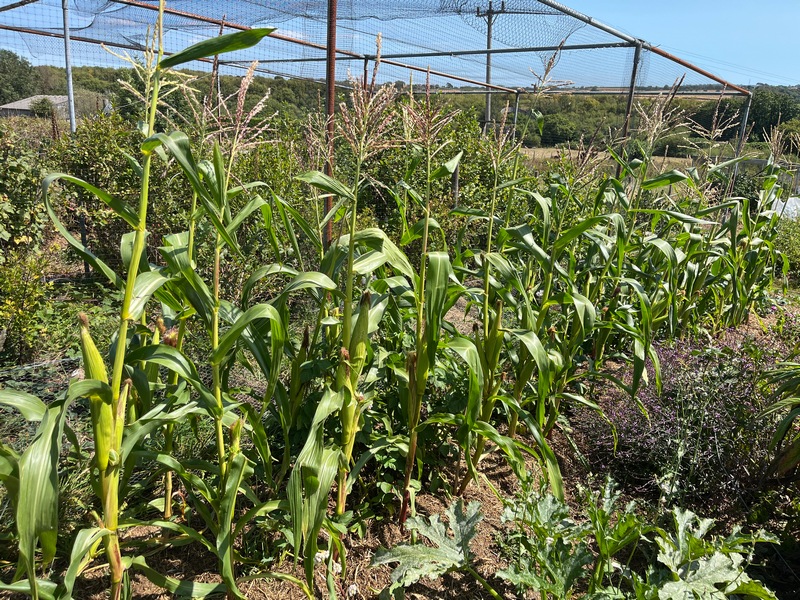
My corn is almost ready to harvest and looks to have a good number of rather small cobs. I grew a variety called Golden Bantam, an open pollinated variety from Vital Seeds, so I should probably leave a few cobs to ripen completely and collect them for seed.
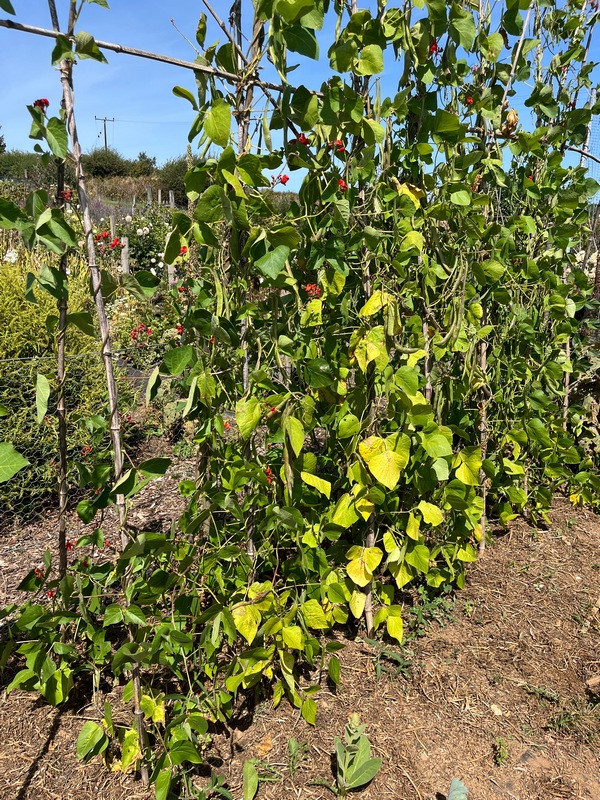
Runner beans, ‘Firestorm’, own seed. The earlier plants in the middle of the row have had some water but are still stressed thought they have set a good number of beans, a lot of them very short. The plants at the left end were sown much later and I have direct sown more this week. Hopefully they will yield me something when the weather has cooled somewhat.



 garden ruminations
Using runner beans as a green manure is a great idea, so thanks for that. Hope we at least get a wet winter before another summer like this one!
LikeLike
What with the allotment, your garden and Sue’s glasshouse I am surprised you ever have time to sleep!
LikeLike
So much good stuff here, Jim. And thanks for the tip about popping in some more runner bean seeds. My row has gone into suspended animation, though the leaves still look good and there are some signs of fresh flowers coming. Also I realise that sparrow flocks were being a pest during the first round of production. Just now reading the RHS post on runners, it says they peck at the flowers which makes it difficult for insects to pollinate them. This is not a problem I’ve had before, (or at least not noticed) but this year I’ve caught them rampaging through the canes. Always something.
LikeLike
The variety of things you grow is most impressive.
LikeLike
It’s dry here too but your place looks to be producing well.
LikeLike