I cannot pretend that there is much happening on my allotment so this will be a short post. As I have explained in earlier posts, I am trying to keep as much growing in my soil over winter as possible and have been filling every available space with cover crops for the last few months. We have had a couple of light frosts but so far the cover crops have withstood it with little damage. Most are hardy but Phacelia won’t withstand more than a light frost.
I had sown leftover runner bean seeds as a cover crop in one area; they have been killed to the ground.
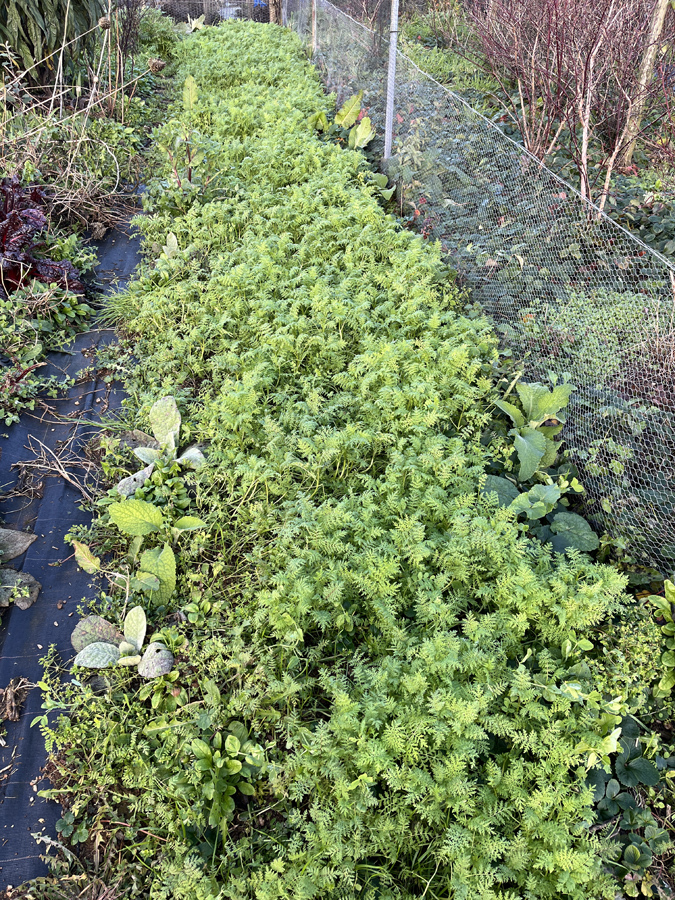
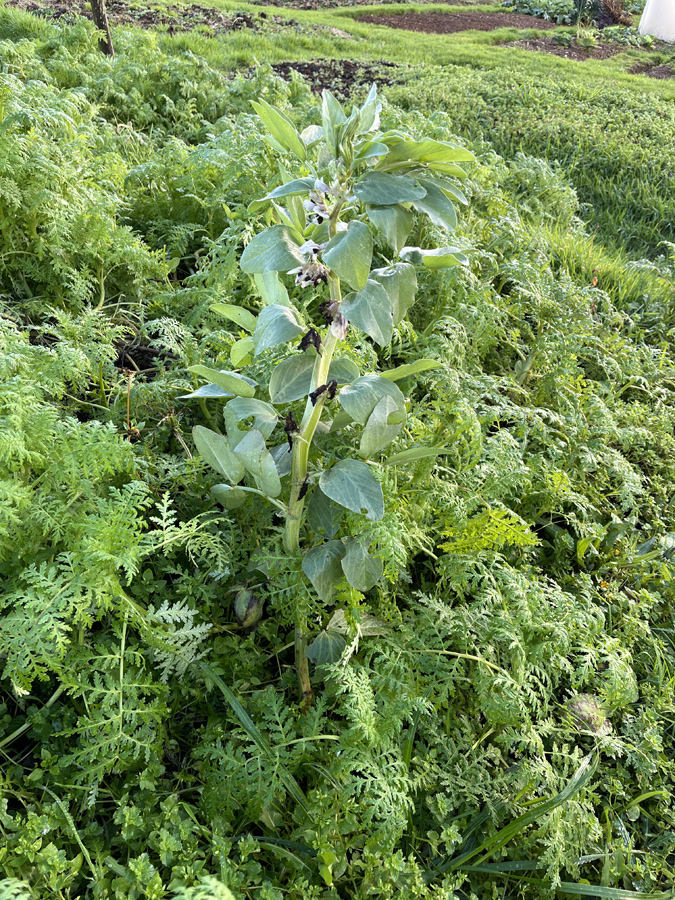
I have a few broad beans growing and flowering among the cover crops which grew from a handful of unpicked beans I’d grown in the tunnel last winter. I think all I did was to dump the cut down plants on the ground and they did the rest themselves. It flags up their possible value as a winter cover crop though, whether or not they produce a crop.
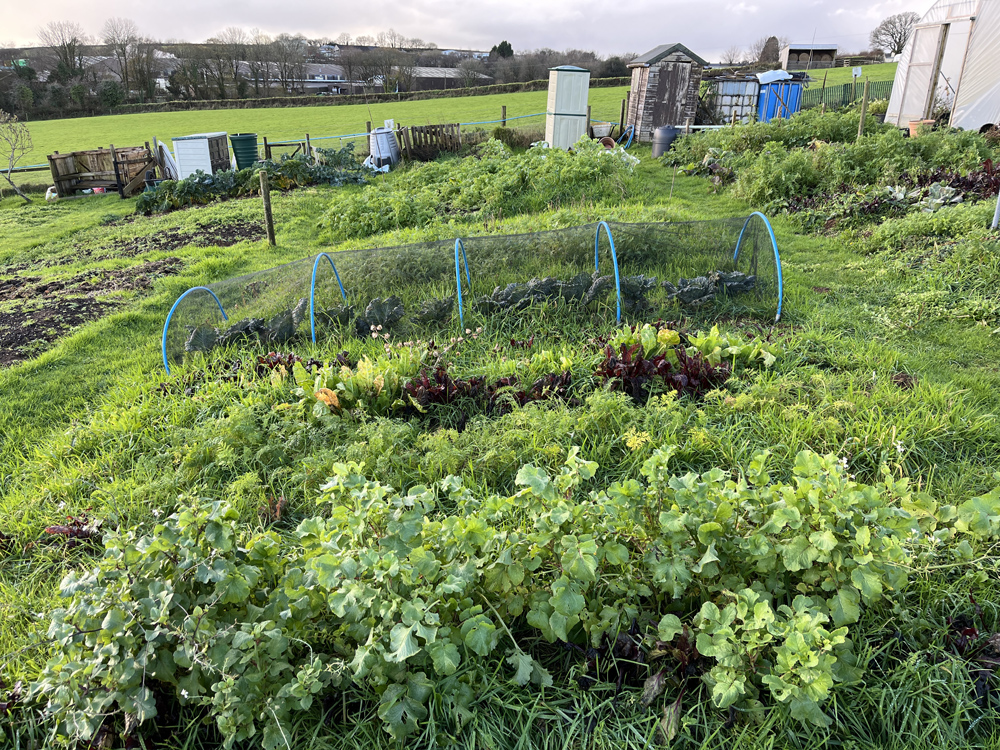
My bed of brassicas, ravaged by caterpillars over the summer, is looking like it will yield some useful stuff. Purple curly kale has fresh unmolested growth at the tips, which I have been cutting and eating. There are already side shoots appearing up the stems, free of pests and set to provide me with kale until spring. Brussels sprouts are looking pretty good on caterpillar ravaged plants and my purple sprouting broccoli is sporting fresh young leaves that I’m very tempted to try way ahead of any purple sprouts being produced.

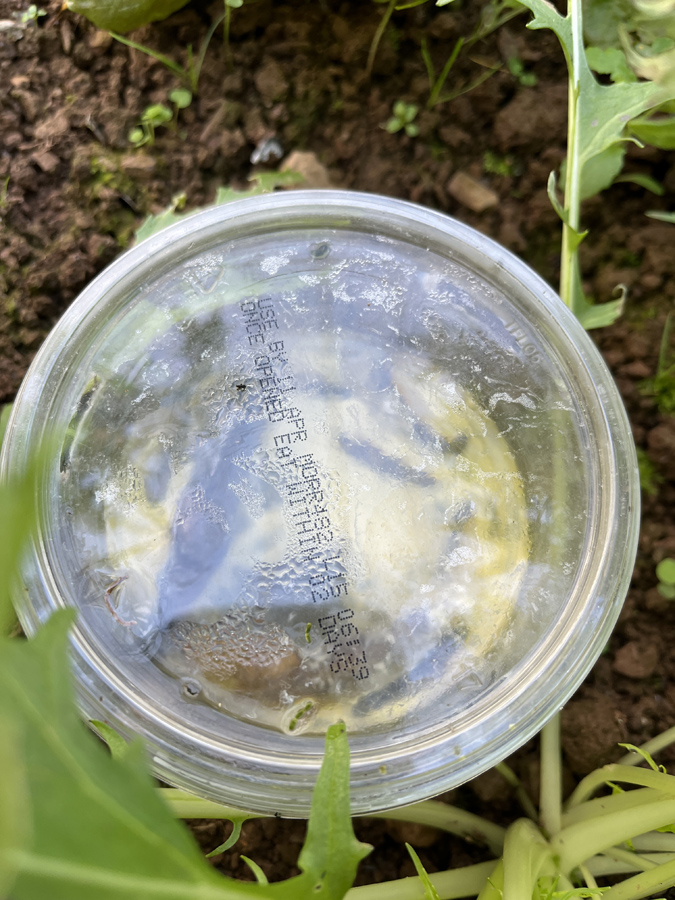
The salad leaves in my tunnel are going well, though there is some slug damage. I’ve set slug traps which should reduce damage to a manageable minimum.

That’s about it. I drained one of my IBC’s because I’d knocked the filter off my battery powered water pump lifting it out. I can see the filter, I just have to fish it out. I think I’ll tip the tank up and wash out the sludge, then paint it to keep out light and hopefully stop algae growing in the water. Just need a bit of dry weather and some suitable paint.



 garden ruminations
You really have a LOT going on! And to have so much of it edible is a plus — It looks like your space is in full sun, which makes such a difference, especially in winter. I’m really noticing the benefit of moving my patch of greens to a different place on my property that is not in the shade of the house.
LikeLike
I wonder if Rocket would work as a cover crop? Ours seems exceptionally hardy, plus you can eat it?
LikeLiked by 1 person
I’m sure there are people who know far more about the subject than me but it seems to me that the primary benefit of a cover crop is to supply energy to the soil organisms that are unable to capture it directly from effectively the only available source, the sun. In the UK photosynthesis carries on through the winter, albeit at a lower level. In open areas it might be grass and herbs, in woodland the trees lose their leaves but bluebells, wood anemones, mosses etc take advantage of the available light. The plants pass on a generous proportion of photosynthates to soil organisms in the form of sugar rich root exudates. The soil organisms have presumably evolved to expect that continuity of supply, not six months or more with nothing. Any green plant would do but the ones that grow well at low temperatures and light levels should be best. Rocket satisfies those criteria. Against it is the fact that it is a brassica and as such does not form mycorrhizal associations with soil fungi, and it just might carry clubroot over from one season to another, if that were a problem. Rocket is not so different from mustard, which is in all the cover crop seed lists. As you say, it is an advantage if a cover crop is edible, even if yields are low. Then again, you’re likely going to grow a cover crop on a large enough scale for a low yield to be a sufficient yield.
LikeLike
Many thanks for that considered reply Jim, much appreciated. Because our soil is heavy here in mid Devon we tend to cover the veg beds not in use with black silage sheet. This prevents perennial weeds and worms/toads/mice etc like it. We do keep rocket, parsley , chard etc over winter too, as well as leeks, garlic and onions. Asparagus gets heavily mulched with Council compost. Best wishes Rebecca
LikeLiked by 1 person
I was also mulching any ground that was bare overwinter up to a few years ago. Then I latched onto regenerative agriculture and came to see things very differently. It’s worth checking out Dr Christine Jones on YouTube, she’s talking about soil management in farming mostly, but it’s just as relevant to soil management in any other growing situation. I’m still very much a novice when it comes to finding things that work in my climate and soil and growing cycle but the learning process is such a pleasure and I feel a sense of purpose in trying to build a more resilient growing environment and sharing the experience, especially after spending my working life in the horticultural industry getting it almost all wrong.
LikeLike