The traditionalists around me at my allotment site have cleared away their summer crops and dug the ground over to be left rough over winter for frost to break it down.
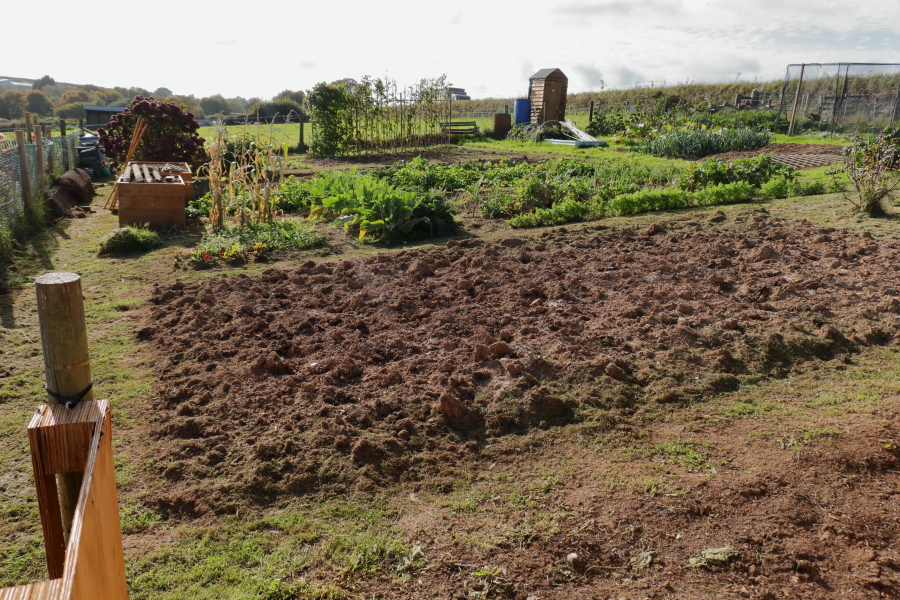
I’m not a traditionalist and have come to regard such behaviour as sadly misguided. For me they are damaging soil structure, allowing the loss of nutrients by leaching (to be replaced by artificial fertiliser in spring) and inflicting untold damage on their soil microbiome by leaving it unfed for many months.
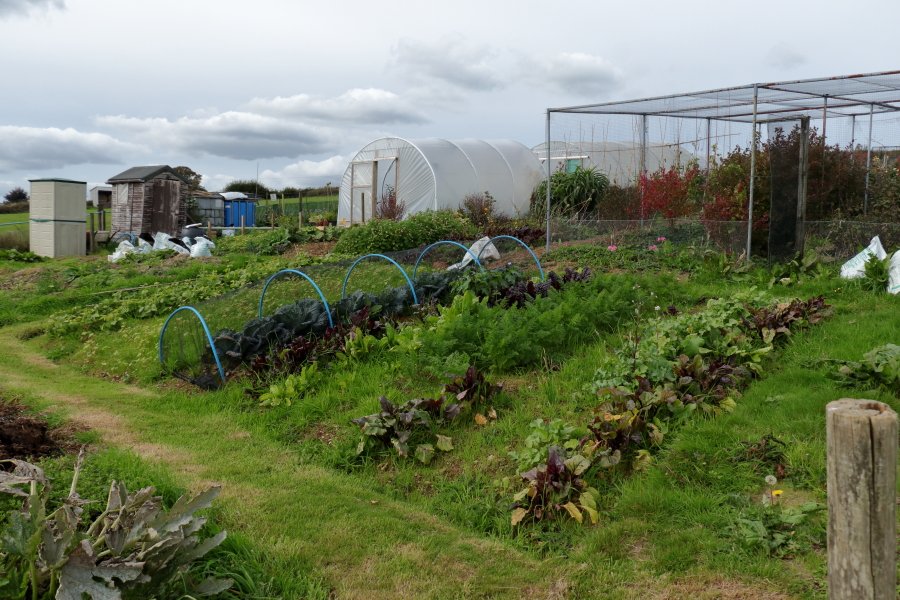
On my plot the month of September has been about clearing summer crops and as far as possible getting a cover crop growing as quickly as I can. The ideal would be to remove an early crop and follow it immediately with a late crop; that way not only would I have living plants occupying the ground continuously but they are something that I can eat as well. The problem is that by the time the early crop has gone, it is too late to sow a follow on crop and get much that’s edible before growth stops in the autumn. If I was organised enough to have sown the follow on crop in cells a few weeks before the early one was removed, I might be able to pull it off, but even so, it wouldn’t create a lot of opportunities.
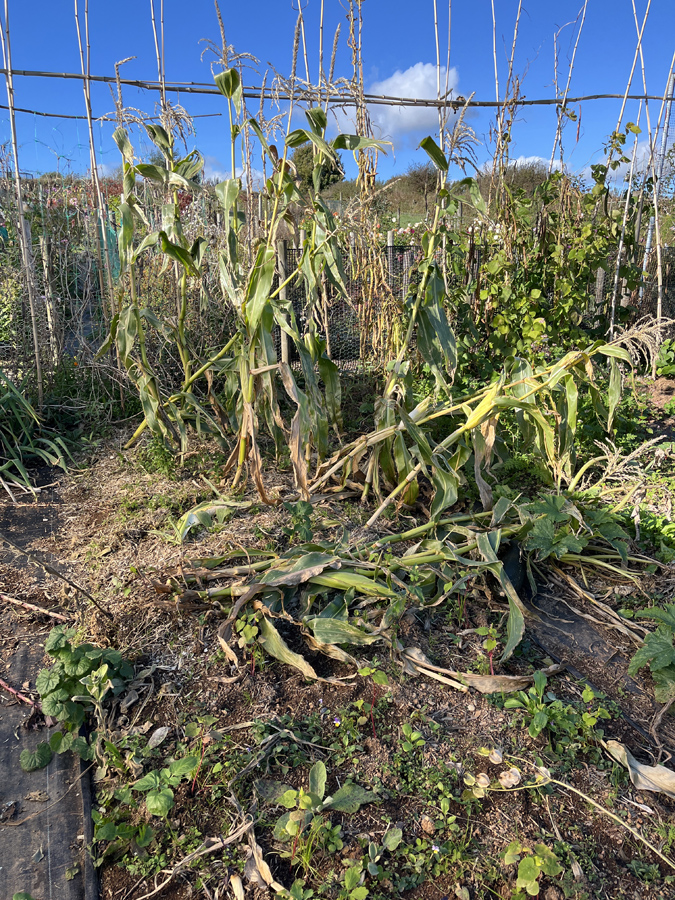
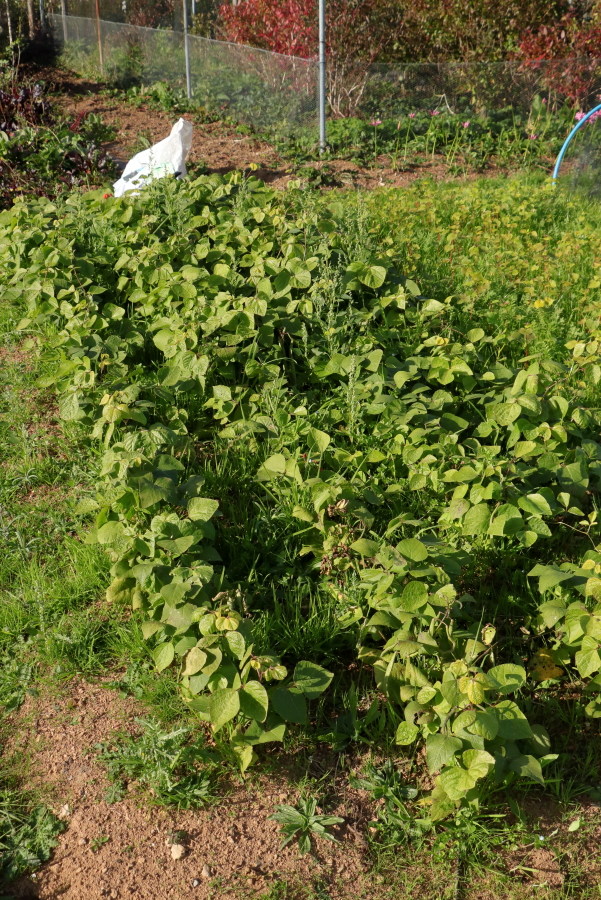
Crops like Peas and Potatoes are at least out of the way early enough to allow time for a cover crop to get well established before winter. I grow onions from seed so they get harvested a bit later than from sets, but still early enough for a cover crop. Corn, runner beans and summer salad crops stay in the ground until quite late, especially if I am wanting to collect their seed, limiting my options on cover crops to those that can be sown into October.
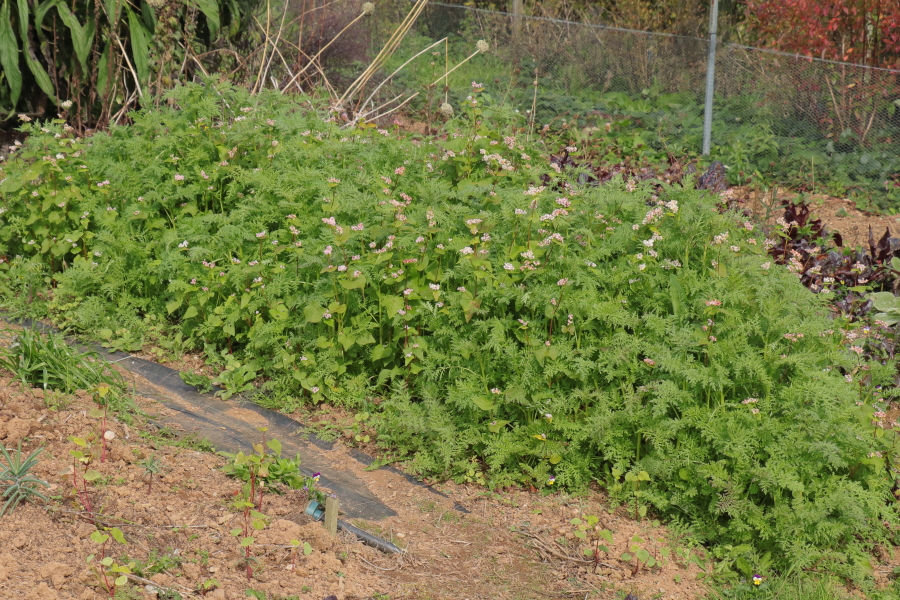
I have raised some cover crop seeds in cells, sowing a mix of Phacelia, ryegrass, fenugreek and buckwheat in each cell and planting them out widely spaced as soon as the ground is clear. I have then sown more of the same in the soil around the cells, a belt and braces approach. All the spent crop material goes through my shredder and gets spread back from where it was harvested. It makes for a very thin layer which won’t impede the cover crop but perhaps still provides a bit of protection for the soil surface as well as returning whatever nutrients are in the material to the soil from which they came.
The cover crop will take up available nutrients and hold onto them until it is removed in spring, to be shredded and spread back on the soil. It will provide physical protection for the soil surface, stopping rain and frost from damaging soil structure and most importantly, it will be photosynthesising through the winter and transferring 20-30% of the metabolites it produces to the soil biome in the form of root exudates. The active soil biome will also be taking up and holding onto soil minerals, stopping them being lost to leaching and making them available to the plants when required. The soil biome will also be continually improving the soil structure, increasing its water holding capacity while simultaneously increasing the rate at which heavy winter rain can drain through it. The root exudates will do a far better job of increasing the carbon content of the soil than will the surface mulch material, being typically four or five times as effective.
A really effective soil biome should in theory make the addition of fertiliser and supplementary irrigation pretty much unnecessary while still producing crops with higher nutrient density. However, while I am trying to emulate a natural system, where all the nutrients get recycled or replaced, it is not a natural system. There are inevitable breaks in the continuity of vegetation cover, both crops and cover crops are annuals so less effective at getting carbon into the soil than perennials and it is near impossible to get the level of diversity in the spread of plants that would be ideal.
Nevertheless, I think I have a fairly clear idea of what I am trying to achieve and in theory at least, how to go about it. Knowing I will never create a perfect setup shouldn’t stop me from working in that direction.
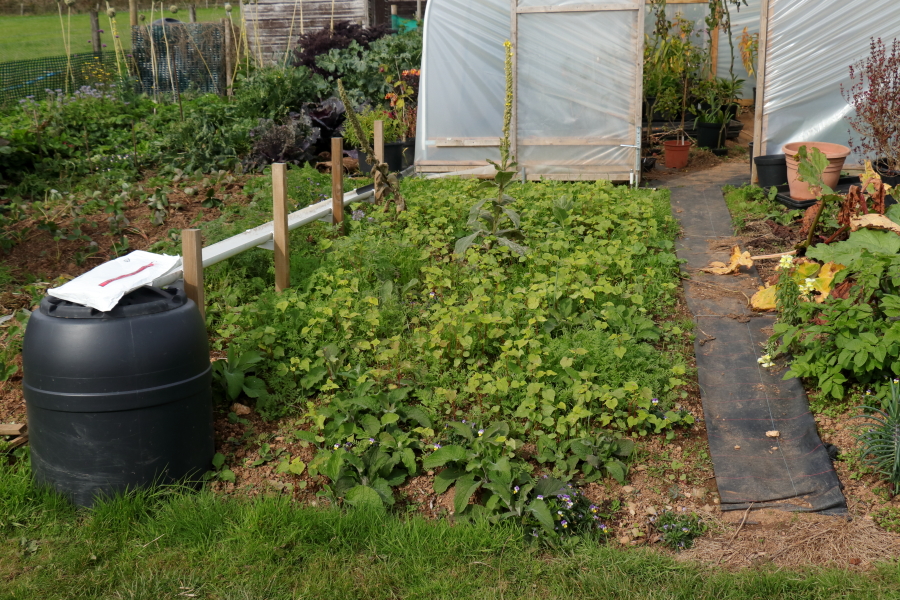
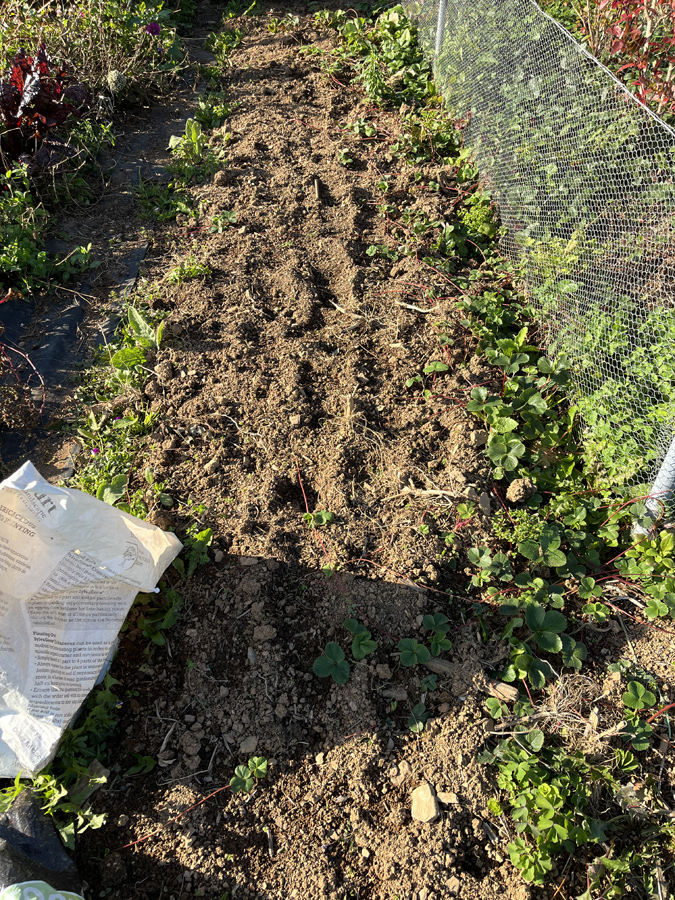
I have been getting my green manure/cover crop seeds from Sow Seeds. Helpfully, they have growing instructions for each species on the website so I have just purchased fodder rye and fodder peas because both are said to besuitable for sowing in October. I actually managed to get them in on 29th September, so I am hopeful they will make good growth before it turns too cold. I have sown them mixed, separately and between small cell grown plants that I put out a couple of weeks earlier. I also sowed a little of each on the strip from which I lifted maincrop potatoes where an earlier green manure mixture, sown on 22nd September, was just emerging.
My target was to head into winter with no bare soil; everywhere should have growing plants on it, either overwintering vegetables such as brassicas, chard or spinach beet, or cover crops. A bit of bare ground can be handy as it provides space to put shredded material from my ornamental garden but I can always use it to mulch around fruit bushes.
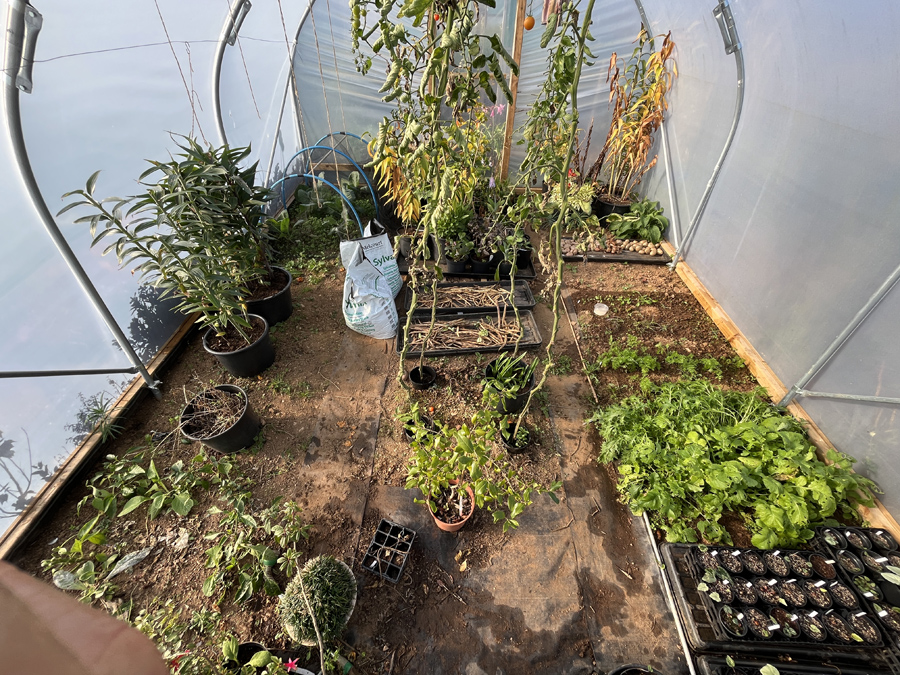
In my tunnel I still have four Sungold tomatoes but they will very soon be gone. In their place will go various winter crops, lettuce, mizuna, mustard, radish, spring onions, kale and peas. Whatever space is left will get filled with potted plants from the garden that are cold hardy but need protecting from winter wet.
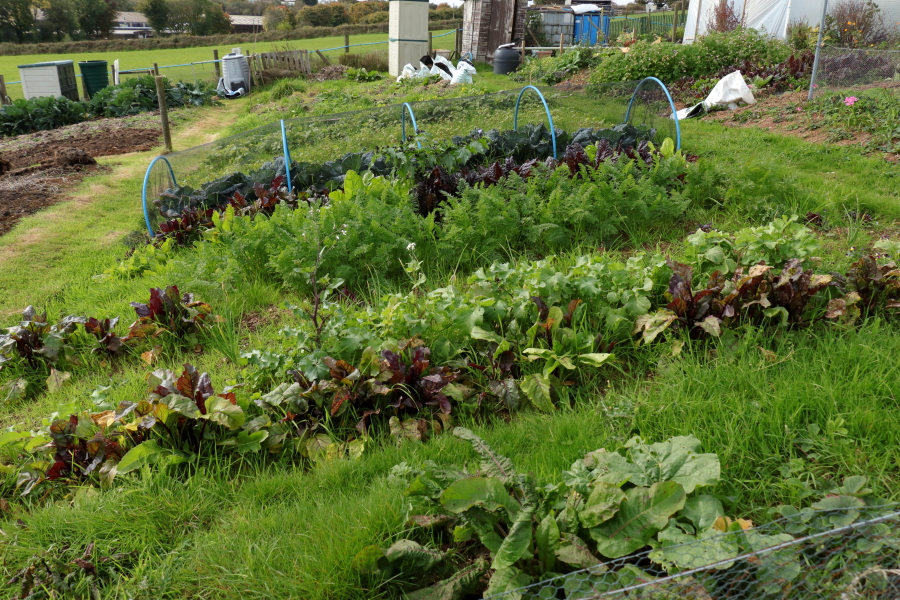


It sounds like you know what you’re doing, and the production of your garden shows it. The vegetables look delicious! Since we have deep freezes for prolonged periods here, and usually snow cover for a big portion of the winter, the techniques are a little different. I don’t turn my soil much anymore either, for various reasons. Long story, but we are blessed with amazingly rich, Midwestern U.S. prairie/savannah soil. Also, I tend to leave my plants, for the most part, standing during the winter for the insects, and then clip them in the spring after the bees emerge. Also, I use some cover crops as you do, and some marsh hay (in parts of the garden) for mulch. I learned a lot from your post, though, about some things I can do here, too. Thanks!
LikeLike
Interesting comment about having no bare soil, Ji,. How dou cope with watering during drought?
LikeLike
I really enjoy reading your posts, as a permaculture gardener myself I really feel for lot of the things you share. Could you please explain what you mean by “cover crop”?
LikeLike
Ah, I might be at risk of getting into hot water here. I’m probably guilty of using the expressions “cover crop” and “green manure” interchangeably because I think it’s pretty much how I use the plants in practice. I would maybe define a cover crop as any growing plant material that covers the soil between successive productive crops and green manure as a crop grown particularly to add nutrition to the soil, probably by being dug in or otherwise incorporated in preparation for the next productive crop. I’m generally aiming for both; getting something established quickly after a productive crop is finished and including a mix of species, one or more of which would be a nitrogen fixer and all of which would offer physical protection to the soil and all the other benefits that growing plants bring. I don’t like to describe myself as a no-dig gardener or an organic gardener or a permaculture gardener because it seems to me that it imposes a set of somebody else’s expectations on me, including being precise in my use of language. I want to feel free to dig if that seems the appropriate course of action, to very occasionally use chemicals in what I see as a responsible way and so on. The bigger picture is to have the patch of soil I’m looking after in the best possible shape, produce as much nutritious food from it as I can/need and do as little damage/much good to the wider environment as I can.
LikeLike
Ha! I just discovered your blog, I have reading to do!
LikeLike
This is on r of those to do or not to do questions..I’m in favor of no till but here things have gotten completely out if hand and I’m not sure how it is going to be corrected..Time will tell.
LikeLike
Enjoyed reading your post! I learn something every time! Sadly circumstances required me to cover my plot for most of this year due to injury, but I am slowly picking up the reins again. Already I have the alliums in cells ready to go.
What kind of a shredder do you use? The one I have access to doesn’t seem to shred fine enough, what is the ideal size minced vegetation do you think?!
LikeLike
My Shredder is a Stihl GHE250. I’d had a couple of Bosch shredders before it, pretty good but lasted 3-4 years then knackered. I was also looking for a shredder that claimed to be able to deal with light woody material such as apple tree prunings and softer stuff like weeds, leaves and kitchen waste. It does reasonably well but still clogs up on soft stuff and needs frequent blade sharpening for the harder stuff. I’m not sure there is an ideal size of shredded material. It’s partly cosmetic; if I’m going to be spreading it in my garden I will shred it two or three time to get it really fine. On my allotment appearance doesn’t matter and especially if I’m using shreddings as an autumn mulch, coarser material might be better at protecting the soil and last longer. In the growing season I may spread material around growing plants and want it finer.
LikeLike