The garden is beginning to look a little tired. It needs a really good downpour and none is in prospect. Then there’s the problem with Agapanthus, gall midge, which seems to have infected every Agapanthus plant I have. This morning I went around searching for and snipping off all the shoots I could find that were infected with Fuchsia gall mite; not quite as bad as I’d feared but bad enough. My evening slug patrols have morphed into evening vine weevil patrols; 75 last night, bringing the total for the last eight days to 429.
I don’t know about the modern day notion that gardening is spiritually uplifting, sometimes it’s the complete opposite!
At least Six on Saturday lets you know that you’re not alone and quite often gives you a glimpse of how much worse it could be. Swap vine weevils for bears, no thanks; gall midge for tornadoes, I don’t think so.
Six inconsequential vignettes from my relatively benign garden in Cornwall, England, then. Carrying onward and upward a meme started back along by The Propagator, who drew up a template of how participants should conduct themselves, which is here. Onwards.
One.
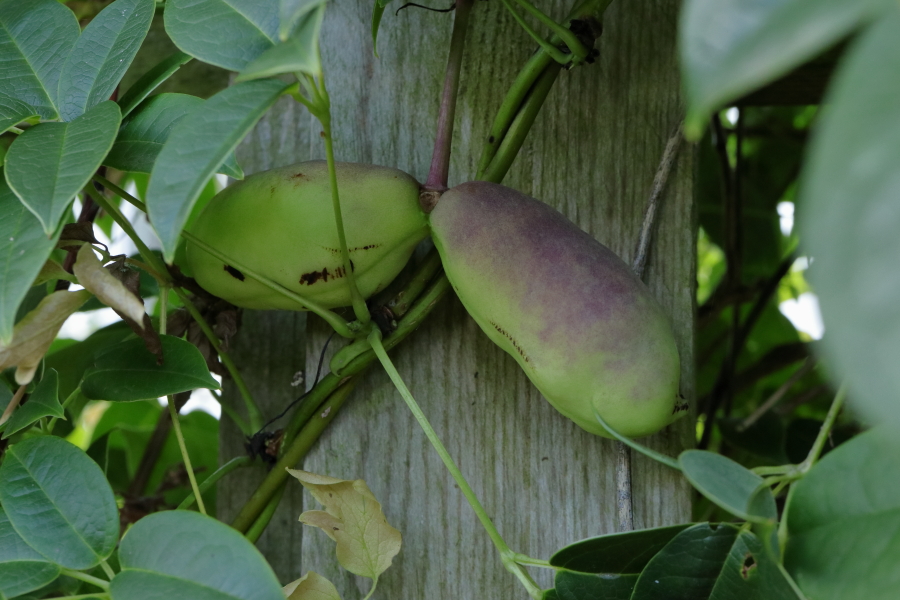
I have been known to say that I want the sort of garden where I can go out on any day of the year and find something that wasn’t there the day before, or at least that I hadn’t noticed before. Today it was this. Points will be awarded for identifying it correctly.
Two.
The task of being uplifting me when more seems to be going wrong than going right falls to the bright and cheery flowers, and none does it better than Dahlias. This one is ‘Cheyenne’ and if it doesn’t warm the cockles of your heart then there is something wrong with your cockles.

Three.
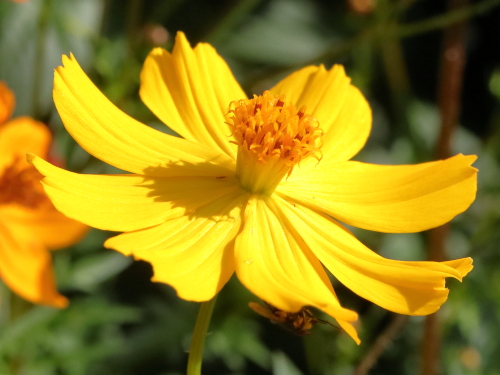
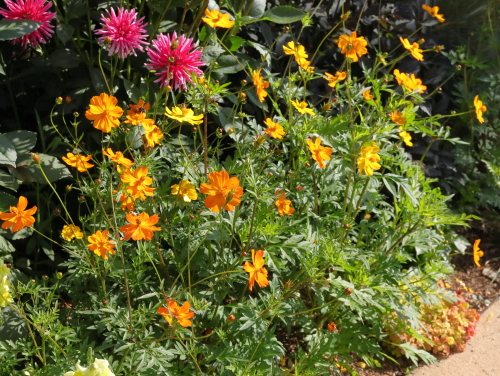
Cosmos sulphureus is not a plant I shall tire of any time soon either. I pinched a bit of seed several years back and have managed to collect my own seed ever since. Fabulously vibrant colour but light and airy enough to carry it off without getting mired in vulgarity. Of course not everyone would agree with me but isn’t that the beauty of gardening, people can be plain wrong and the rest of us are just too polite to tell them.


Four.
Calibrachoa.

Five.
OK, it may not be immediately clear what’s going on here. We have a leaf of cleome being devoured by the caterpillars of the large cabbage white butterfly. I note that it’s scientific name is Pieris brassicae so maybe Linnaeus didn’t quite finish the job when it came to sorting out nomenclature. I further note that the annoying lady rabbiting on about it when I looked it up online had an American accent, so it is presumably as much a pest over there as it is here. There is then the mystery of why a cabbage butterfly would choose to vary its diet with Cleome and Nasturtium and, in my experience, nothing else. The lily in the background is Lilium lancifolium but that deserves its own SoS slot at a later date.

Six.
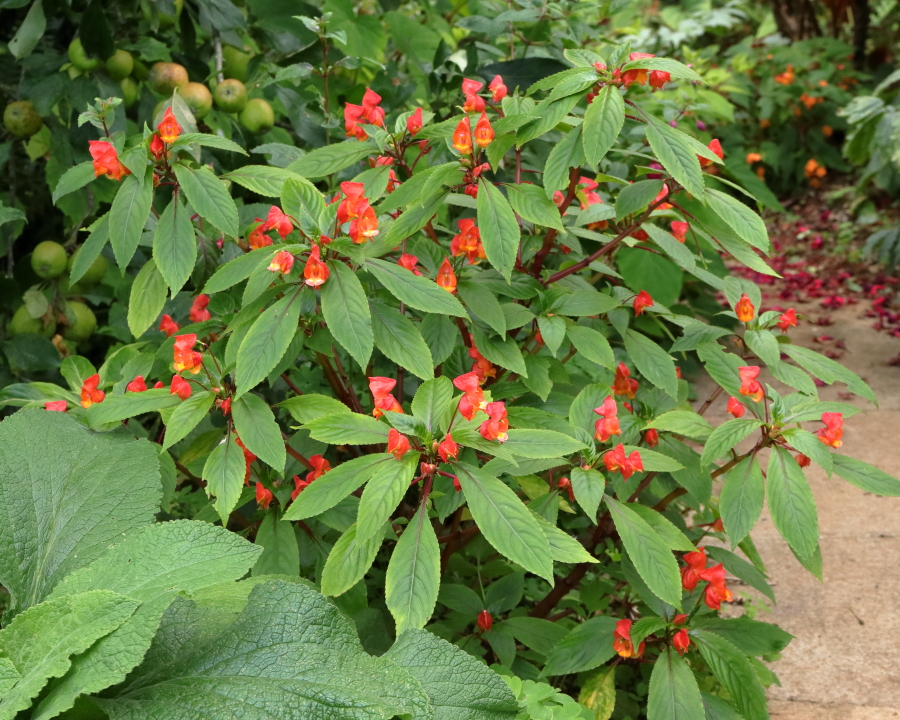
Impatiens bicaudata x auricoma is very happy to be planted out in a shady spot and provided it gets enough water will flower from June until it gets wiped out by the first significant frost. By then we will have taken cuttings and have young plants in the greenhouse for the following year. It sets seed and we have a seedling with pinkish flowers. Look closely and you will see that this is one of the plants on which I regularly find vine weevil adults, the leaf margin notches being a giveaway.
One, again.
I don’t want you running away with the idea that points would mean prizes. It’s my Holboellia brachyandra, which has produced a pair of fruits for the first time since it was planted, perhaps 15 years ago. Holboellia is supposedly not self fertile, though it produces both male and female flowers. I don’t know that I’ve ever seen pollen on the male anthers so maybe mine is functionally a female plant even though it appears to be hermaphrodite. Which begs the question of how it came to produce fruit. Has a male flower produced a bit of pollen? Did a bee come in that had visited a plant in another garden? Has it just spontaneously produced a fruit without being pollinated, in which case will it contain seeds and will they be viable and will they be apomictic and gentically identical to the parent? And how many can I grow on to see if I’ve got anything different? Incidentally, it seems it’s now Stauntonia brachyandra; I’m not remotely surprised that they’ve lumped those two genera together.

 garden ruminations
You had so many amusing lines that it was hard to pick just one. I narrowed it down to this one. “This one is ‘Cheyenne’ and if it doesn’t warm the cockles of your heart then there is something wrong with your cockles.”
LikeLike
Yes, once they get going, Calibrachoa can make a real impact – I must remember to add more next year. I have a purply-blue one but yours is even prettier! Strangely, we seem to have far more snails than slugs for the last few years, although with the dry conditions neither of them have been an issue this year (thankfully!). Searching for colour today, my six are here https://ramblinginthegarden.wordpress.com/2025/07/26/six-on-saturday-a-bit-of-colour/
LikeLike
The color in your garden is fabulous. Be forewarned. My contribution this week does include some unpleasantly large pests: https://stoneyknob.wordpress.com/2025/07/26/sos-a-tale-of-two-vines/
LikeLike
Love the Cosmos sulphureus, I think I had some of those a few years back and they survived a couple of winters before dying off. Should have saved some seed. I like the yellow ones more than the apricot ones I am growing this year. That said I will try and remember to save some seeds from my cosmos. I’m channelling MD this week and it seems I have had more of the wet stuff than you, though mostly in the form of the very Cornish mizzle.
LikeLike
oops the link https://theshrubqueen.com/2025/07/26/six-on-saturday-summer-bromance/
LikeLike
The Dahlia is fantastic and the varieties of Impatiens you have never fail to amaze me. I would not put my hand under the plants in my garden at night! Well done. I have Cabbage Whites here. They host on mustard family plants here, probably Pepperweed in my garden. Thanks for hosting sans larval!
LikeLike
Seems that nearly all of us are dealing with the lack of rain. Your additional pest patrol is heroic. My dealing with the lack of rain and heat is here: https://aftereden.blog/2025/07/26/six-on-saturday-26-july-2025/
LikeLike
Yes, cabbage whites are prevalent here in many parts of the U.S., too. Thanks for supplying the information on your Holboellia brachyandra, and it’s exciting that you have some fruits this season. Checking on it a bit, I see that it’s somewhat difficult to get it to fruit, so yay for you! Based on the description, I imagine the scent of the plant (and fruits?) is very pleasant. Thanks, again, for hosting.
https://plantpostings.blogspot.com/2025/07/six-on-saturday-in-seattle.html
LikeLike
Hm. It is indeed hard to keep the spirits up with the garden dry as dust. My shining star at the moment is the white, and beautifully scented Phlox David. And thank you for the show of Cosmos sulphurous. I’d recently read you could sow cosmos in July for an autumn flowering so I chose that particular variety to try. We’ll see…
LikeLike
My cockles are also well warmed by the fiery dahlia. I also love your cosmos. That bright yellow is something I want more of, and I noticed that the planters at the new bus shelters include lance leaf coreopssi (Coreopsis lanceolata), so I will definitely pinch some seeds. Vine weevils sound very annoying. I would not be able to go out so late for a search or the mosquitos would drain me to a dry husk. Cabbage whites seem to be my main butterfly, but they seem content on the kale forest so my broccoli is unscathed. I have never seen it on my nasturtiums (which I forgot to plant this year). Hope you get some rain! My barrels have not been empty yet, and we had such a downpour on Tuesday that I had to put on scrubs when I got to work and dry my clothes! Have a great week! Here are my six!
https://wisconsingarden.wordpress.com/2025/07/26/july-26-2025-six-on-saturday/
LikeLike
Being able to wander round the garden late in the evening without encountering anything worse than a spiders web in my face is clearly something I take for granted rather than being grateful for. Which reminds me, it’s time to don my head torch and hit the trail.
LikeLike
The Cosmos sulpureus and the Cheyenne dahlia have sufficiently warmed my cockles. Those are beautiful photos and thank you for the quiz.
LikeLiked by 1 person
Thanks much for warming my cockles, and making me smile when I looked up the common name of your now fruiting Holboellia, and joining in my annoyance of the cabbage white caterpillar. Nice way to start the day! My tiger lilies are also in bloom…
LikeLiked by 1 person
What a lot of caterpillars, I was ‘admiring’ the number of cabbage whites fluttering around my garden the other day and then wondering where the caterpillars had been lurking. You have converted me to cosmos sulphureus – I think I did sow seed from Fred but they didn’t quite make it. Here’s my six https://n20gardener.com/2025/07/26/six-on-saturday-mainly-from-seed/
LikeLiked by 1 person
I was feeling pretty relaxed about cabbage whites in the garden, there are no cabbages here for them. Perhaps if there had been they’d not have gone for Cleome and Nasturtiums? I had to replant some of the Cosmos after the slugs destroyed the first lot; but it was anticipated and I had a few plants in reserve.
LikeLike
I had no clue what your mystery vine fruit were, and am most jealous of your fabulous dahlias. On t’other hand here we have have a happy agapanthus, have seen many beautiful butterflies, and the damselflies on the pond are delightful.
Here’s my six: https://doingtheplan.com/2025/07/26/six-on-sat-rose-fritillary-waterlily-with-damselfly-wheels-apples-white-star-sedge-and-agapanthus/
LikeLike
I thought the fruits were Akebia quinata for a minute until I realised the leaves were wrong. I have never seen fruit on Holboellia before. It seems that every year there are more different bugs or plant pathogens to drive poor gardeners to distraction. I love the colour of Cheyenne.
LikeLiked by 2 people
Same family as Akebia of course, the wonderfully named Lardizabalaceae. Monstrous thugs both.
LikeLike
Reading your post this week brought forth a few chuckles from me. I thought to suggest the seed pods were ‘cockles’ even though I knew they were not! “The task of being uplifting me when more seems to be going wrong” was my guiding light in selecting a few ‘eye candy’ plants to lead me on regardless. I have not even mentioned the caterpillars on the nasturtiums or the amount of vine weavil damage, but you have as good as described the situation in my garden.
https://noellemace.blogspot.com/2025/07/six-on-saturday-26-july-2025.html
LikeLike
I’m so sorry that I won’t be able to be awarded points today. Never would I have guessed the name of your plant. Even though you kindly added it at the end of the post, I still have to plead ignorance, and I’ve had to google it. I hope it produces loads of its lovely flowers for you! Cosmos sulphureus on the other hand, is one I know and I will agree that there’s a place for it, in the right place, in the garden. I don’t have the plant but I do have the right space. Perhaps I’ll dip my toe in the water and add it to the borders next year.
Mine for today: https://notesfrommygarden.co.uk/2025/07/26/colourful-july/
LikeLiked by 1 person
I would have guessed the genus, although not the species (Holboellia latifolia). This is the first or maybe second I have seen of Cosmos sulphureus in a very long time. No one seems to know about it anymore. Here are my six.
https://tonytomeo.com/2025/07/26/six-on-saturday-abandoned/
LikeLiked by 1 person
The Holboellia came from a nursery, Crûg Farm, the proprietors of which have over the years done many plant collecting trips, some with Dan Hinckley, and much of the catalogue is of wild collected plants. Do a Google image search on Holboellia brachyandra and the variety of flower forms is pretty wide and sadly, mostly a bit more ornamental than mine. I do wonder how they propagate their stock because the obvious explanation for the apparent variability is hybridity. I love the Cosmos but didn’t know it existed until quite recently, I don’t know whether it hadn’t been grown earlier or had passed me by. It’s a total magnet for slugs so a struggle to get going in my garden.
LikeLiked by 1 person
That particular cosmos was popular in the 1980s here before becoming obscure; but that was here. I do not know how popular it was elsewhere. I like it because, without much slugs or snails, it performs better than more popular Cosmos bipinnatus (here). Also, I sort of like the color. Common cosmos looks a bit too cartoonish. Holboellia latifolia that I notice here is somewhat variable, and I suspect that it is all the same cultivar. I just figure that it adapts to various microclimates. It can get quite vigorous on the coast, but not bloom much. It is wimpier farther inland, but the flowers are a bit large and more prominent.
LikeLike
I’m sorry to say there must be something wrong with my cockles:-) The dahlia doesn’t do it for me but the Calibrachoa – wow! The cosmos is stunning, too.
This is my six this week, mostly new plant purchases: https://mysanctuarygarden.wordpress.com/2025/07/26/six-on-saturday-26-07-2025/
LikeLiked by 1 person
They’ve closed down now but I will always cherish the occasions I visited the field of several acres near Penzance where they had the National Collection of Dahlias. Just one of each of hundreds if not thousands of varieties, total riot of colour, and every visitor with a smile on their face, talking to complete strangers and loving it. Of course I realise you can love something somewhere else but not for a moment want it in your own patch. I have an unhealthy fascination with that boundary line between beauty and vulgarity, it can take so little to cross it. A begonia with a single, perfect white flower with a fine pink picotee edge can be exquisite but when ten blooms are open it is pretty much cringeworthy.
LikeLike
I bet that was an impressive sight. I do love lots of dahlias, just not the spiky-petalled sort (I know that’s not a gardening term but you know what I mean!)
LikeLiked by 1 person
That’s very intriguing regarding the fruiting Holboellia brachyandra. 429 vine weevils in 8 days? Yeesh https://onemanandhisgardentrowel.wordpress.com/2025/07/26/six-on-saturday-26-july-2025/
LikeLiked by 1 person
464 in 9 days now, who’d have thought they’d be put off by a bit of light drizzle; perhaps just under the leaves not on top where they could be seen.
LikeLiked by 1 person
Sometimes it does feel like a battle out there, other times a doddle. Yesterday I was showing my great niece (2 years old) the cabbage white caterpillars chopping away on my nasturtiums and made a concerted effort not to label them as the bad guys. It was tricky but true in the greater scheme of things. And you are right, it is the little (good) surprises that keep us going. Here are mine https://offtheedgegardening.com/2025/07/26/six-on-saturday-no-complaints/
LikeLiked by 1 person
I’m not so sure about plant pests not being the bad guys. I have no qualms about killing slugs, snails, vine weevils, caterpillars on my cabbages and so on and I’m not convinced by the argument that they are as entitled to be there as the rest. Take humans out of the equation and most of those pests wouldn’t last long, and certainly not in serious numbers because their host plants wouldn’t be there for long and they’d be left to dine on things they didn’t like. A garden where slugs are left to their own devices quickly becomes a garden with very few slugs because they kill the plants that attract and support large numbers. I’m trying to work out my chances of ever getting a great niece and wondering if I might already have one.
LikeLike
Wow lots going on and those fruit do have an interesting tale.
I have seen so many cabbage white butterflies in my garden recently. I have got cloches over my Brussel Sprouts and my finger crossed for their survival!
Anyway here’s my six
LikeLiked by 1 person
Strange isn’t it how we’ve been bombarding insect pests with chemicals for decades and what are we largely left with, more insect pests than ever and they’re resistant to the chemicals and drastically fewer of everything else.
LikeLiked by 1 person
I didn’t know about Holboellia brachyandra; the fruits are incredible !
This week, you’re surprising us, of course, with the magnificent clump of Calibrachoa flowers as well as the dahlia flowers ‘Cheyenne’. A lovely 6!
LikeLiked by 1 person
There was nothing to say about the Calibrachoa, I let it do the talking.
LikeLiked by 2 people