A week ago we were hunkered down waiting for storm Darragh to blow itself out. We had a bit of damage, which has provided me with a couple of items for my six that I’d have been happier without. Now we’re in a quiet spell of weather, very dull, pretty cold but at least dry, above freezing and not windy.
The somewhat ephemeral deciduous flowery stuff is over and done, gradually getting cut down and shredded. I’m left with the garden skeleton, meaning some bare branches of deciduous trees and shrubs but rather more evergreens of one sort or another that serve as the backdrop to the summer display but now come into their relatively understated own. Not always understated mind, Camellias are star performers in their own right.
Six on Saturday, where gardeners share the highlights of their gardens each week by posting a picture or two, adding a word or three and linking to the wider world via my comments below. The participants guide is here.
One.
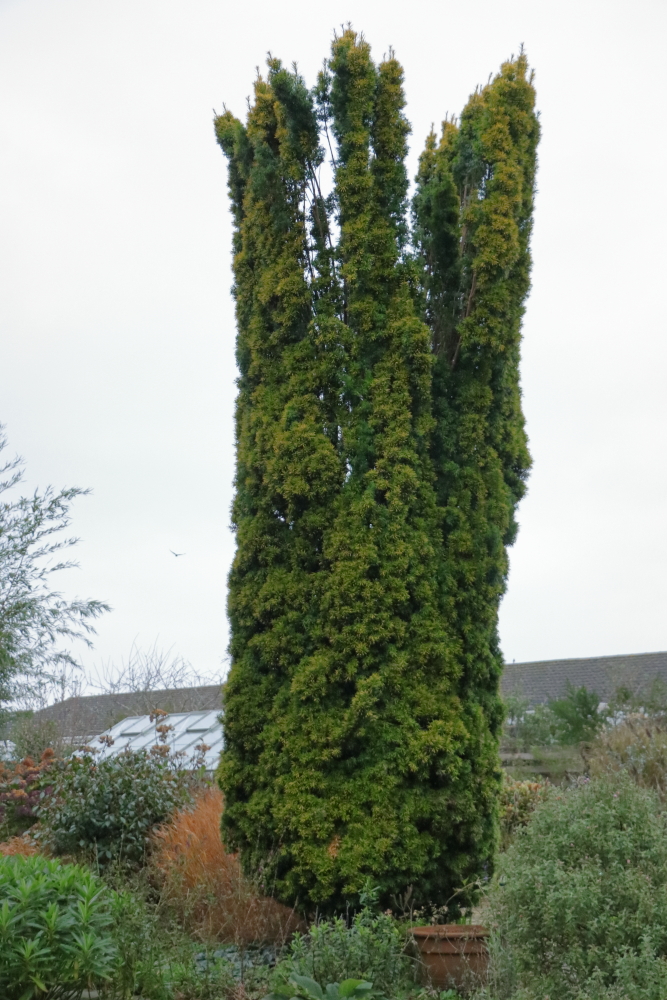
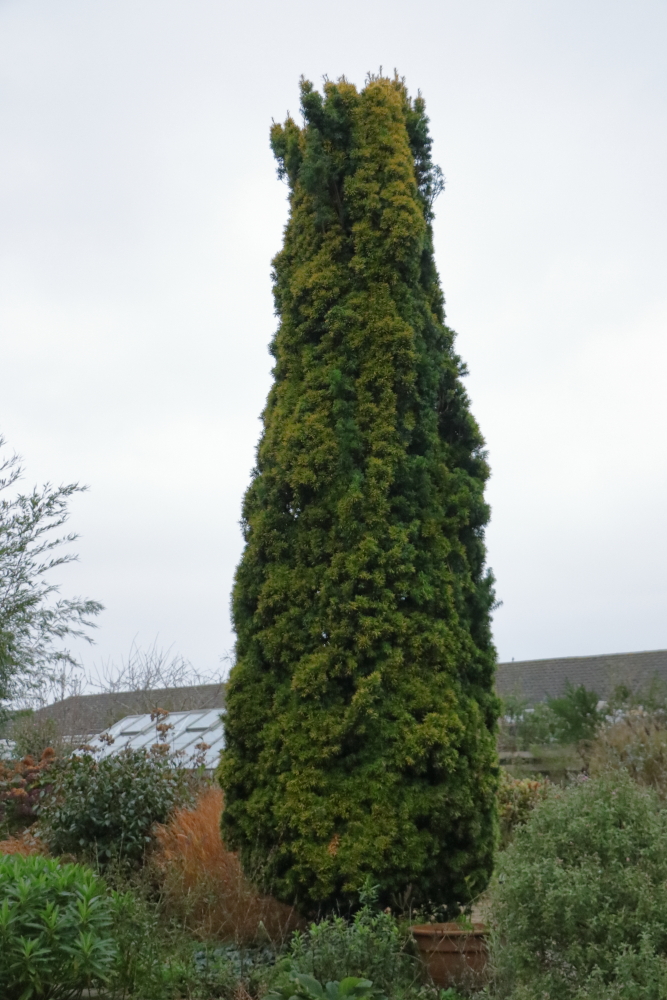
The first casualty of last week’s blow that I noticed was Taxus baccata ‘Standishii’. If this had a central trunk with smaller branches coming out, it would be easier to manage. It doesn’t; rather it consists of a cylinder of upright stems, none of them very thick, with foliage on one side only. It becomes all too clear when the wire that holds it all together breaks, as it did last weekend. Replacing the wires is tricky, the tree is 5.36m tall, over 17½ feet. It’s not easy to get all the bits back in tidily when you’ve got a ladder leaning against it either, so there’s a bit of tidying up needs doing.
Two.
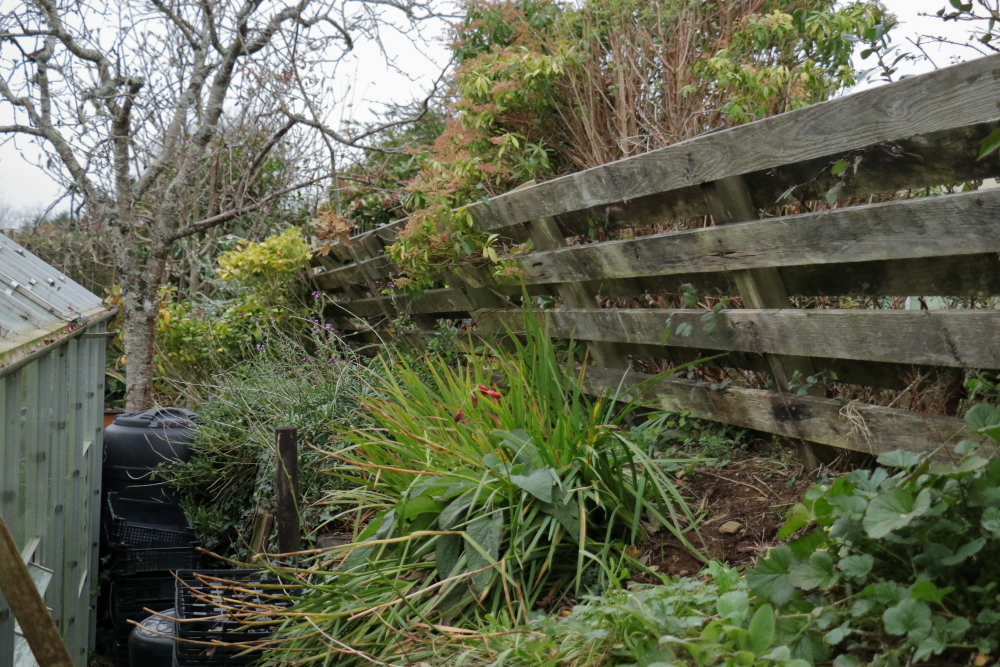
The other casualty was a length of the fence along the back of the garden. All the posts have snapped at the bottom and need to be replaced. The boards are pretty ropey too so I’ve new timber on order. It isn’t pretty but it’s functional, in that we want a complete visual barrier between us and them but also want to filter the wind through so that it doesn’t blow down any sooner than it has. Hit and miss panels fits the bill, would look better with vertical panels but work much less well as a visual barrier. It gets covered by plants and is behind the greenhouse, so it doesn’t matter much. The timber is due to arrive monday, expect the weather to turn wet.
Three.
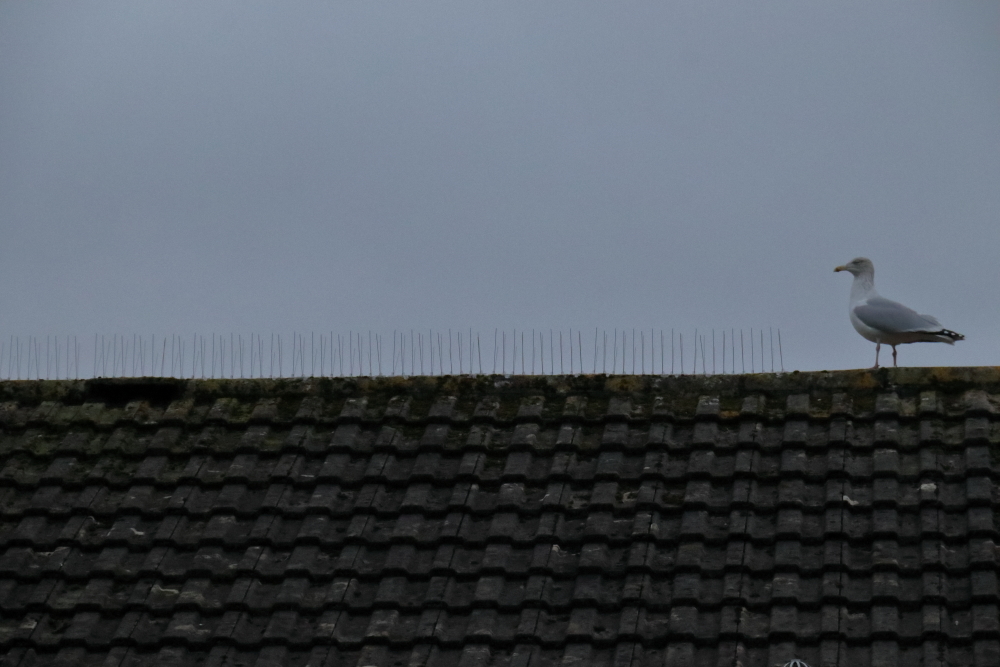
A few weeks ago we had a man fix spikes along our roof ridge and behind the chimney where the gulls nested last year. They’re not happy. I was reading just this morning that they’re finding high levels of antibiotic resistant bacteria in birds like gulls and ducks, picked up from the rubbish tips where the gulls forage and the waterways the ducks frequent. Not that I needed another reason to hate the b-s-a-r-s, but the s-i- they target us with could be carrying the disease that will kill me. Grrrr.
Four.
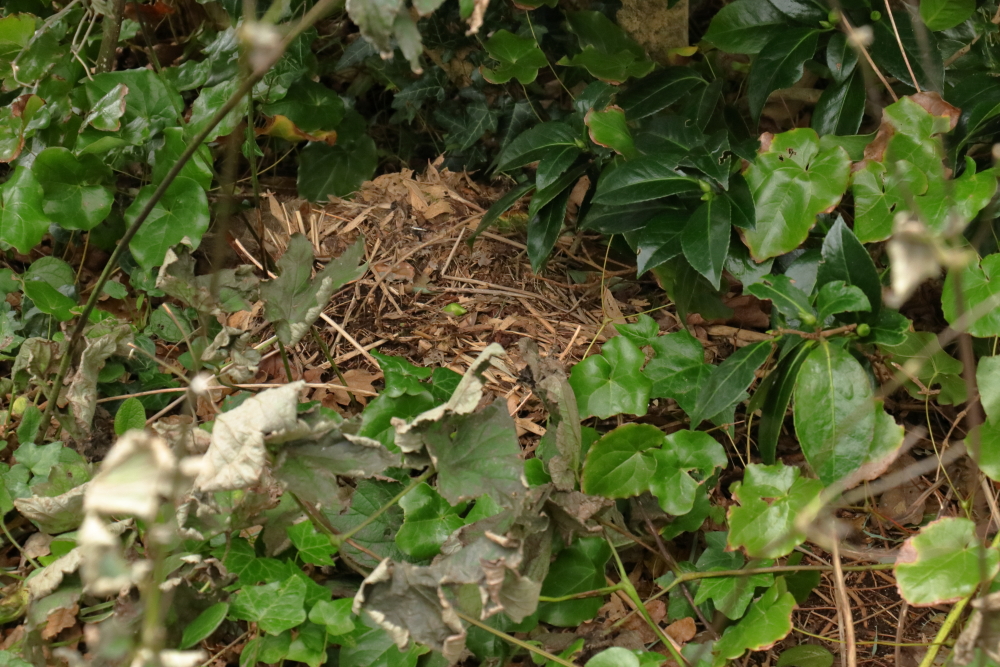
Also on the wildlife front, having gone many months without seeing any sign whatever of hedgehogs, I am now seeing signs of activity outside both hibernation boxes and today I spotted a pile of leaves under Camellia ‘Bob Hope’ that is undoubtedly a nest. It would be typical for them to build a nest somewhere other than in the boxes provided at considerable expense for their use. Of course they may be moving between nests. I don’t want to disturb them so will set up my camera to see if anything other than cats shows up on it. I might even get something more impressive than the picture below, which looks pretty much like any another pile of leaves.
Five.
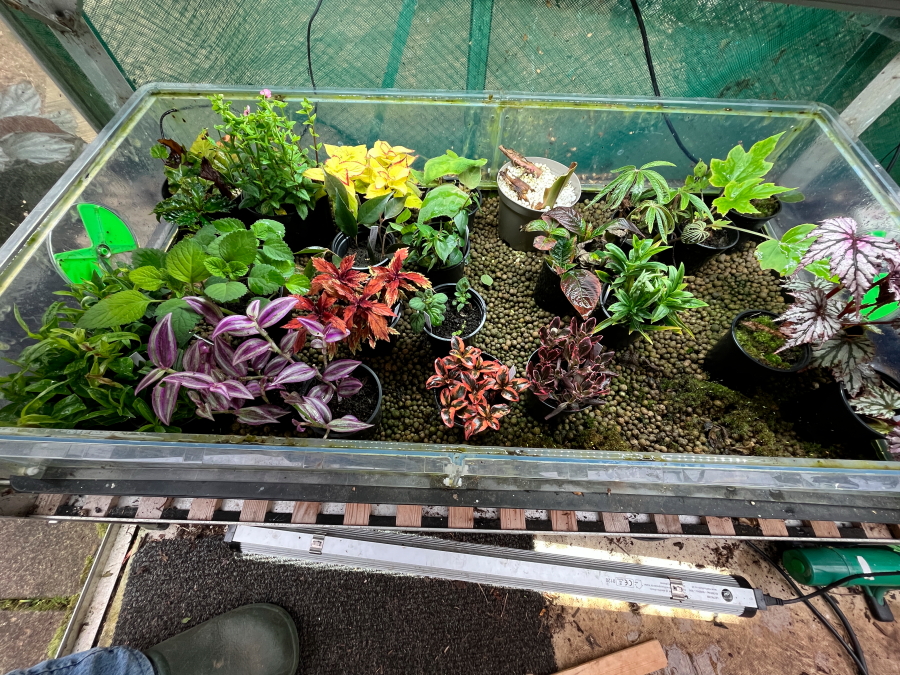
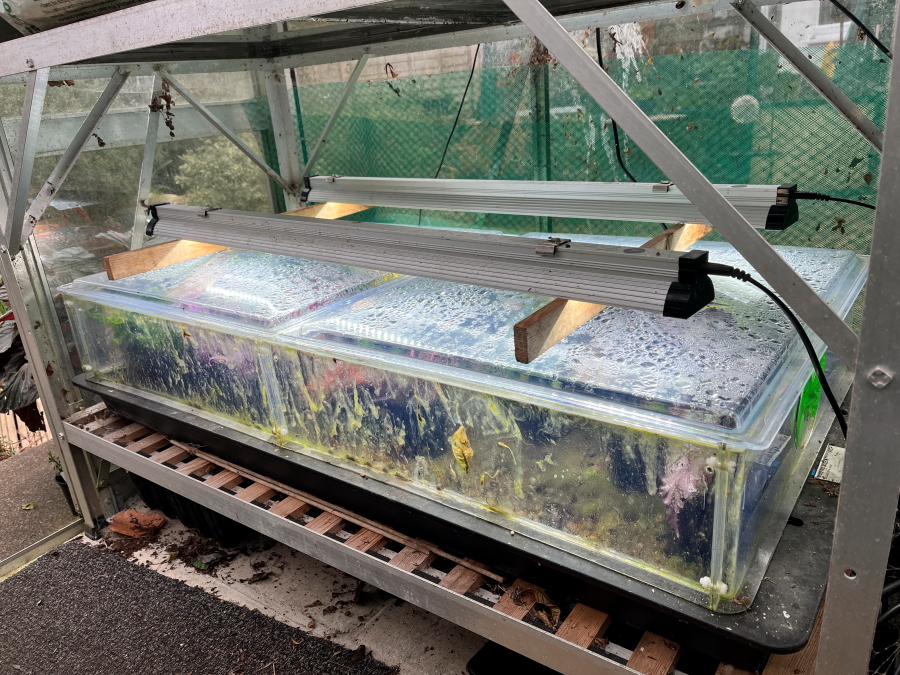
I’m pretty sure I wouldn’t have the propagator I have but for The Propagator, creator of this six on Saturday meme. I intend writing a blog about it so I’ll just post a couple of pictures without explanation.
Six.
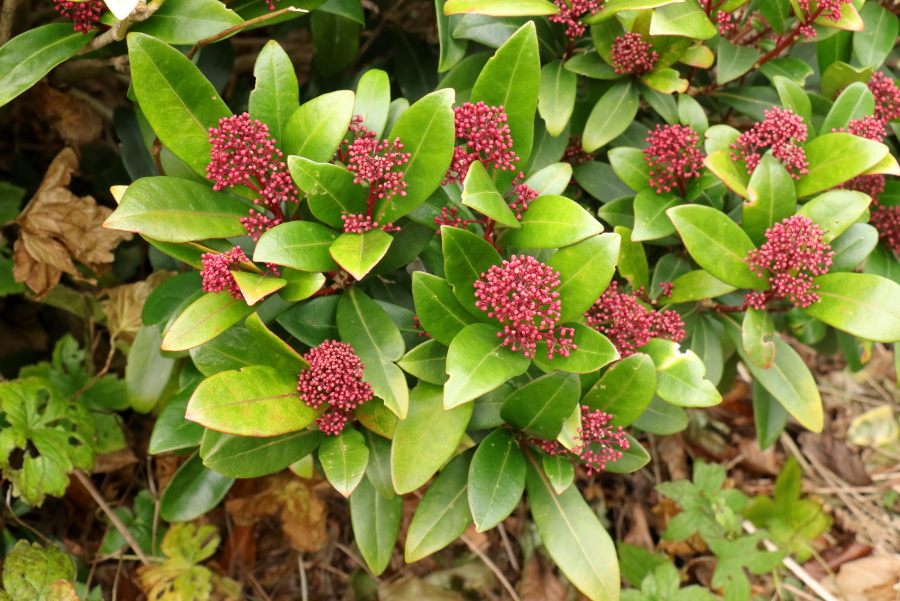
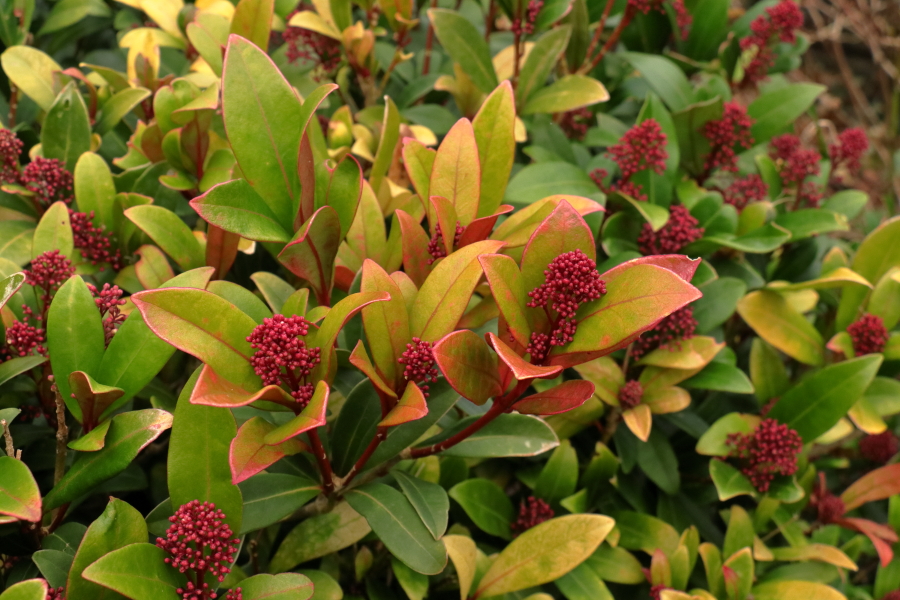
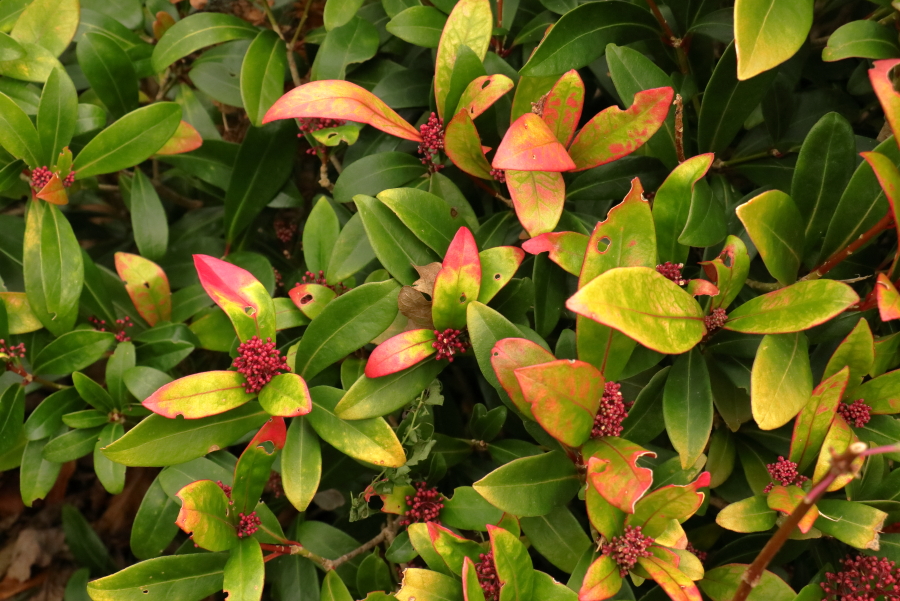
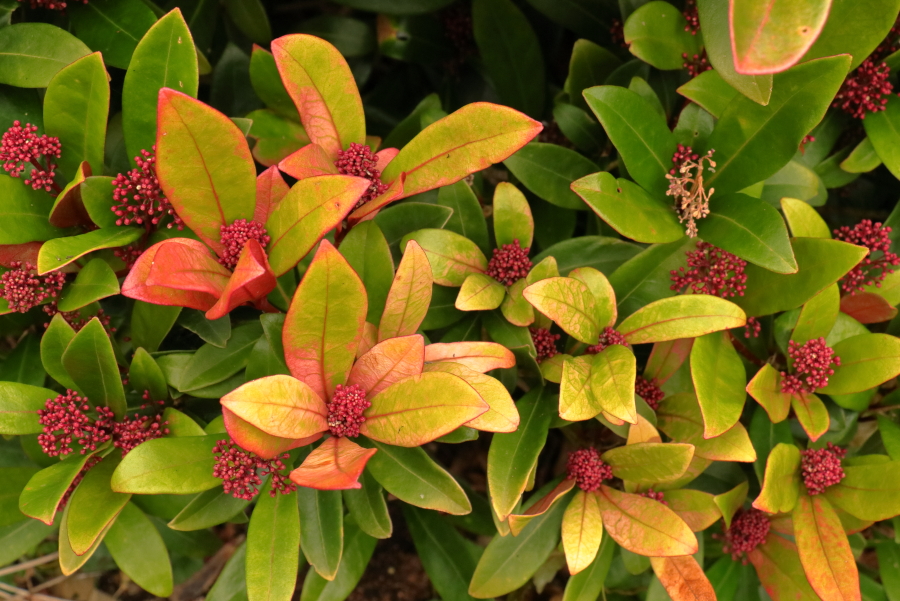
Skimmia japonica ‘Rubella’ is much the most widely grown male form of Skimmia and looks good with its red flower buds from autumn until it flowers in spring. Ours is adding foliage colour to the mix but you then notice a healthier looking all green patch and start to fear that all might not be well in the root zone. Several nearby plants have succumbed to honey fungus. Methinks I’ll finish up my Avengelus granules around the Skimmia.
Only a couple of weeks and the days start getting longer again. The forecast for next week seems to involve some light rain, so hopefully the repaired fence will be in next weeks six. Mending fences? Isn’t that supposed to be a good thing?

 garden ruminations
Your propagator setup is impressive. It’s always wonderful to have some plants starting and growing indoors during the cold months. The Skimmia is stunning! I’m glad you didn’t have more damage from the winds/storms, although it’s no fun tackling unexpected/unwanted disruptions from storms.
Beth @ PlantPostings.com
LikeLiked by 1 person
It must be a delight to see abd house hedgehogs, well done! I saw a Joey in ny garden yesterday, trimming the grass for me! 🦔🦘
Here are my Six-
LikeLiked by 1 person
On the whole, I would prefer to have carnivores like hedgehogs to herbivores like deer or rabbits. Herbivores have a tendency to get tired of grass and want to vary their diet, which isn’t good for a garden.
LikeLiked by 1 person
I laughed — “The timber is due to arrive Monday, expect the weather to turn wet.”
LikeLiked by 1 person
Oh, climbing up and wiring it back together is so intimidating! The skimmia is gorgeous. I hope the gulls have found a better place to hang out.
LikeLiked by 1 person
Hedge hogs??How wonderful..we don’t have them over here and I think that would be a delightful visitor.
LikeLiked by 2 people
For an animal that is usually alive with fleas, is a ball of spines and snuffles like a pig with flu, they manage to be quite endearing.
LikeLiked by 2 people
😄
LikeLiked by 1 person
Your tree – had no !idea it was wired. My house came with an arbor vitae that someone at some point had ties several trunks together badly. The tree had tried to grow over it and I removed the plastic stuff as best I could but one trunk started to die once I did that. It was small so I cut it off below the unhealthy bit and am fine with the fact that this tree does not come to a single point. I had already removed two trunks to the rear that were growing directly under the edge of the roof and too close to the house for the painters.
Sorry about your fence! I lost a section of fence to a windstorm once but I was renting so I did not have to deal with it.
Honey fungus sounds nasty! Apparently you can eat the mushrooms, but they may upset your stomach, so if adventurous, try only a little at first and cook it well before eating.
Hope the weather cooperated with your fence mending project!
LikeLiked by 1 person
Our honey fungus has only very occasionally produced mushrooms. We get plenty of bootlaces, the whole garden is criss-crossed with black rhizomorphs, and we see fans of white mycelium around the base of affected plants, but have only had mushrooms when it has been on the cut off stumps of sizeable trees.
LikeLiked by 1 person
The Taxus looks great and I love the Skimmia. It is very windy here today and my zinnia seedlings produced one very insipid flower that is not worth photography!
LikeLike
The yew really does look like a difficult repair. How and why did it get wired together originally? Do such yews eventually become less reliant on such wiring? I would be concerned that individual trunks will not develop structural integrity if they do not need to. (That happened to crape myrtles that I left the trunk binding on for too long. Recovery is slow.)
My six, although wet from some of the first rain, attempt to ignore the consequences of winter in the garden.
https://tonytomeo.com/2024/12/14/six-on-saturday-a-saturday-of-flowers/
LikeLike
I wired it originally because branches kept falling out. It has had multiple stems from very early so they are all very one sided and a little too slender to resist bending out under their own weight. No doubt supporting the trunks has allowed them to make more height without adequate thickening but with a dozen or more main trunks I doubt they would ever have developed enough rigidity to resist gales. I’m reluctant to shorten them because it will encourage it to get broader and spoil the proportions. Left to develop naturally they slow vertical growth almost to nothing and gradually get broader, which would make it even more out of scale with the rest of the garden than it is already.
LikeLiked by 1 person
After it gets bound, can some of the trunks be removed at their bases? I know it would look silly until the other trunks generate enough foliage to replace what is lost, but can they fill in within a season? If only two or three get removed at a time, can two or three more get removed after a year or two?
LikeLiked by 1 person
I have considered taking out some trunks, perhaps one in four, then trying to pull the rest in to make the tree narrower, but I think they are now a bit to thick lower down to move far. I was reminded of remarks made by Aljos Farjon when he visited the nursery many years ago, he being a Kew based world authority on conifers. He was bemused by the enormous range of conifer cultivars that we were selling, seeing them as runts and mutants that wouldn’t have lasted long in nature but survived because gardeners with their love of novelty propagated them and mollycoddled them. My Taxus is an aberration twice over, in being narrowly fastigiate and in having seriously depleted chlorophyll making it bright yellow. Little wonder that it isn’t able to stay in good shape without its human keeper intervening from time to time. It is inherently unnatural, would have spectacularly failed in a natural fight for survival and the only surprise is that it gets by as well as it does on such little artificial intervention as it gets from me.
LikeLiked by 1 person
Not many of us get that. I mean, most believe that all vegetation is ‘natural’, as if bringing a mutant cultivar of a tropical species from Brazil into a home in a skyscraper in Manhattan makes the interior environment more natural. I sometimes try to explain to those who consider themselves to be ‘environmentalists’ that Los Angeles is ‘naturally’ a desert, which was naturally occupied by only a few trees; so planting more trees is unnatural. Anyway, many of these cultivars are really awesome, and worth pampering, regardless of how unnatural they are.
LikeLiked by 1 person
I had to check my skimmia. Definitely no colours. I really don’t envy you having to deal with the taxus, but Sue’s concern for the plants made me smile.
LikeLiked by 1 person
Of the trials and tribulations of gardening! I don’t envy your ladder climbing task to re-wire the taxus. I lost both my skimmias to honey fungus and yellowing of the leaves was the first sign that all was not well. What a nuisance HF is. I hope you have success filming the hedgehogs. Here’s my six https://n20gardener.com/2024/12/14/six-on-saturday-these-ever-shorter-days/
LikeLiked by 1 person
Looks like your taxus is going to require all your skill and dexterity to rectify the problem. How nice to find the hedgehog nest using up the chopped up material you leave on the ground. Here is my contribution this week: https://noellemace.blogspot.com/2024/12/six-on-saturday-14-december-2024.html
LikeLike
I can’t wait to read a post about your propagator which seems to me to be quite effective! (and lots of pretty things in it.)
Too bad for the Taxus baccata, it’s going to be complicated to reach there and fix…. I’m afraid it’ll be left with messy hair. https://fredgardenerblog2.wordpress.com/2024/12/14/six-on-saturday-14-12-24/
LikeLiked by 1 person
Yes, take care on the ladder. I quite liked the lily-flowering tulip/rook chess piece shape of the Taxus until I saw the wired up photo. I hope the spikes have bested the gulls https://onemanandhisgardentrowel.wordpress.com/2024/12/14/six-on-saturday-14-december-2024/
LikeLiked by 1 person
You can almost see the gulls trying to puzzle out how they can get around the spikes. They are incredibly persistent.
LikeLiked by 1 person
Hopefully they aren’t as intelligent as pigeons. Thousands of pounds were spent on trying to pigeon proof the railway bridge on the way into town, causing months of road chaos. Within a year the pigeons were nesting under the bridge again and have been ever since.
LikeLiked by 1 person
I’m hoping that if I can force them to nest somewhere else for a couple of years that they will stay away. They seem to get fixated on a location.
LikeLiked by 1 person
https://thistlesandkiwis.org/2024/12/14/six-on-saturday-14-12-24/
LikeLike
Interesting about the gulls and ducks. Our local gulls seem to be far less aggressive. I noticed last year visiting suburbs of London giant pigeons. Our native kereru are large but they are naturally so.
LikeLiked by 1 person
The gull’s chicks inevitably end up on the ground before they can fly and woe betide anyone who goes near. One drew blood from a visitor to our neighbour a couple of years back, quite a lot of blood. They are big birds with a wingspan up to 1.5m.
LikeLike
I don’t envy you your ladder duty, take care! Your propagator looks a beauty, such fun to be had there. I like to hear how you live with honey fungus in your garden, every so often something fails but on the whole you manage it well. I think the week ahead is set “gloomy” too. Soon be spring. Here are my six https://offtheedgegardening.com/2024/12/14/six-on-saturday-slacker/
LikeLiked by 1 person
Sue was fretting about me falling off the ladder. Concerned about the plants I might fall on. We have sun here today, I was getting very tired of gloom.
LikeLiked by 1 person