Now that we are done with opening the garden for this year, it can slide into autumnal disarray without us feeling the need to put up much resistance. Growth this year has been particularly lush so the disarray had come early and hard. Now it doesn’t matter, since we are the only ones to see it and the only ones inconvenienced by it.
Not by any means does that mean that we can put our feet up. There were a few things that we’d held back on doing until we’d shut up shop, not wanting to leave big gaps. This week has seen an apple tree and a camellia dug out completely and our ailing maple cut down drastically. While not exactly things happening this Saturday, they seem like the big gardening events of the week. There’s plenty of stuff flowering too, so it’ll not be all about destruction.
One.
I planted an apple tree several years back, the variety ‘Holstein’, which I had already grafted bits of onto another tree. This one was grafted directly to the rootstock. It grew, I decided it was in the wrong place and moved it. I never knew what stock it was on but it had become clear that it was a vigorous one, probably M25, and the tree was making masses of growth but producing almost no flower and even less fruit. It had to go.
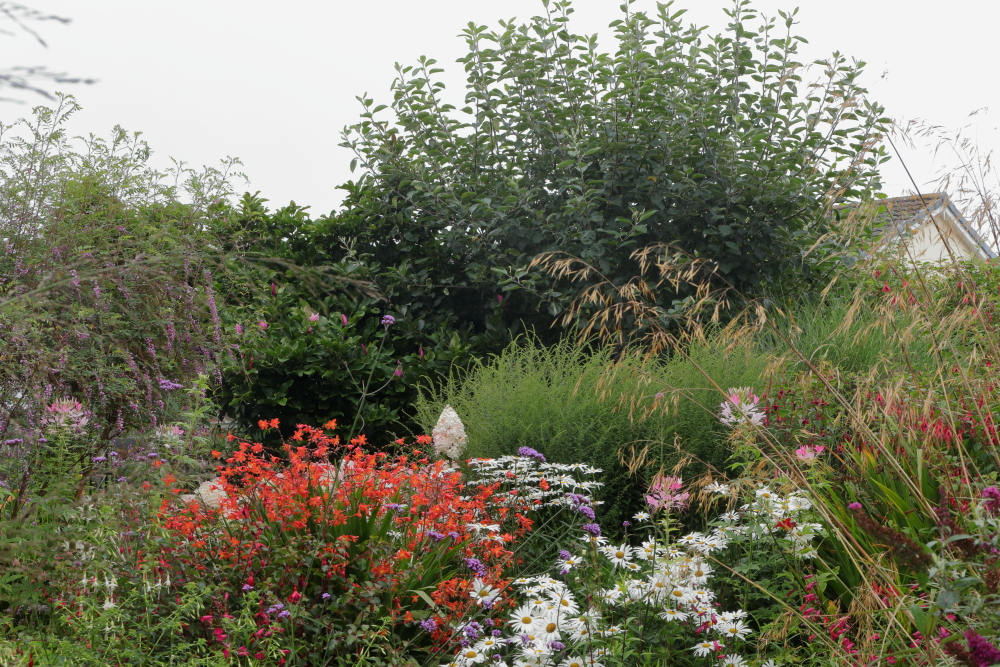
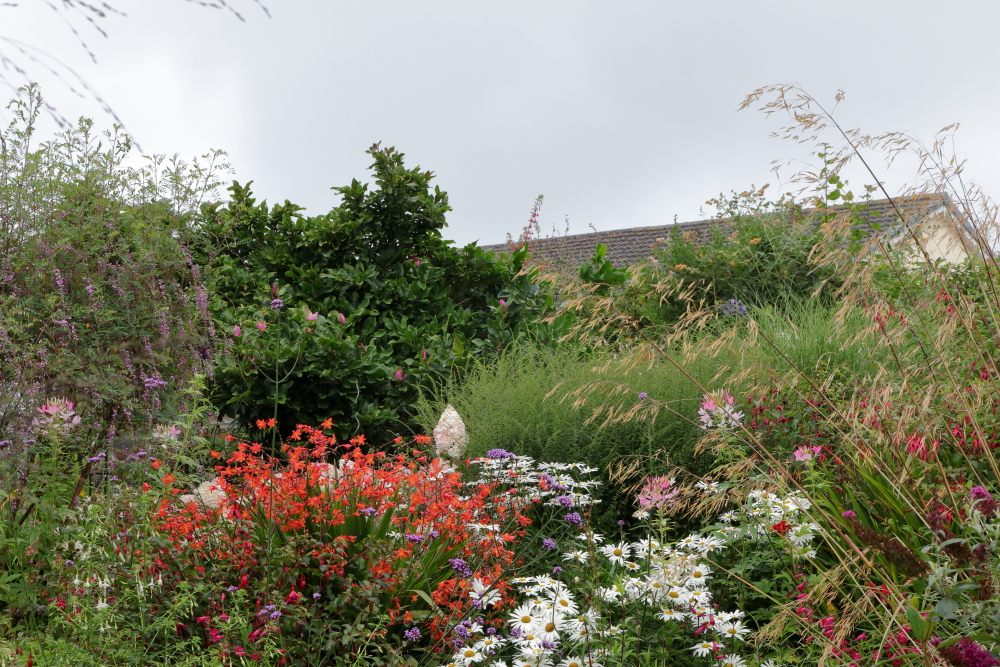
Two.
Next to go was Camellia sasanqua ‘Cleopatra’. This had been slowly dying probably over the last two years and I had suspected it was under attack by honey fungus. Once I’d removed the canopy it became clear that the bark at the base of the trunk was dead and peeling away. Underneath were the tell tale remains of white fungal mycelium and when I dug out the roots the black ‘bootlaces’ that provided confirmation. We are considering replacing it with a large Miscanthus; so far as I know grasses are not susceptible to honey fungus and it’s in the way where it is. It’s an apalling observation to make but when plants die in our garden we tend to get over the loss very quickly as it provides a space for something else to go in; often something that has been knocking around in a pot for quite some time awaiting just such an eventuality. Plants that grow well (i.e. bigger) cause us far more problems, especially if they cannot be constrained to the size we want.
Three.
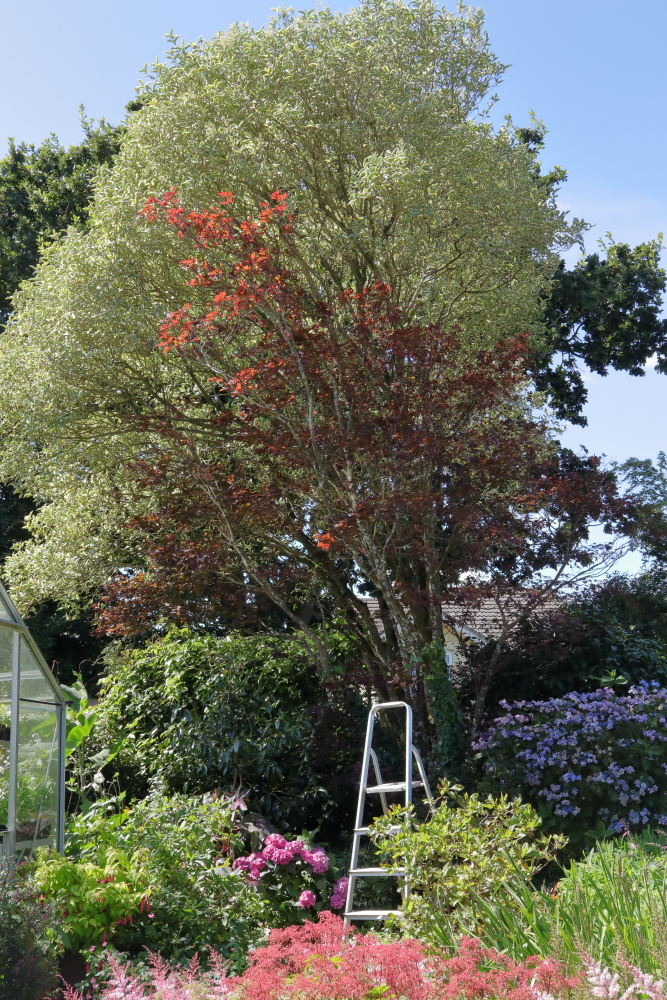
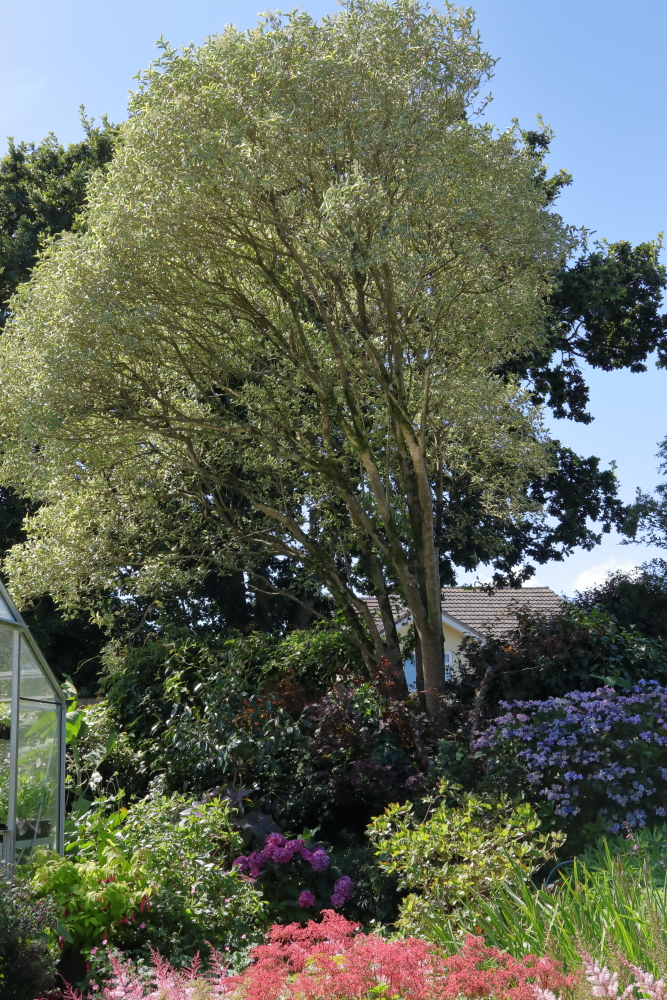
It was then the turn of our purple maple. This has been losing branches, again probably to honey fungus, for years. What was left was not much of an asset and the long deferred decision to take drastic action was finally taken. It was too big and too close to other plants to be able to dig out the root, so on the basis that a living plant would be more resistant to fungus than a root system with no top, I left a small piece in. It has some strong healthy shoots on it so maybe it will make a comeback. There is a product available, called Avengelus, based on Trichoderma, which I may try as a treatment. It supposedly suppresses pathogenic fungi.
Four.
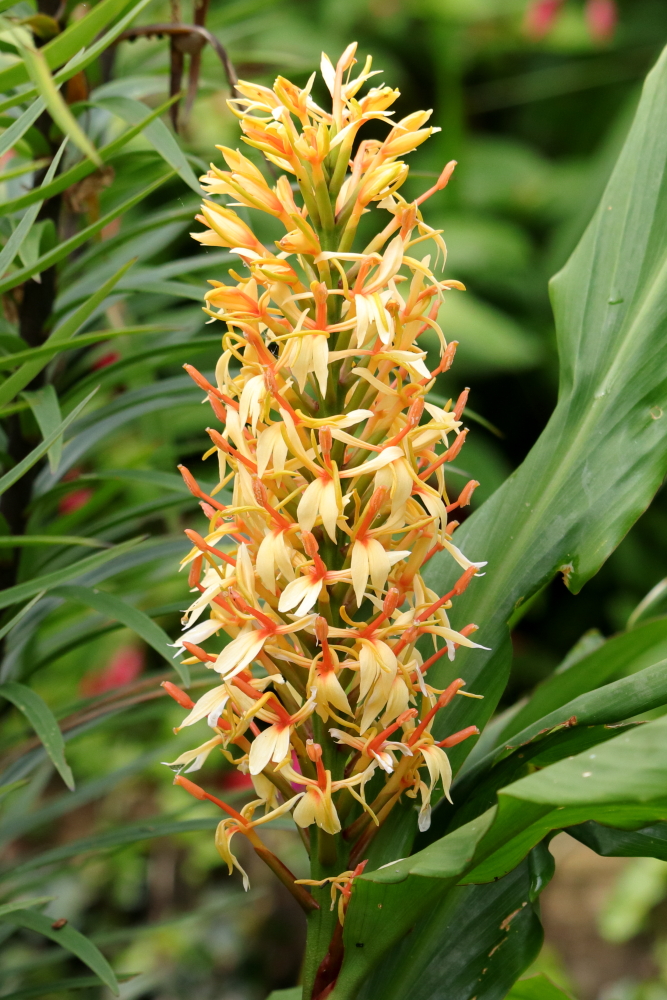
Enough destruction, this is Hedychium ‘Stephen’, like ‘Tara’ a Tony Schilling introduction and a top notch plant. I moved it from a dry shady spot under our plum tree around three years ago and it’s taken a while to get going. The wet summer has suited it very well so hopefully it will get better still in future years. Exotic looking and scented but completely hardy.
Five.
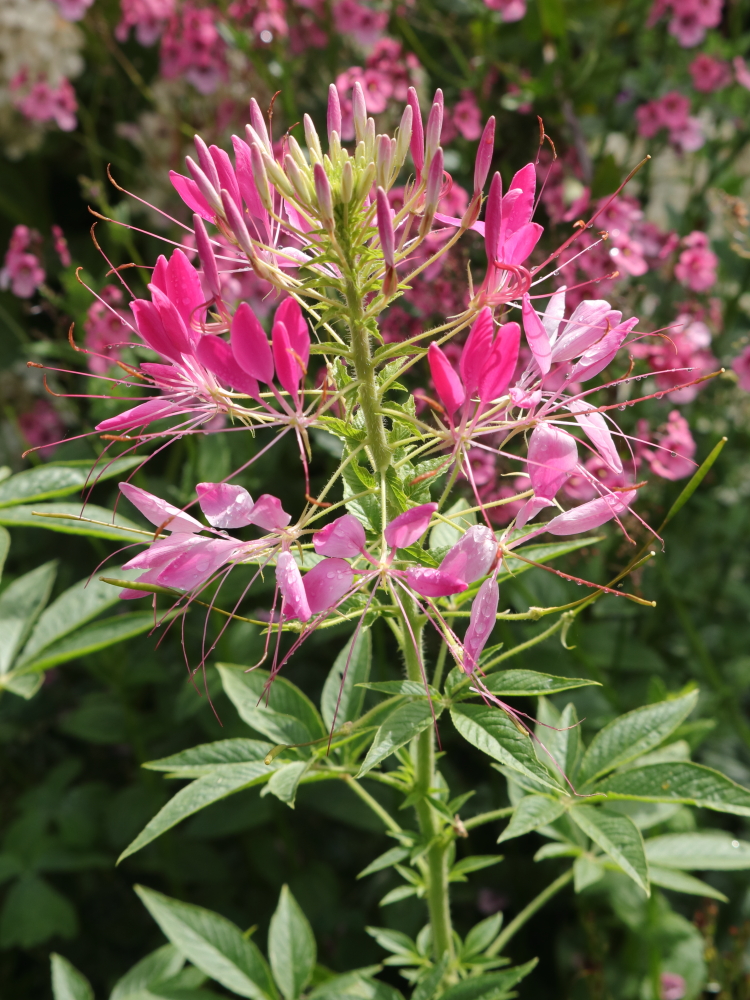
I’m not sure whether it is lack of sun or the loss of many of their leaves to slugs but our Cleomes, which I’ve had an excellent show of for the last couple of years, have been very poor this year. Some are finally starting to strut their stuff; this pink one was originally from seed Fred sent me a couple of years ago. Hopefully we will get enough sun to ripen seed again this year. I see a few pods starting to develop.
Six.
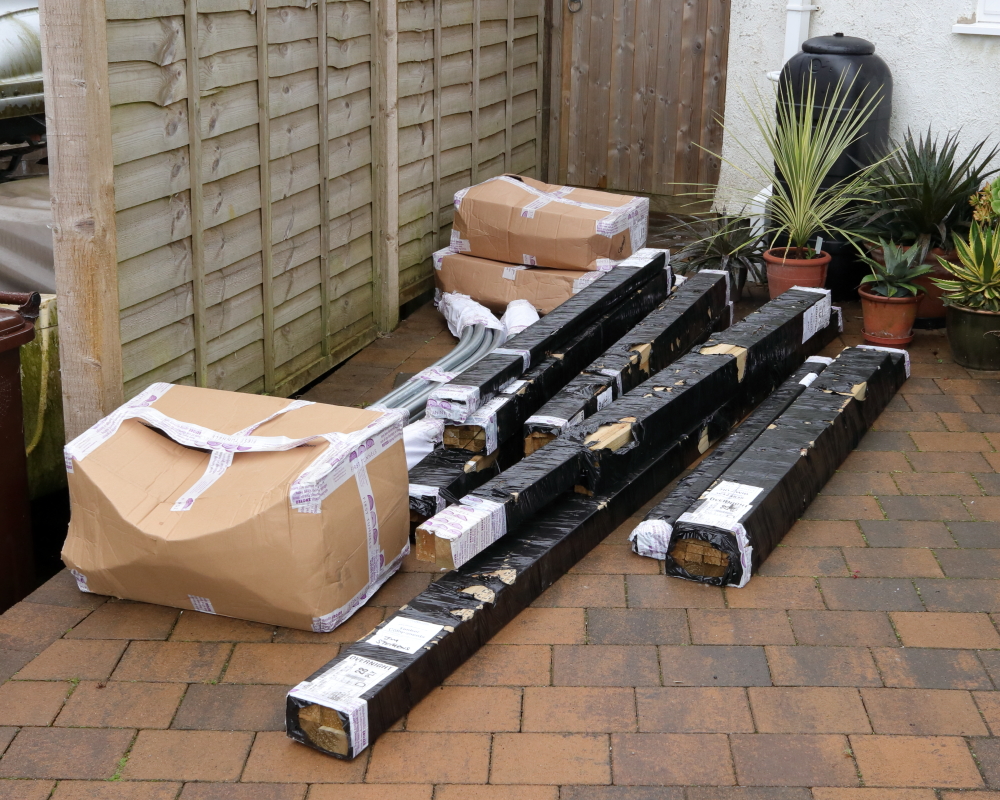
Finally, I have a new polytunnel. Or I will have, when I’ve built it. It’s 12 x 15 feet, a little larger than my existing tunnel and it’s going on my allotment. Hopefully I shall be able to report on my progress over the next week or two. The first thing I need is a 13mm spanner. I have a big bundle of spanners, mostly useless imperial sizes, never the one you want.
Another week wrapped up then. I shall make myself hostage to fortune and commit to one of next week’s six being the tunnel frame being up. I think the weather forecast is reasonable.
Six on Saturday is where a friendly bunch of gardeners from all over the place share what’s happening on their patch on a weekly basis. I think we are all fascinated by what other gardeners are getting up to and the infinite variety of situations in which they find themselves. Some of us are weekly regulars (as the host I kind of have to be), others post now and then when they have something interesting to share. It’s the simplest of concepts, take pictures of six things happening in your garden on a Saturday and share them on a social media platform of some sort. All the ones I see are on blogs but the meme took hold on Twitter back in the day and pops up elsewhere too I believe. Put a comment down below with a link to your posting so we can all find it, and Bob’s your uncle. There’s even a participant’s guide.

 garden ruminations
.
LikeLike
Thanks for a very interesting read. Removing those trees must have been quite a job.
LikeLike
Love your beautiful Cleome! ❤ Sorry to hear about the trees. Yes, opening your garden seems like quite a commitment on so many levels. I am thinking about opening mine. Good luck with your greenhouse.
LikeLike
LikeLike
Bob’s your uncle always throws me off! I had an Uncle Bob. I am waiting for tunnel photos. Hedychium is gorgoeous.
LikeLike
You reminded me how many trees I’ve removed and replaced with a healthier, more informed choice. Your Hedychium is gorgeous. Here’s my six: https://stoneyknob.wordpress.com/2024/08/17/sos-harvest/
LikeLike
I am very much with you in those opening paragraphs Jim, although your cutting back is on a much larger scale to ours – and that sliding photo facility is a brilliant way of showing before and after 👍 You make that ginger sound so easy to grow – could they cope with beng stuffed in a border with lots of other things? Thanks for hosting,as always https://ramblinginthegarden.wordpress.com/2024/08/17/six-on-saturday-breaking-rules-and-other-quirky-stuff/
LikeLike
Well there is nothing like SOS blogging friends to get one reinterested in the garden. Interested to hear that you are pruning or removing things, as I feel that is what is needed here. Here are my six which having posted will help me to keep an idea for myself when I look back on what has been worth mentioning this week: https://noellemace.blogspot.com/2024/08/six-on-saturday-17-august-2024.html
LikeLike
I’m breathing a sigh of relief now that your garden is closed. You’ve been “on” for weeks.
I had a big evergreen tree removed because it was devouring the Wicked Wisteria on the pergola. Neighbors agreed it was the right thing to do. The remaining trees still hide my house from prying eyes.
LikeLike
Beautiful garden flowers, I will be checking out other participants through the pingbacks and comments. Wishing everyone a lovely Saturday and perfect week to come.
LikeLike
This is the time of year to “prune@. I really like the cleome and the ginger lily.
LikeLike
I’m off to google honey fungus, I haven’t heard of it. A new place for a plant is the best way to think of it. The Hedychium is a real beauty! And a new project I’m excited to see your progress.
LikeLike
What a fun prompt. I’ll be back!
LikeLike
https://judydykstrabrown.com/2024/08/17/my-friend-pattys-garden-for-six-on-saturday/
LikeLike
Honey fungus – I had only heard of it since visiting SOS, so, nerd that I am, I had to read more. Same genus as the largest (2400 years old) and oldest known fungus in the world (8.9 square kilometers)! That one must be good for local trees, as it is in a national forest. Also, some species use the same biochemical reaction to glow as fireflies do. What advantage does glowing offer a fungus? I am going to be distracted by this all day!
Nice job removing the things that are no longer thriving. This is my plan for the last two lilacs. They just are not managing. I plan to cut them to the ground in late fall and think over winter what to add to the mixed hedge – I would love Cephalanthus occidentalis, but it wants wet and the location is dry…I also need to revise the Sambucus so it stays a reasonable size – cut out the original stems and tidy things up a bit.
Love the Hedychium!
Here are my six!
LikeLiked by 1 person
I commented on an earlier post that I have much the same grudging admiration for fungi as I have for bacteria. We love to categorise living things taxonomically and as being good/bad, saprophyte/parasite, mycorrhizal/not mycorrhizal and so on. The current fad seems to be to anthropomorphize fungi into intelligent, benevolent, communicating organisms. Mostly nonsense it seems to me. Why are we only inclined to admire things if we can see human characteristics in them?
It is oddly satisfying to remove big plants, it feels like a significant decision that will make a real difference, the very stuff of proper gardening rather than just being a caretaker. It gives you a little of the pleasure that creating a garden from scratch provides.
LikeLiked by 1 person
There are researchers who track transfer of carbon and phosphorus between trees and their associated fungi which is pretty interesting, using C-14 and P-32. I don’t know about communication in a literal sense, but fungi could easily have symbiotic relationships with other organisms, sharing nutrients and even small biochemicals. Interesting to think about.
LikeLike
Seems a lot of us have been wielding the loppers and pruning saws lately. There is something enormously satisfying about clearing things out that are no longer performing as we’d wish. I visited Trengwainton this week and was disappointed with their walled garden where usually there are masses of cosmos, cleomes, Hesperantha and salvias. Not a single cleome and the rest were pathetic. A very large ginger though which looking at yours is probably Tara.
Question for you. I have a bog standard fuchsia that gets cut back every year and grows to about 5 feet. Flowers well but every year the leaves go yellow with black blotches and I think it is rust. It seems to improve come September. Is there anything I can do to prevent this happening?
https://cornwallincolours.blog/2024/08/17/six-on-saturday-oranges-and-lemons/
LikeLike
There have definitely been winners and losers this year and it’s the obvious sun lovers like salvia, cleome, petunia et al that have been the big losers. The only way I know of really controlling Fuchsia rust is to spray it and I doubt there is anything very effective available to do so. I have an old bottle of stuff that I probably shouldn’t have, but it works, not that I use it much, and only on a few pot grown varieties. It may be that F. magellanica is a bit more resistant than F. ‘Ricartonii’, I don’t know which you regard as bog standard. Species like F. regia and F. hatschbachii are immune.
LikeLiked by 1 person
There is a fuchsia virus in the north of Brittany and in Cotentin (upper Normandy) which gives signs as you describe… Not much to do and it is linked to climate and humidity. I have cuttings from the same fuchsias here and everything is fine ( so far)
LikeLiked by 1 person
I am excited to see your poly tunnel. No six form me this week.
LikeLiked by 1 person
I too have honey fungus, and a miscanthus not too far away from the source (now dug out). The miscanthus is doing fine. All your removals seem to have been to good effect, testimony to how well planted your garden is. The hedychium is glorious, I’m always wondering about adding those but have not been convinced by the hardiness, I’m possibly tempted! Here’s my link to a garden in need of rain http://n20gardener.com/2024/08/17/six-on-saturday-drying-out/
LikeLiked by 1 person
Hedychium ‘Stephen’, ‘Tara’ and ‘Assam Orange’ are fully hardy in most parts of the UK. Tony Schilling was curator at Wakehurst and the first two are named for his children. Both thrived at Wakehurst, quite a cold garden for the south of England.
LikeLike
Notes have been taken, thank you
LikeLiked by 1 person
I also find that the excitement of a new plant helps me get over the loss of an ailing/dead plant remarkably quickly. Does that make us bad people? I’ve talked about the loss of an Amelanchier earlier this year providing planting opportunities in a few Sixes and again this week. Looking forward, with envy, to seeing the new poly tunnel.
LikeLiked by 1 person
Marketing people know very well that “new” appeals to nearly all of us. At some level it seems to be hard wired into our psyche.
LikeLike
Wow, you have been busy! I think we all dread getting honey fungus in our gardens and hope that it never happens. Your Ginger Lily Stephen is the star for me this week, lovely colour.
My six are here…………………https://www.leadupthegardenpath.com
LikeLiked by 1 person
We’ve lived with honey fungus long enough for the dread to have gone and while it certainly isn’t welcome, it creates spaces for new plants without us having to harden our hearts and remove something healthy.
LikeLike
Honey fungus are two words which strike fear in most gardeners’ hearts, yet you seem to have worked out a way to live with it. It’s a bit like we now have to live with Covid and it’s very impressive.
My six this week includes a few pictures of a visit to Geneva Botanical Gardens last weekend as well as pictures of my own garden: https://mysanctuarygarden.wordpress.com/2024/08/17/six-on-saturday-17-08-24/
LikeLiked by 1 person
Paradoxically, losing the odd plant to honey fungus probably contributes to keeping a turnaround of plants that refreshes the plant range. I lose a shrub to honey fungus so I replace it with a non woody perennial which is less likely to be affected. Maybe I just look for a silver lining because it’s largely out of my control.
LikeLiked by 1 person
When we were back in the UK one of our horse chetnut trees got it. The tree was huge and we employed a company to chop it down and dispose of it. I was horrieified to see they turned all the smaller branches into woodchip. For mulch the guy said. Um … won’t that transfer it to other gardens?
The Hedychium ‘Stephen is the winning flower this week
LikeLiked by 1 person
I’m not at all sure how honey fungus gets started somewhere it hasn’t been before. I usually say it started on the roots left behind when I dug out a leylandii hedge years ago but it must have come from somewhere. We have an old field hedge on two sides of the garden so it may be that honey fungus had always been present in the hedgerow, it’s primarily saprophytic and there would be plenty of dead material for it to live on in a hedgerow. Fungi are mercurial and unfathomable, I have much the same grudging admiration for them as I have for bacteria.
LikeLike
Hi, I’m back with my Six this week. https://fredgardenerblog2.wordpress.com/2024/08/17/six-on-saturday-17-08-24/
Regarding your apple tree, it’s strange that it hasn’t flowered if you’ve pruned it regularly. 3 years needed. As for the cleomes here too, they are in very poor condition, I assure you, and not very flowery. Can’t wait to see your new polytunnel!
LikeLiked by 2 people
I don’t have much fruit on my other apple either, so this year is a bad one to judge it on. I think it was too wet and cold when it flowered for there to be any insects about to pollinate it. I needed to restrict its size and that doesn’t work well with a very vigorous stock (M25) combined with a vigorous scion variety. I’ve made a start on the tunnel, ground poles down one side.
LikeLiked by 1 person
What is a purple maple? I know I have seen it before, when other bits were cut out of it, but I do not remember. What is that silvery tree behind it? Your Hedychium is rad! The climate here is ideal for that genus, but my kahili ginger did not bloom so well while canned, and what remained in the landscape is still recovering from gopher damage, so did not bloom at all. (Gopher damage is why there is a specimen in a can here.) There are three culinary gingers and five ornamental gingers here, but because almost all just arrived, they did not do much this year. Anyway, these are my six.
https://tonytomeo.com/2024/08/17/six-on-saturday-more-about-this-later/
LikeLiked by 1 person
Acer palmatum ‘Atropurpureum’. The tree behind is Ligustrum lucidum ‘Excelsum Superbum’. Do you get enough summer rainfall for the monsoon region gingers? Mine have loved having a decent amount of water this summer; watering is never as effective.
LikeLiked by 1 person
Oh, of course. I should remember ‘Atropurpureum’ Japanese maple, as well as the ‘Excelsum Superbum’ privet. (‘Atropurpureum’ Japanese maple is ‘not’ one of the trendy modern cultivars that I am not so keen on. ‘Excelsum Superbum’ privet was interesting because privets are too uninteresting here for any interesting cultivars to get any attention.) All gingers want more rainfall than they can get here. Even kahili ginger needs irrigation. (It can survive without it, but is not at all happy about it.) Not only do the want quite a bit of water, but they want it all the time to compensate for the aridity. However, if they get all the water they want, they are quite happy with the warmth here.
LikeLike
Honey fungus sounds like a real menace. I always count myself lucky I don’t have it in my garden but worry that it might end up here some day, somehow. Hedychium ‘Stephen’ is a beauty. I think I’ve seen it in a few gardens in Cornwall and always wondered what it was https://onemanandhisgardentrowel.wordpress.com/2024/08/17/six-on-saturday-17-august-2024/
LikeLiked by 1 person
I have Hedychium ‘Tara’ in bud and looking the best it ever has; it will put ‘Stephen’ in the shade.
LikeLiked by 1 person