Nine months on from my last posting on Begonias and it seems a good time to put some notes together by way of an update. My collection has come through another winter and has been added to both by plant purchases and with seed raised plants.
Begonia pedatifida ‘Apalala’
It is clear that this is a big, fast spreading plant that will be happiest in boggy ground. Even though it has been a relatively wet season, I have had to water it a couple of times when it has wilted. If it has flowered this year it has done so out of sight beneath its leaf canopy and knowing that the flowers are unspectacular, white, smallish and not carried in great numbers, I have not been motivated to look. (I looked, there are almost open buds)
Another blot on its character is that it starts into growth absurdly early in the year. I covered it over with dry leaves in late autumn when the first frost threatened and new leaves were pushing through the protection before the end of January. I removed the protective leaves to let light and air to the new growth, then had to put them back and remove them again on several occasions before the risk of frost had passed. Maybe if I’d not protected it, it might have remained dormant, or started into growth later. Maybe if the early leaves had been frosted it would have grown a new set. Maybe I’ll leave it unprotected next winter and find out. More likely I’ll see if I can find a taker for it and replace it with something else.
Given that this plant has much of the same character as B. emeiensis and B. koelzii it is perhaps a little surprising that it doesn’t produce bulbils on its leaves, but I have seen no sign of any. Propagation from sections of rhizome is straightforward though. B. emeiensis started into growth at the same time, B. koelzii was much later.
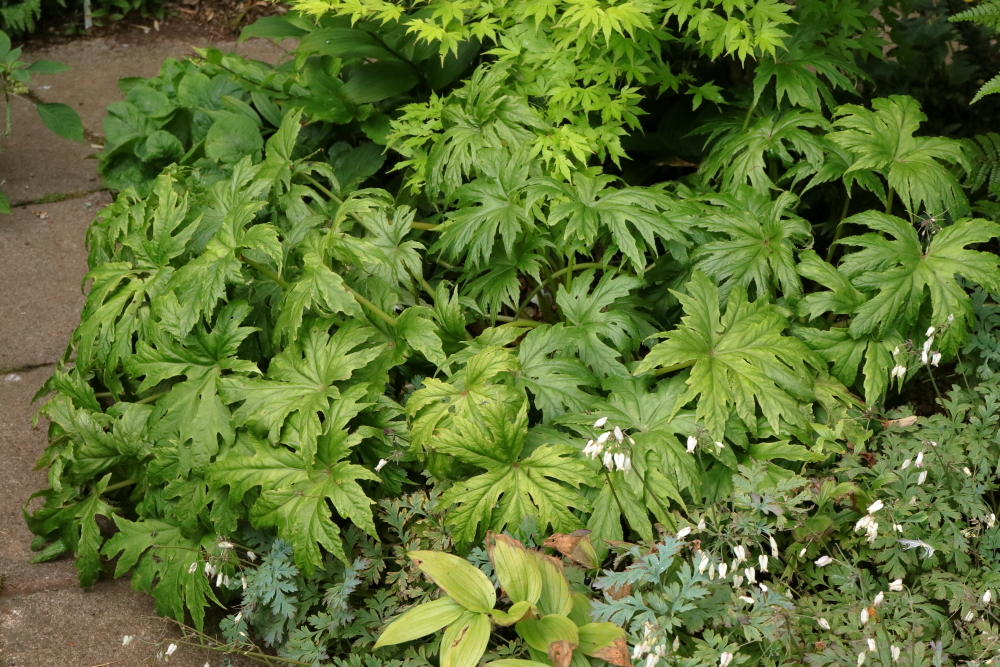
Begonia palmata.
I purchased a plant from a stand at the Royal Cornwall Show which was simply labelled Begonia palmata. I have had B. Palmata ‘Tie Dye’ for some years and this barely looked like it could be the same species, having green leaves arising directly from a stout soil hugging rhizome, rather than the upright clump of stems of ‘Tie Dye’. There is a slight red flush at the centre of some of its leaves, it is otherwise all green. It is now flowering, on a stem directly from the rhizome and not rising above the leaf canopy, pale pink in colour. Again this is very different from ‘Tie Dye’, which produces its flowers from leaf axils towards the top of its stems.
Farmyard Nurseries list four forms of B. palmata, including ‘Tie Dye’, and they are very different from each other. The International Database of the Begoniaceae lists a ‘Tie Dye’ but it is a completely different cultivar. Confusion reigns.
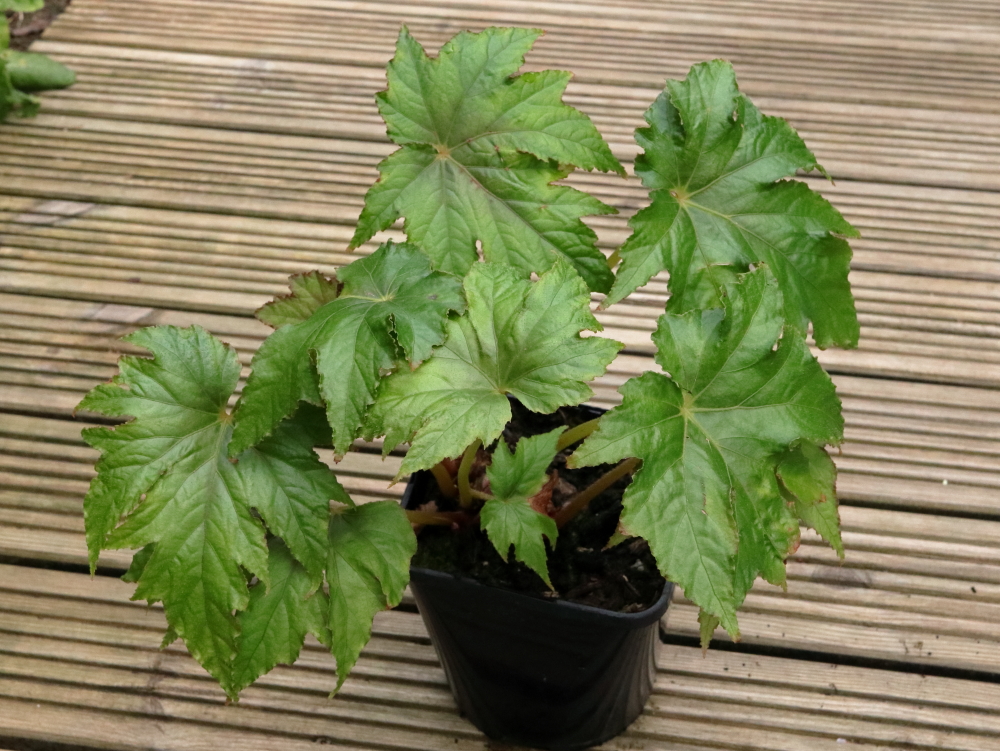
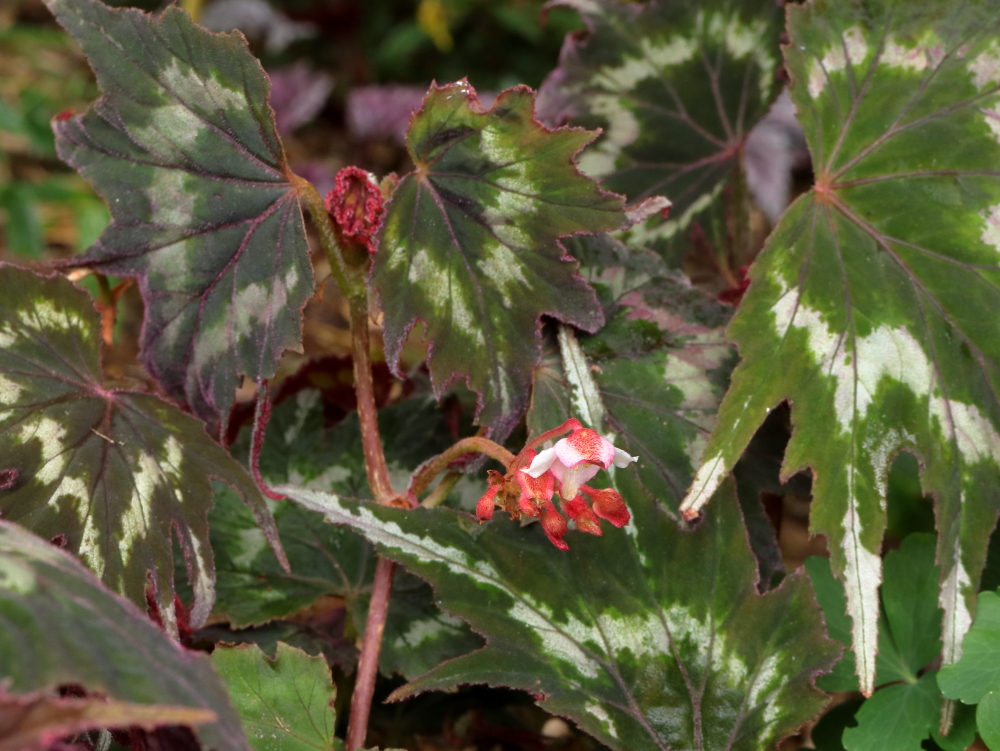
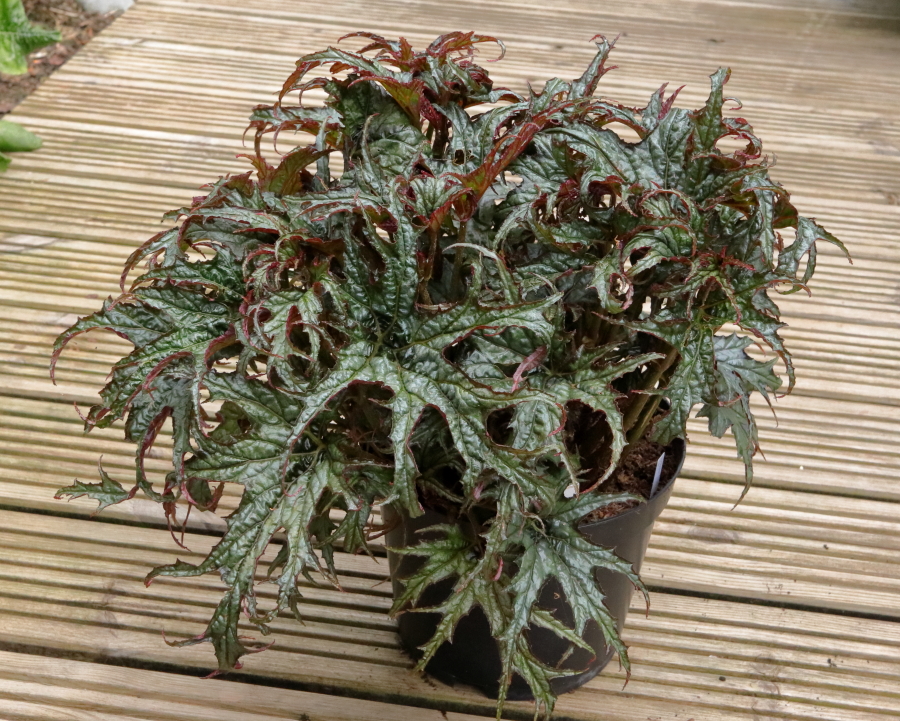
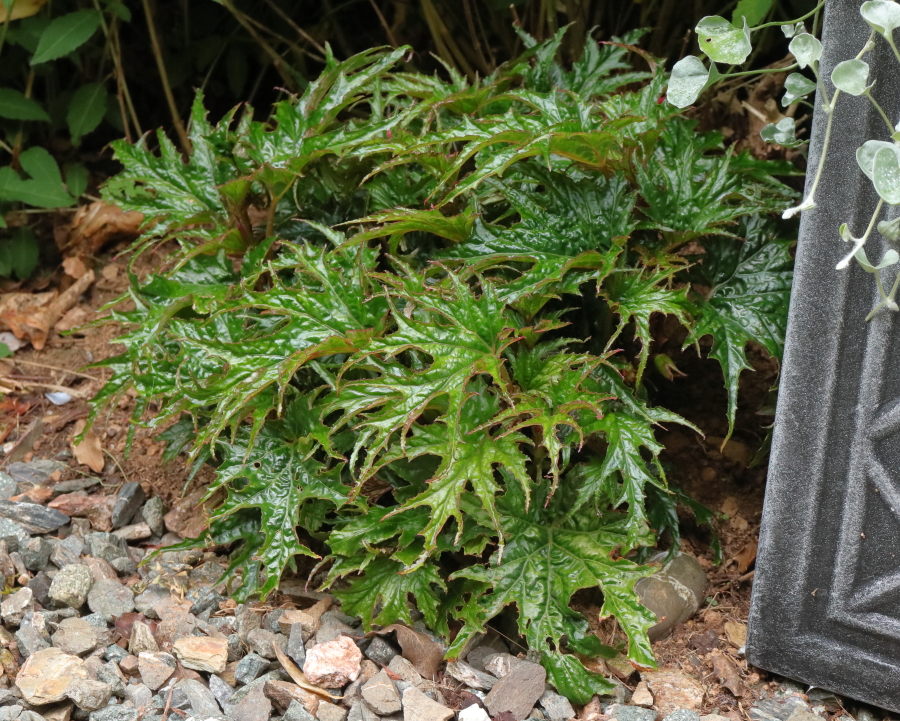
Begonia U614
I grew a few seedlings from seed of the unidentified species U614 a few years back and they show a considerable degree of variation. I have planted a green leaved form in the garden and will leave it out this winter; I expect it to survive without difficulty. My favourite of the batch I have labelled U614/4 and it has leaves that are a little more finely dissected than the original, a little more silvery with the edges rolled up to give a glimpse of a purple-red underside. It isn’t radically different from its parent but certainly good enough and distinct enough to keep going and evaluate over a longer period. I don’t currently see it as distinct enough to warrant giving a clonal name.
I presume that Michael Wickenden’s original introduction of this species was by seed, in which case there may be multiple forms of it in circulation, with the form I originally obtained being one among many. If he introduced it as a single clone, or selected just one seedling to distribute from his nursery then my original plant should be the same as his introduction.
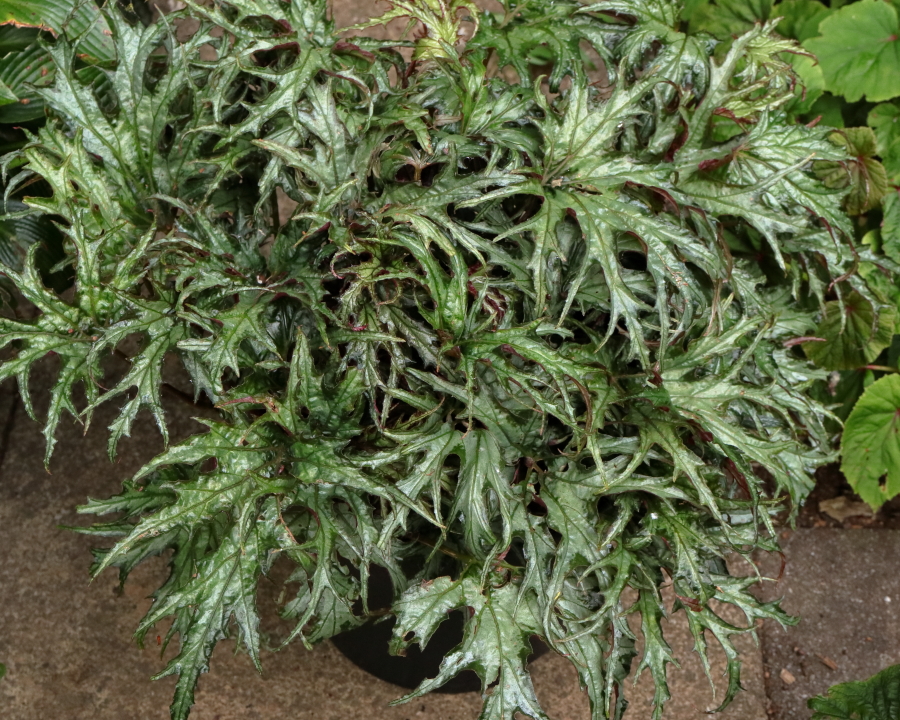
Begonia heracleifolia
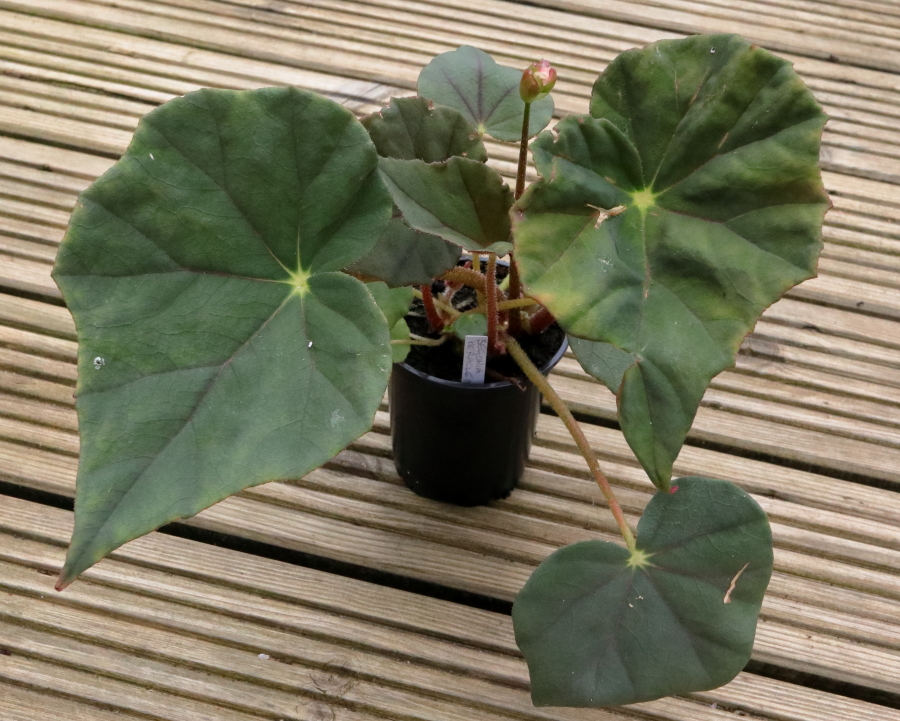
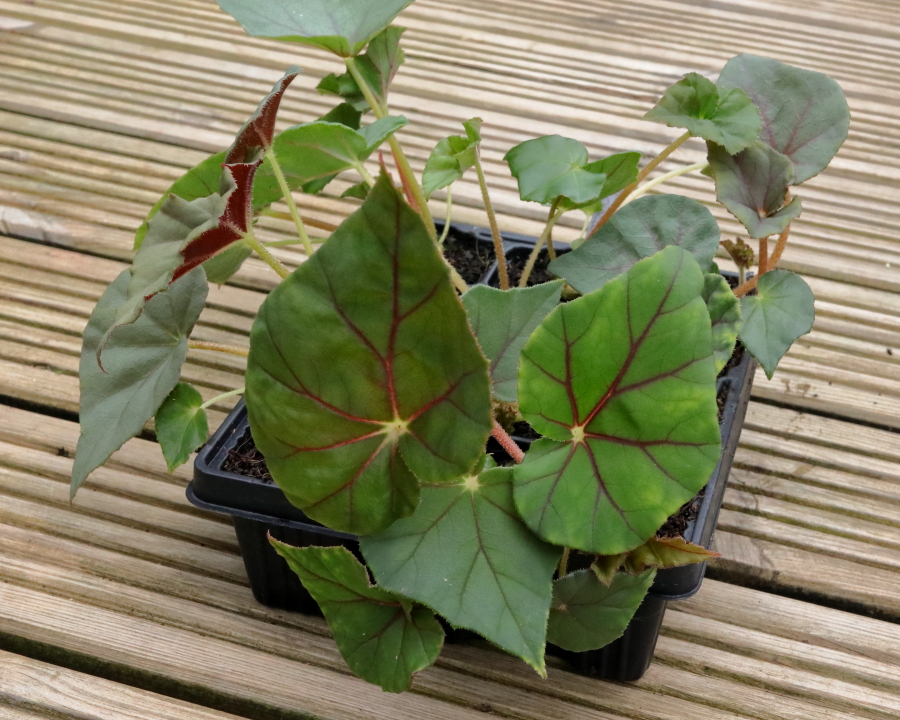
I sowed seed from Plant World Seeds on 16/5/2023, got a good germination and nursed the seedlings through the winter before potting some of them up in spring 2024. Plant World claim it to be reliably hardy to 15°F (-9°C) but I will be treating that claim with caution, not to say some scepticism. As with the U614 seedlings, there is enough variation to make me want to grow on several plants for evaluation. The largest seedling already has a flower stem developing. A rogue seedling of something completely different, still a Begonia but more like a cane type, is also growing on so that I can see what it does.
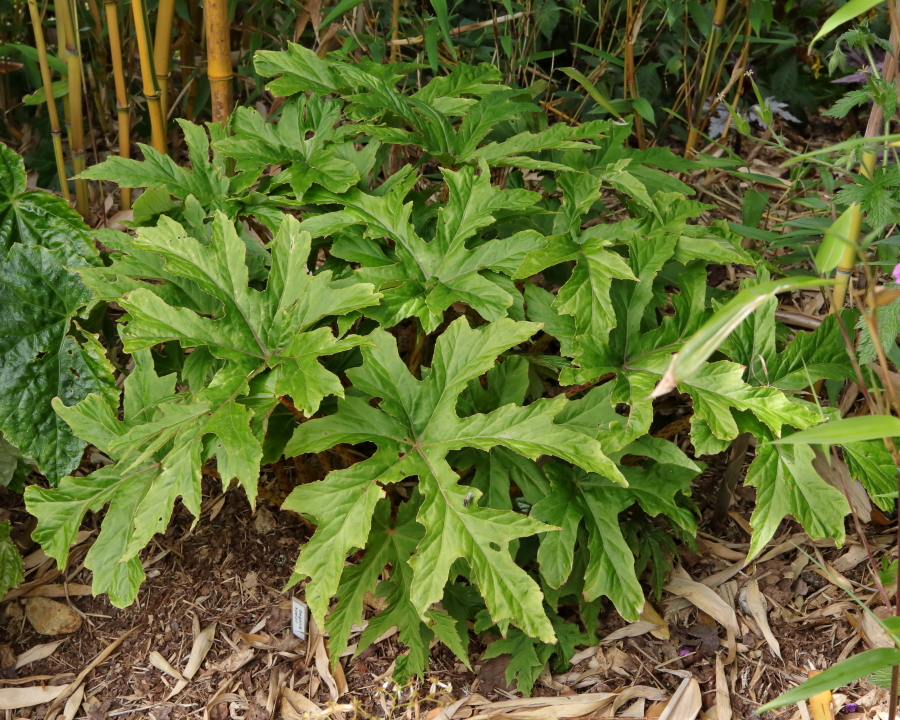
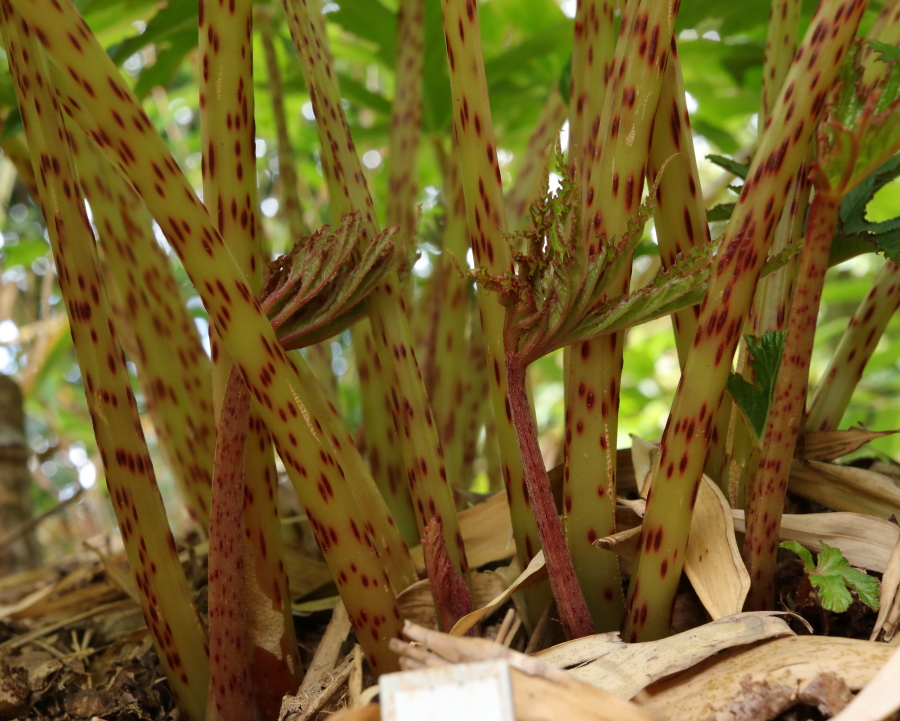
Begonia koelzii.
The foliage of my plant of this is similar to the aforementioned B. pedatifida ‘Appalala’ but more deeply lobed and somehow sharper in outline. Red spotted petioles, though largely hidden below the leaves, make looking more closely worth the effort. It produces bulbils at the point where the leaf blade meets the petiole and they quickly grow into plantlets during the growing season. If they form very late they stay as bulbils, fall to the ground with the collapse of the leaves and start into growth in the following May. The plant itself, for all its similarities in appearance with B. pedatifida, doesn’t start into growth until May and progresses very slowly for some weeks. I have my plant growing under a large bamboo where it can get very dry and it still needs less supplementary watering than B. pedatifida. It was protected with a covering of leaves in the same way as B. pedatifida ‘Apalala’ and B. emeiensis but unlike them was not tempted into growth in the middle of winter, making it rather easier to manage.

Begonia ‘Garden Angel Blush’.
It’s hard to believe how good this was in late 2022, given the struggle I have had since to get it to survive and grow at all. I left plants in the ground last winter, protected with a covering of leaves, and while they survived, they didn’t start to make growth until early June and have made painfully slow progress in the month since. A plant I lifted and overwintered in the greenhouse is scarcely any better. Perhaps I need to propagate new plants every year and keep replacing the old. At its best it was so good that I would really hate to give up on it. Certainly it seems that overwintering it in the ground is not a recipe for success.
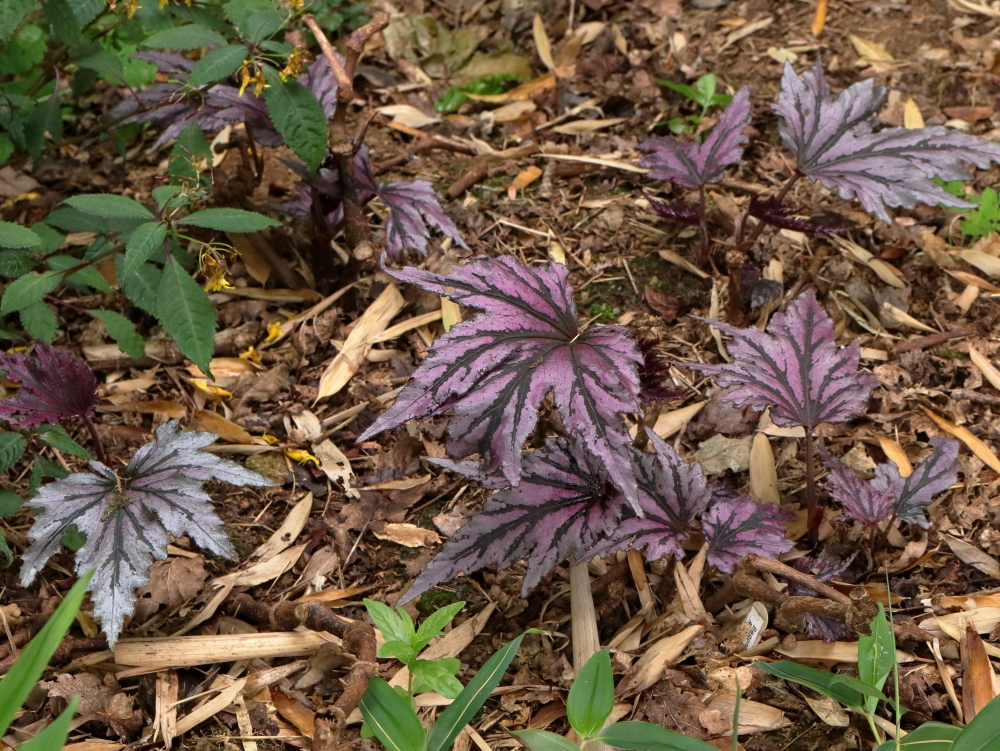
Begonia ‘Spacestars Maia’
This was one of two I bought at a local garden centre, the other being ‘Spacestars Avior’. It is doing well; I have planted it out and it looks quite similar to ‘Garden Angel Blush’. Its label describes it as good as a houseplant or for outdoor summer display. Visually I am currently thinking that it looks a bit too much like a houseplant that has been inappropriately planted in the garden. It doesn’t altogether blend in; the colour a little too strident, the habit compact to a degree that looks unnatural. I’m wondering whether ‘Garden Angel Blush’ pulled it off just a little better, perhaps because its growth is more open? Perhaps it is a matter of getting the location right, though I’m not sure what that would entail. Maybe the plant was treated with something to shorten the internodes and will grow out of it? ‘Spacestars Avior’ was slower to make fresh growth and when it did was struck with mildew. On being moved outdoors the mildew disappeared but so did most of the affected leaves .
The Spacestars series seem to be from a Dutch company called Beekenkamp Plants and to comprise 13 varieties.

Begonia grandis ssp. chinensis BWJ8011A ‘Red Undies’
Crûg Farm Nursery, who originally collected this in China, have BWJ8011a listed as Begonia sinensis and BWJ8011 as Begonia sinensis ‘Red Undies’.
This was a star last autumn and I hatched plans to have it make a big clump under the bamboo. Unfortunately by mid June there was still no sign of it. I decided it had died and dug around where it had been, finding three seemingly sound, but dormant tubers. These I potted individually but I’d not lifted them carefully enough to be certain which way up they needed to be and it was not at all obvious from the corms. After a couple of weeks I turned them out again to find two had rotted and one was beginning to shoot. I may well have planted them upside down. The original plant had produced large numbers of bulbils in its leaf axils but they were so tiny I judged the chances of them surviving through to spring to be minimal and didn’t collect any. They are now starting into growth all around the plant of B. ‘Tie Dye’ that I have planted to fill the gap. I have lifted and potted a dozen of them but suspect there will be very many more. It maybe needs to be sharing a space with something that is leafy in winter and spring then dies down for summer and autumn. And I need to learn to be patient.
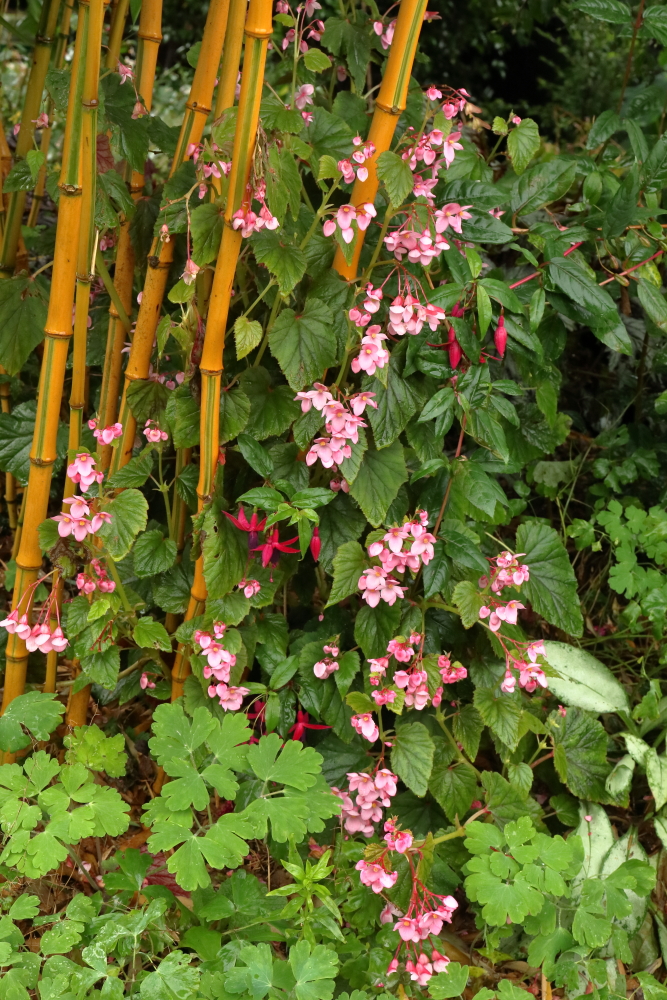
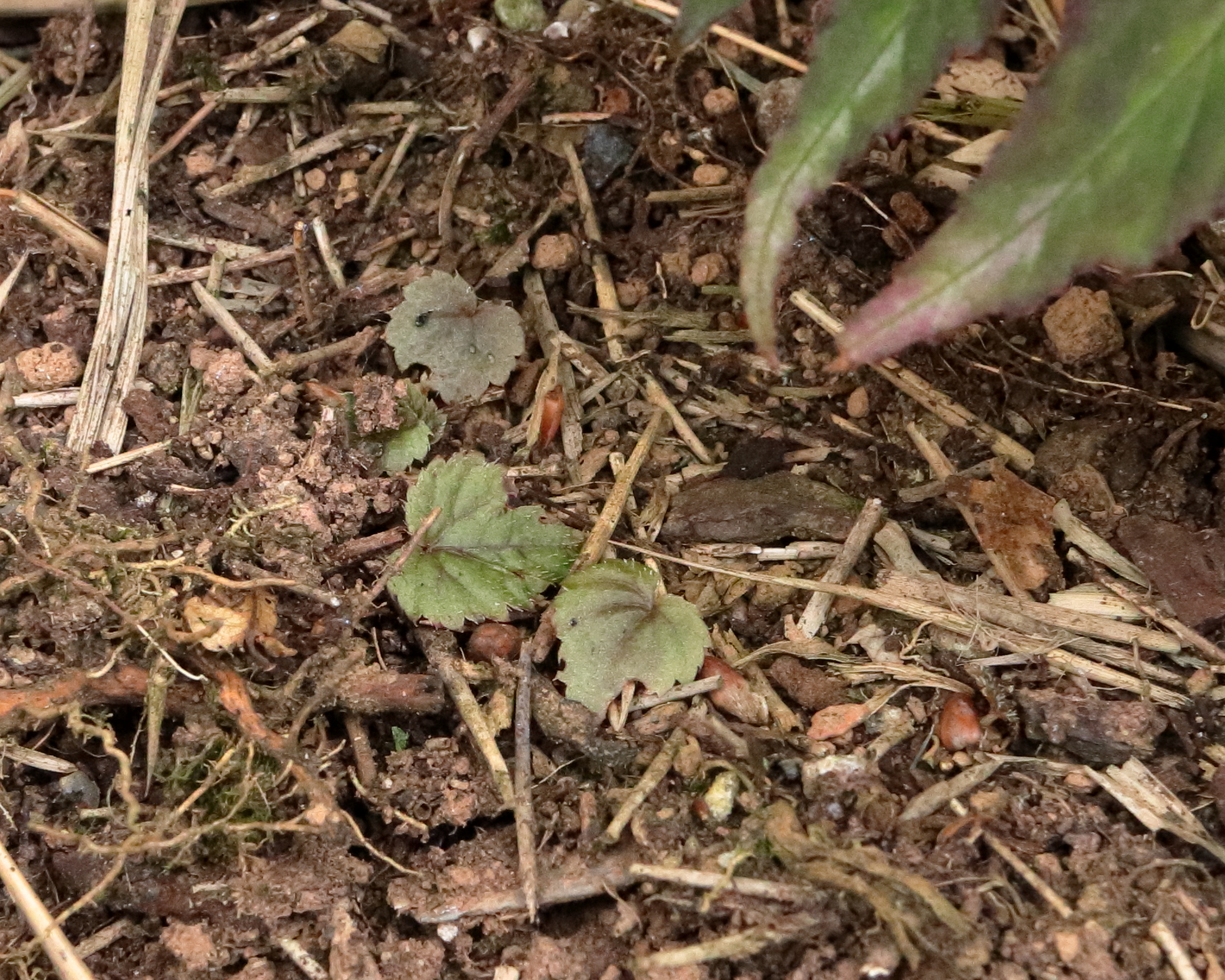
Begonia grandis ‘Heron’s Pirouette’ and Begonia grandis ‘Sapporo’ have given me no such headaches. ‘Sapporo’ is excellent, with strong red undersides to its leaves. ‘Heron’s Pirouette’ has produced a dense carpet of plantlets from the copious number of bulbils it produced in the autumn and threatens to be somewhat invasive. As forms of Begonia grandis go I regard it as undistinguished.
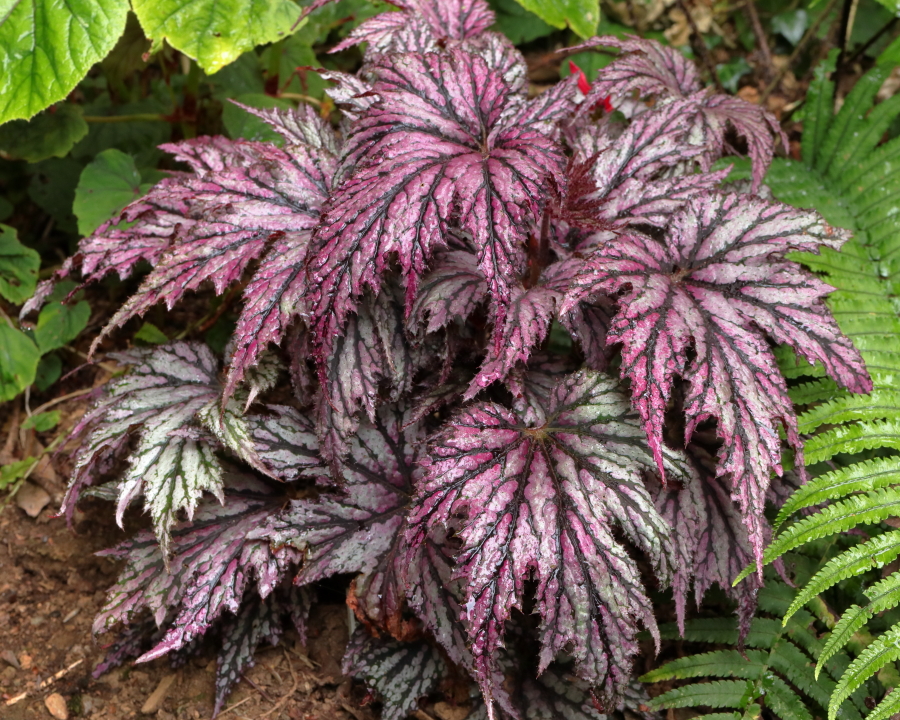
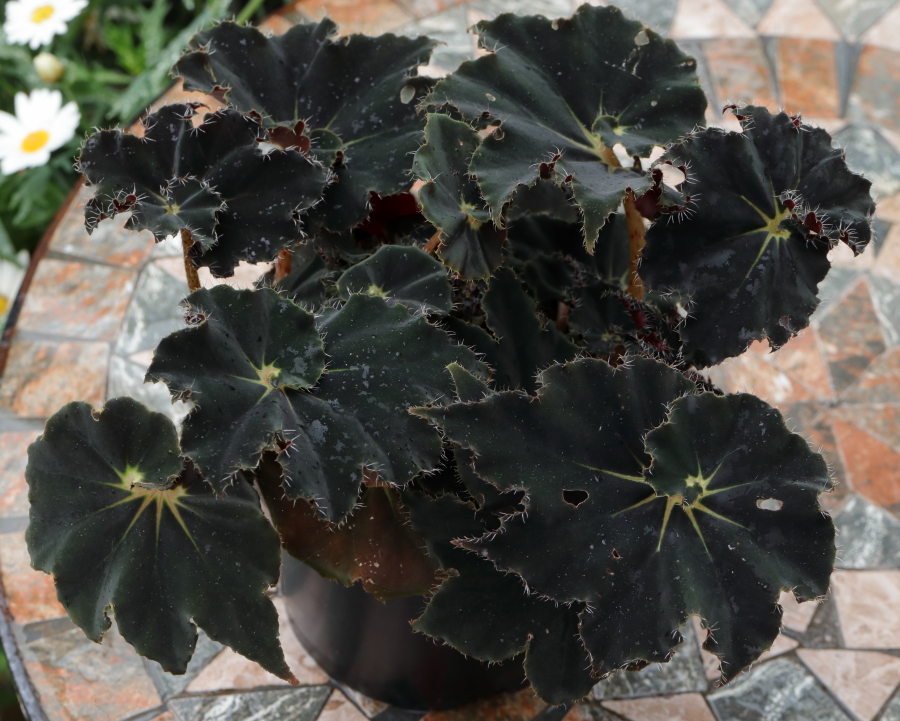
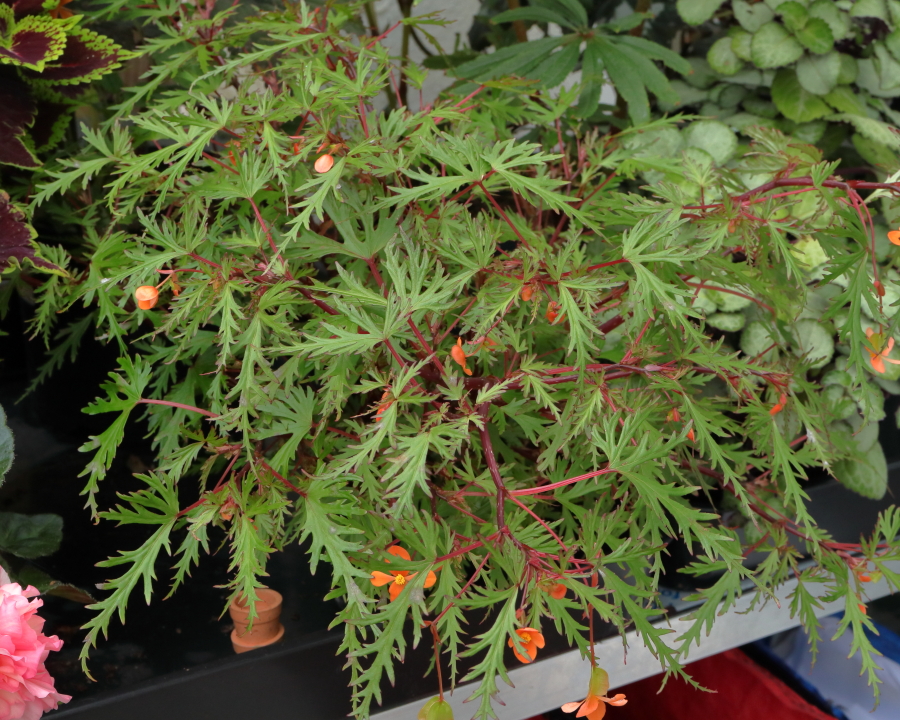
Enough already! Here are some pictures of a few more from my still growing collection of this extraordinarily varied genus, all taken in the last few minutes.
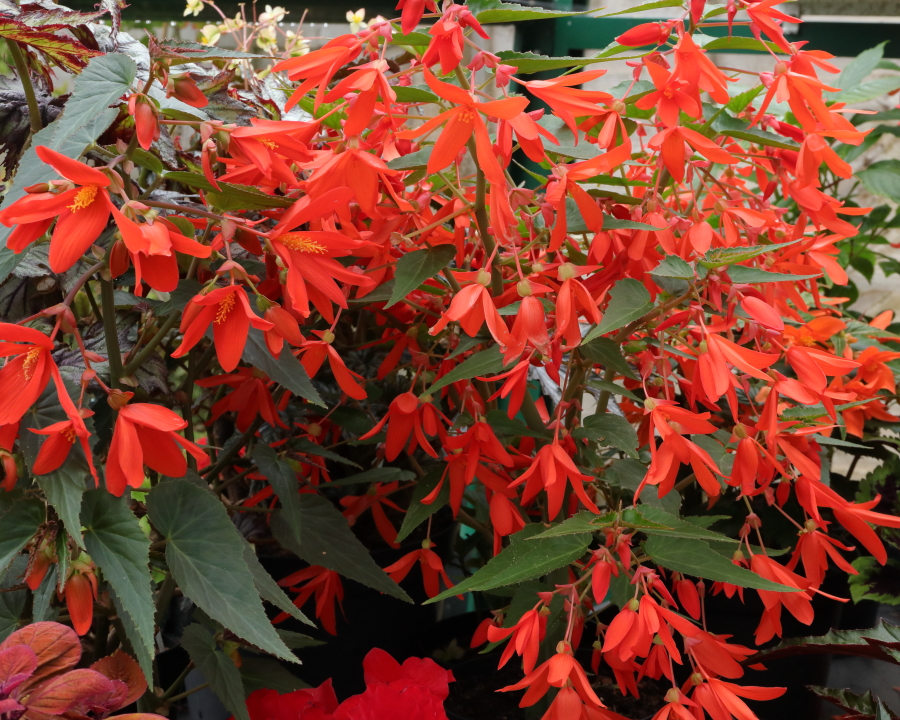

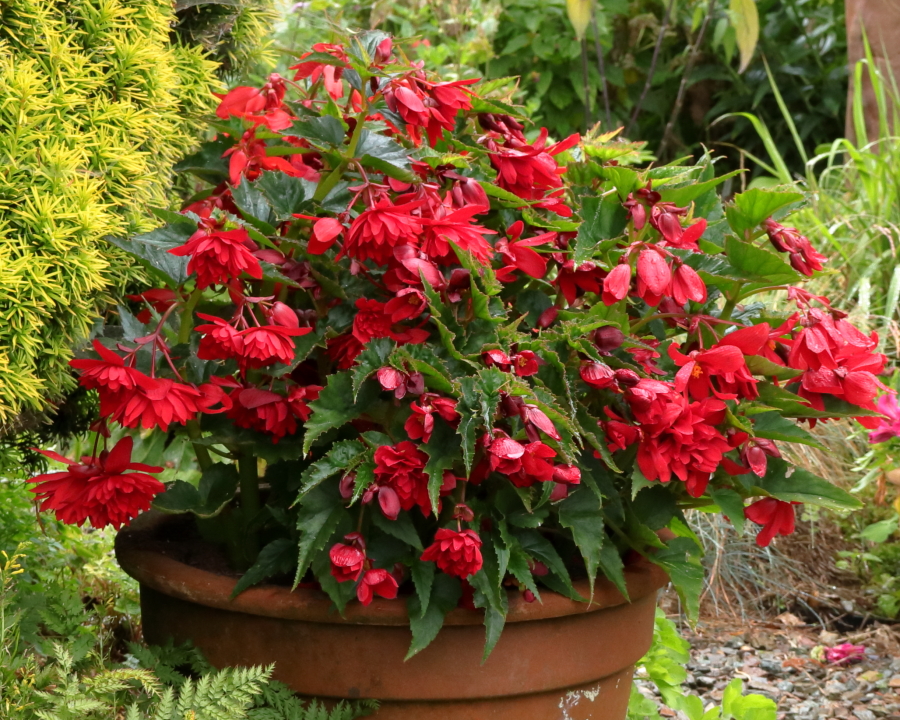
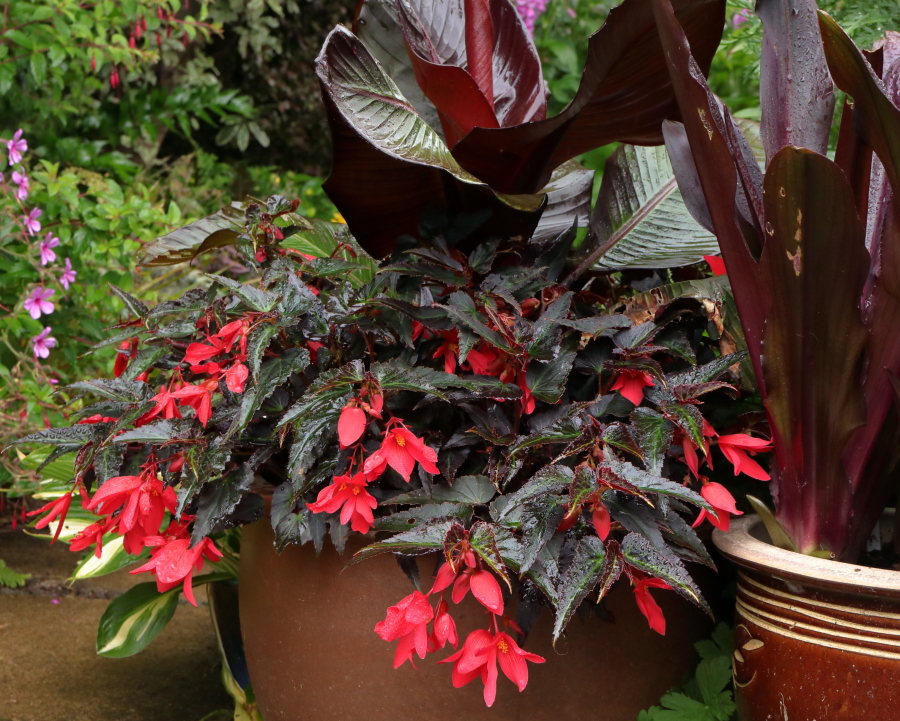


 garden ruminations
I love the one with the almost black foliage, you’ve got a nice collection!
LikeLike
Oh, I think we all need to learn to be patient. 😉 Thanks for sharing all your experience with Begonias. The foliage on some of them is stunning. I need to grow more.
Beth@PlantPostings.com
LikeLiked by 1 person
What is the fourth of the last eight?
LikeLiked by 1 person
The plant in the middle has a label saying ‘Minstrel Orange’ and I think it was just a bedding plant purchase where we bought half a dozen and they were all slightly different, so presumably seed raised. The plant on the left has slightly bigger flowers of a slightly stronger colour and was bought as Begonia boliviensis ‘Santa Cruz’.
LikeLiked by 1 person
What?! You have more discriminating taste than that! We just got a copy of ‘Santa Cruz’ Begonia boliviensis last year because we felt sort of obligated to do so. It came from Santa Cruz, just a few miles from here. We are in Santa Cruz County. I suppose it is the most colorful of the three trendy cultivars of the species. ‘San Francisco’ is just dull pink. ‘Santa Barbara’ is bland white. As much as I like white, I am unimpressed with this one. Your ‘Santa Cruz’ certainly looks good, but it is not one that I expect to see in your collection.
LikeLike
I don’t know what I did to deserve the accusation of having discriminating taste. I thought my growing Alstroemeria ‘Rock ‘n’ Roll’ had buried any such notion. I’m planning on ordering some of the huge flowered tuberous Begonias for next year; if I’m going to be vulgar I may as well be big and vulgar.
LikeLiked by 1 person
‘Rock & Roll’ Alstroemeria is more distinctive than ‘Santa Cruz’ begonia! So are the tuberous begonia. That was what the Begonia Festival in Capitola was all about!
LikeLiked by 1 person
Beautiful pic
LikeLiked by 1 person