Winter equinox is now history, the days are getting longer, currently about a minute a day longer. I went out with my camera to look for positivity, signs of growth in the gloom. I’m very pleased to say that I found them, so, notwithstanding the fact that they are not at all photogenic, I picked out six for this weeks SoS outing.
One.
Hylotelephium x mottramianum ‘Herbstfreude’, aka Sedum ‘Autumn Joy’. Always one of the earliest perennials to start showing its hand for next season and with its little glaucous rosettes, not unattractive even so far away from flowering. Some carpeting alpines look quite similar much of the time. It was Chelsea chopped last year and will get the same treatment this year, perhaps a week earlier.

Two.
Clematis always surprise me with how early they start to make new growth and how resistant to cold and wet it turns out to be, such that come February I find myself cutting away shoots with 6-12 inches of new growth. This is Clematis viticella ‘Polish Spirit’, growing up a Magnolia, which is leading the pack.

Three.
It’s not just autumn sown annual sweet peas that are happy to grow in winter. I planted Lathyrus grandiflorus a few years back and it has spread all over the place. Shoots, some as much as a foot tall already, are popping up and will sprawl over whatever they can find to support them. So long as they are not smothering anything, I’m happy to let them, it’s a plant that’s tough enough to just rip out any inconvenient bits with no fear of losing the whole thing.

Four.
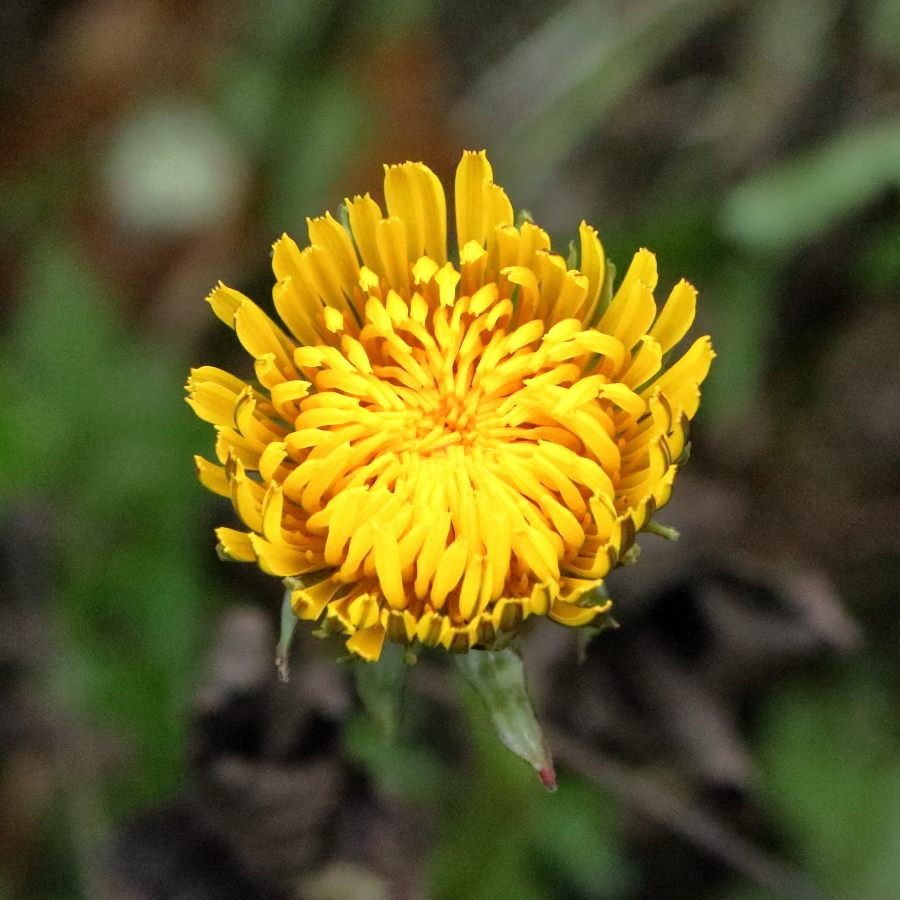
Not all plants are equal. Or is it plants are not all equal? If this dandelion thinks it can wheedle its way into my affections by flowering on the shortest day then it has got it all wrong. I’ve largely stopped regarding them as a particularly bad weed on my allotment, I just periodically slice off the rosette of leaves with my hori-hori so they rarely flower, shred it and call it mulch. In the garden I will probably do the same if digging it out is made tricky by other plants being too close. Taraxacum officinale, so that I have something to italicize.
Five.
This Camellia grijsii is all about things to come, in that this is the first bloom of the season and it has been wrecked by the wind we’ve had the last couple of days. The plant is pickled with buds though, promising a couple of months of not especially showy small flowers with possibly the strongest perfume of any that I know of as hardy in the UK.

Six.
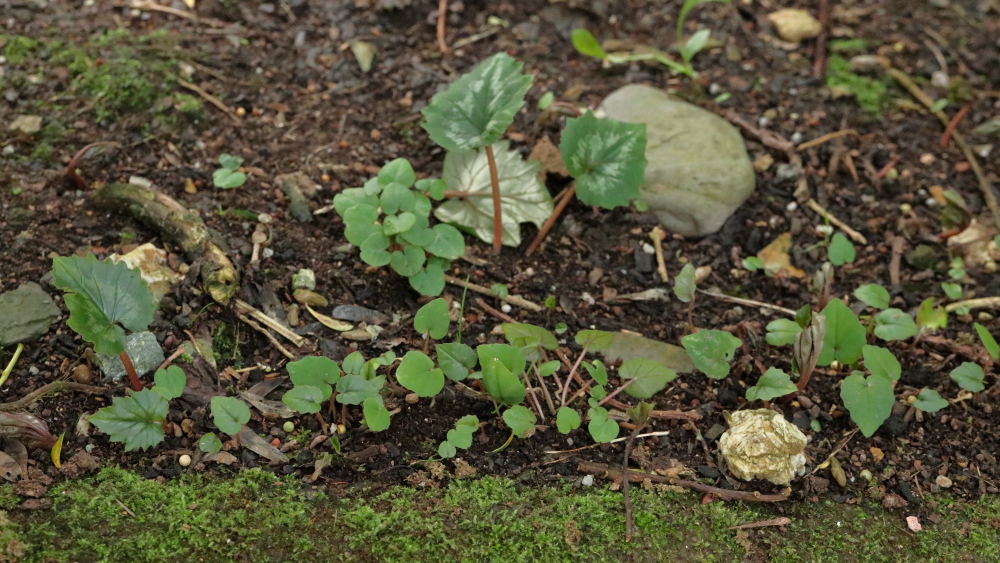
Last but not least, Cyclamen repandum. This is a spring flowering species the leaves of which come up at the turn of the year. It lends itself to growing where other things will occupy the same space all summer, not least because it is happy to have its corms buried quite deep, to six inches or so down. The plants that produced the seed that has germinated here have not themselves been there very long and haven’t produced a massive flower display, so the germination rate on the seeds must be excellent. I must make more of an effort to harvest some pods before the seed is dispersed so that I have more control over where they end up.
There you have it. I followed the rules participant guide, got my six done. One more to see the year out, then into 2024. Shaping up to be a consequential year, more so than some of late. It’d be a good year to join our little band of well grounded gardening folk and doing so couldn’t be easier.

 garden ruminations
Nice job on finding all the new growth at this time of year! Happy Holidays!
LikeLiked by 1 person
Isn’t it curious that we can look at a photograph of ‘Taraxacum officinale’ and think it’s a pretty flower, until we realise it’s a dandelion?!! I have not noticed new growth on anything in the borders yet, but there are new shoots on several of the viticella clematis. Thanks for hosting – I have been busy (not unusual!): https://ramblinginthegarden.wordpress.com/2023/12/23/six-on-saturday-god-rest-ye-merry-gentlemen/
LikeLiked by 1 person
I finally got here! The Camellia flower is still beautiful and deserves a medal for braving the windy weather. Wishing you and Sue a very Happy Christmas Jim and thanks for hosting.
LikeLiked by 1 person
Merry Christmas Jim and thanks for hosting SoS. See you in the new year!
LikeLiked by 1 person
Signs of life are well worth celebrating this gloomy time of year. Merry Christmas, thanks for hosting and here’s my contribution for this week: https://stoneyknob.wordpress.com/2023/12/23/six-on-saturday-happy-holidays-2023/
LikeLiked by 1 person
Wonderful dandelion photo, a weed I live too far south far and do not miss. What a difference a minute makes! Thanks for hosting and Happy Christmas. https://theshrubqueen.com/2023/12/23/six-on-saturday-gifts-from-the-garden-2/
LikeLiked by 1 person
I’m guessing you’re not short of things to plug the yawning gap left by a lack of dandelions. Looking out the window just now that extra minute isn’t making as much difference as I’d like! Drizzle.
LikeLiked by 1 person
Yes, we have crabgrass for every season.
LikeLike
Wonderful signs of new life! Yes, the days getting longer is definitely something to celebrate. The early Clematis buds always amaze me, too. Most years, I’d be way behind you, but this El Nino year is very warm, even for us in the Upper Midwest U.S. Happy Holidays!
LikeLiked by 1 person
Wishing you and Sue a happy Christmas and thank you for being such a wonderful SOS host this year Jim. Hopefully I will get to visit your garden next year!
LikeLike
Thank you, and a very happy Christmas to you too. I’ve said it before and I’ll say it again, don’t feel you must come on one of our garden openings, you’d be welcome any time you’re passing.
LikeLiked by 1 person
You have quite a lot going on in your garden, Jim, and I love that you included the Sedum buds and dandelion. Sedum is such a rewarding plant and I sometimes forget its winter promise. Our Clematis, growing against a brick wall on the patio, is showing a bit of new growth, too. It is always very optimistic. But it is a long time yet until spring. In some ways our summer flowers still linger, even a sheltered Lantana which amazes me every morning with its persistent flowers. Here are my six for the week: https://woodlandgnome.wordpress.com/2023/12/23/six-on-saturday-solstice/ Merry Yule to you and yours!
LikeLiked by 1 person
Happy Christmas Jim, and thanks for starting off the party with a Six Pack. The picture of the dandelion flower is so perfect it transcends its weedy reputation. Here are my six this week: https://noellemace.blogspot.com/2023/12/six-on-saturday-its-nearly-christmas.html
LikeLiked by 1 person
Happy Christmas and best wishes for 2024! The solstice is always an exciting date for me, because as soon as the days start getting longer plants start flowering in the heated greenhouse, no matter what the weather is like outside.
My garden is still mostly asleep, so the six for today are photos taken earlier in the year that didn’t make it into any previous blog post.
LikeLiked by 1 person
Happy Christmas everyone. Looking forward to the long days and signs of Spring.
LikeLiked by 1 person
Happy post solstice pre Christmas Six on Saturday! I was poking around yesterday and while I did not take any pictures, I see that the columbine leaves remain green. It is unseasonably warm, high of 12 C today. Rain in the forecast, but as you say, the days are getting longer again, if imperceptably for now. Nothing but houseplants from me today!
LikeLiked by 1 person
Those are beautiful photos. It is difficult to find worthy photos this time of year, but it forces you to look more closely. This is my last post for 2023. Merry Christmas and Happy New Year.
LikeLiked by 1 person
My goodness – our gardens couldn’t look more different at this time of year! Aside from the dandelion that is – as our snow melted earlier this week I spotted a yellow thingy in the grass looking vaguely similar to the one you picture. Merry Christmas!
LikeLike
I think I commented elsewhere that I find it hard to imagine gardening coming to a complete halt with months of snow cover and/or frozen ground. It slows down here, but never entirely stops.
LikeLike
Really nice photo of that dandelion; surely its brightness deserves a little smile if not outright affection. I, too, have a few camellias in my six today, https://aftereden.blog/2023/12/23/six-on-saturday-23-december-2023/
LikeLike
Dandelions must be one of our showiest wild flowers as well as one of most troublesome weeds. A popular line with their defenders is that they are an important nectar source for insects, but I’ve rarely seen any on them. Admittedly that might be down to lack of insects and not the dandelion’s fault. I don’t have a love/hate relationship with them, more a fellow traveller relationship.
LikeLiked by 1 person
I laughed that you were happy to have something to italicize. Love your way with words!
LikeLiked by 2 people
This clematis caught my eye this week. As well as the pretty serrated leaves of this cyclamen. For my part, I couldn’t resist the call to post a little something… https://fredgardenerblog2.wordpress.com/2023/12/23/six-on-saturday-23-12- 23 /
LikeLiked by 2 people
Lovely signs of new growth and the promise of things to come next year. I’ve never seen any seedlings from my Cyclamen repandum, must try saving the seed in future. All good wishes to you and yours for Christmas, many thanks for organising us, my six are here……..https://www.leadupthegardenpath.com/
LikeLiked by 2 people
You just reminded me of perennial peas we grew at Cliffe, I can’t remember which but I wonder if grandiflora was one? Something to keep in mind for the future. I love the camelia “pickled” with buds. Happy Christmas to you and yours Jim, hope it is a good one. Here are mine https://offtheedgegardening.com/2023/12/23/six-on-saturday-twas-the-sos-before-christmas/
LikeLiked by 2 people
Hi Jim. I have found the same with Lathyrus grandiflorus, spreads everywhere but never flowers! One more year and then it’s out! Here are my Six. https://davidsgardendiary.com/2023/12/23/six-on-saturday-109/
Merry Xmas
LikeLiked by 2 people
I wouldn’t stand for Lathyrus grandiflorus if it didn’t flower. Good luck with getting rid of it, if that’s what it comes too.
LikeLiked by 1 person
I’m wondering why a straightforward Sedum needed to be rebranded to Hylotelephium? It’s a bit of a mouthful.
Could Cyclamen coum could be planted deep? It’s being dislodged when clearing nearby annuals.
Happy Christmas 2023 to one and all
LikeLiked by 3 people
A great herald of what is too come. Wishing you and Sue a very happy Christmas and the very best for your consequential year to come! Thank you for hosting so wisely and generously.
LikeLiked by 3 people
A simple rule that no new name may be longer than the one it replaces would help. Cyclamen repandum seems to be the only cyclamen species that is happier when planted deeper. My self sown C. coum all stay right on the surface but are usually under a carpet of leaves.
LikeLiked by 2 people
Many thanks, Jim. I went out to check… It’s peeping though from beneath dead annuals. ☑️
LikeLiked by 2 people
I needed to look up Lathyrus grandiflorus. (Your posts sometimes compel me to look up something unfamiliar.) The description seems to be similar to that of Lathyrus latifolius. The floral color is different. Lathyrus latifolius is naturalized here. It can be nice, but often gets into situations where it is not wanted. I want find a white specimen. I grew a few copies a few years ago, but those in cans rotted with all the rain last year. I did not mind because I could always grow more. . . . However, the original specimen was buried by a mudslide. I must now find another.
Gee, I do not mean to leave such long comments. These are my six:
LikeLiked by 2 people
Your posts get me looking things up often enough, glad to get my own back for a change. L. latifolius comes in pink, red and white but grandiflorus only in strident magenta; that’s the sum total of my knowledge, assuming I’m right. Is it even knowledge if it’s wrong?
LikeLiked by 2 people
Yes, if you ‘know’ it, even if wrongly so, it is ‘knowledge’. Lathyrus latifolius is almost always that weird magenta pink here. It is only rare white or lighter pink. I have not yet seen it in red. I really like the white, but also like the magenta pink because it is familiar. I relocated some of the white closer to the garden here, but a mudslide buried it last winter. I must find some more now.
LikeLiked by 1 person
It’s exciting to find signs of new growth at this time of year and there’s something particularly pleasing about the new shoots of a Sedum. It’s a pity fragrance of that Camellia can’t be shared digitally https://onemanandhisgardentrowel.wordpress.com/2023/12/23/six-on-saturday-23-december-2023-a-christmas-one/
LikeLiked by 2 people
Well done on finding so much new growth, that’s always an encouraging sign in the winter garden. I’m just about to head out to do the supermarket battle as it’s time to get Christmas food into the house. I’ll catch up with everyone later in the day.
Meantime, this is my effort – I’ve had to bend the rules a bit.
LikeLiked by 1 person