Fuchsias are really easy to grow and trouble free except for Fuchsia rust, Fuchsia gall mite, Fuchsia flea beetle, capsid bug, apple moth, vine weevil and whitefly. They also don’t enjoy being very hot and dry.
There was a time when the only concern anyone ever had about them was whether they were hardy; no longer. It really has reached the point now where it is becoming questionable whether they are worth growing at all. Gall mite, if left unchecked, puts it beyond questionable.
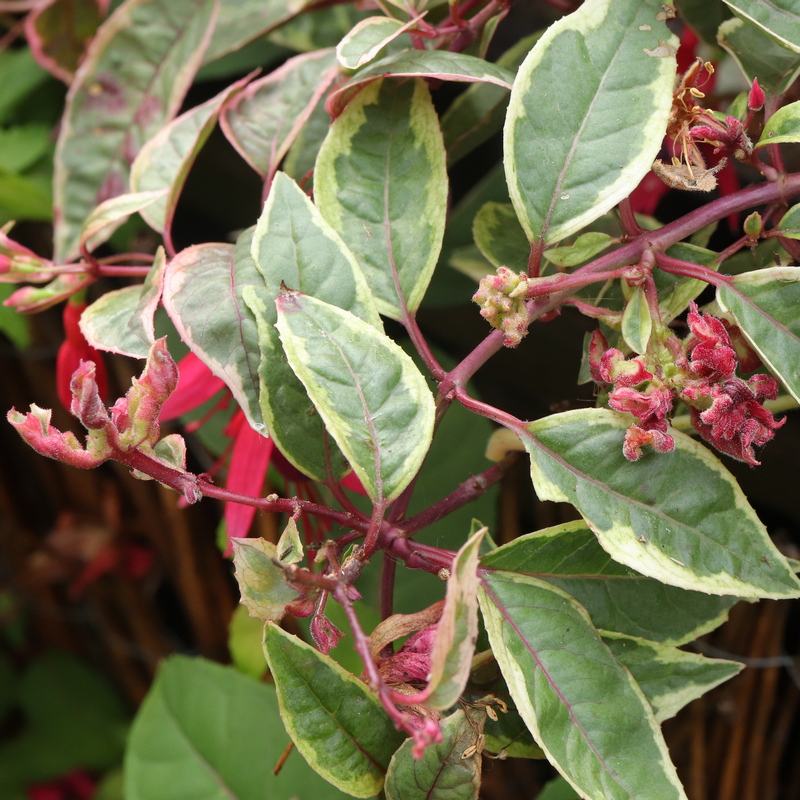
We have about fifty varieties growing in pots and a similar number growing in the garden. Gall mite appeared on one in the garden some years ago. I cut the affected shoots six inches or so behind the infection and binned it, then checked the plant every day for weeks to see if it reappeared, which it didn’t. The next outbreak was two years later, the same procedure was followed and again the problem vanished. The following year it was back on a number of plants and was not so easily contained. It has appeared every year since and gets worse each time.
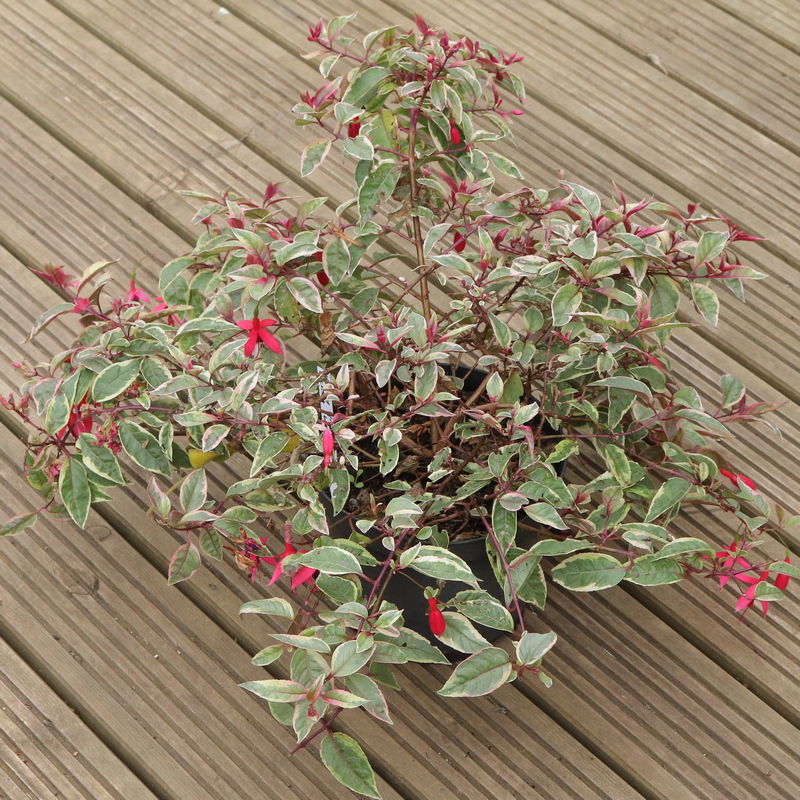
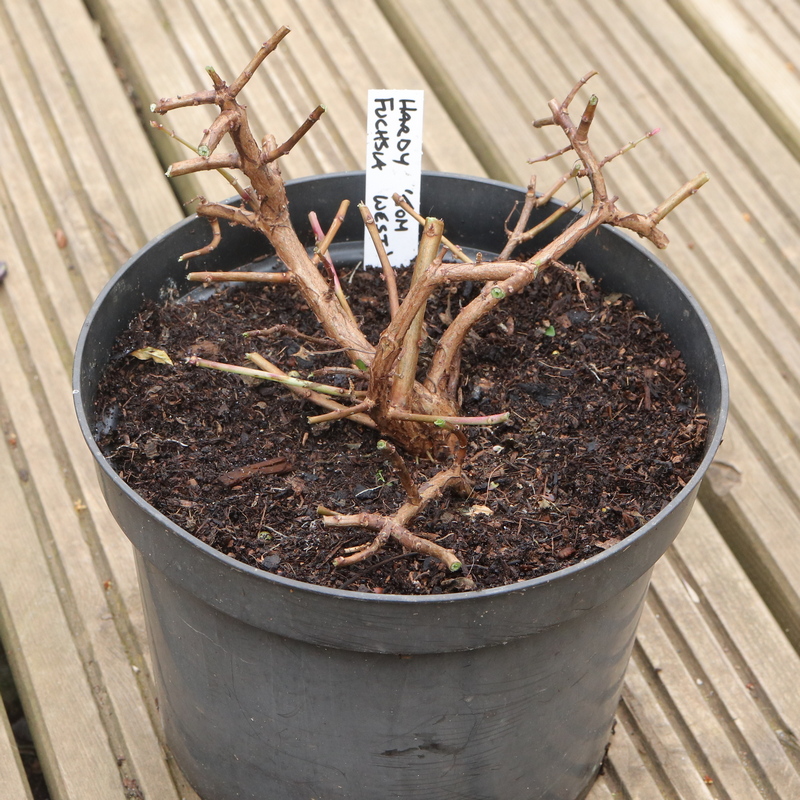
In the garden I have been cutting almost all the plants back in autumn and cleaning around them. I’m hoping that several months with no food supply will inconvenience them. The only plants not hard pruned are the “climbing” ‘Lady in Black’, where I don’t want to start from ground level to cover a large trellis area, and F. microphylla, which is usually in full flower in the last two or three months of the year and which so far has been unaffected. All the pot grown plants get cut back hard before going into a greenhouse or polytunnel for winter.
It has been midsummer before we have started seeing symptoms and unfortunately it is all too easy to overlook. The first affected shoot sparks a frantic search of all our plants and invariably more is found. If it is one or two shoots then I remove them, if it is over a considerable part of the plant I cut it back hard and carefully defoliate it before putting it in a glasshouse to reshoot. I have not needed to be so draconian on a plant in the garden, yet. A plant of ‘Grace Bell’ that I cut back and put in the greenhouse a few weeks ago has new shoots on it, some of them still infected. It has been denuded a second time. It won’t get a third chance.
Insofar as the problem is getting worse each year, I am clearly not doing enough. Whether being more vigilant and catching it earlier, or more draconian when I find it, or taking some further action, would allow me to get on top of it more successfully, I don’t know. It is much more of a problem with the plants in pots than those in the ground, which I put down to them being massed together whereas the garden plants are spread about.
I would be very hesitant to draw any firm conclusions from our experience in regard to whether any varieties are less susceptible or immune. A plant of a particular variety in one place gets badly infected while another elsewhere is unaffected. I haven’t yet seen it on any of our encliandras (those with the tiny flowers such as microphylla) even when they’ve been pot grown and adjacent to affected varieties. It may be that some varieties show little or no symptoms, which could be a problem in that they may then be a source of infection to other plants.
We have always had problems with capsid. These fast moving and elusive insects are like large aphids and feed in similar fashion, inserting their needle-like mouthparts into the tender growing tips of the plant, injecting digestive juices and sucking the mix back. As the shoots develop and the leaves expand, they are revealed to be distorted and full of holes because some bits of tissue have been killed. The bigger problem is that the shoots don’t produce flower buds. Usually, by midsummer their numbers are much reduced and flowering gets under way in late summer. Given that I am cutting the plants back hard each year, it is not delaying flowering by a great deal.
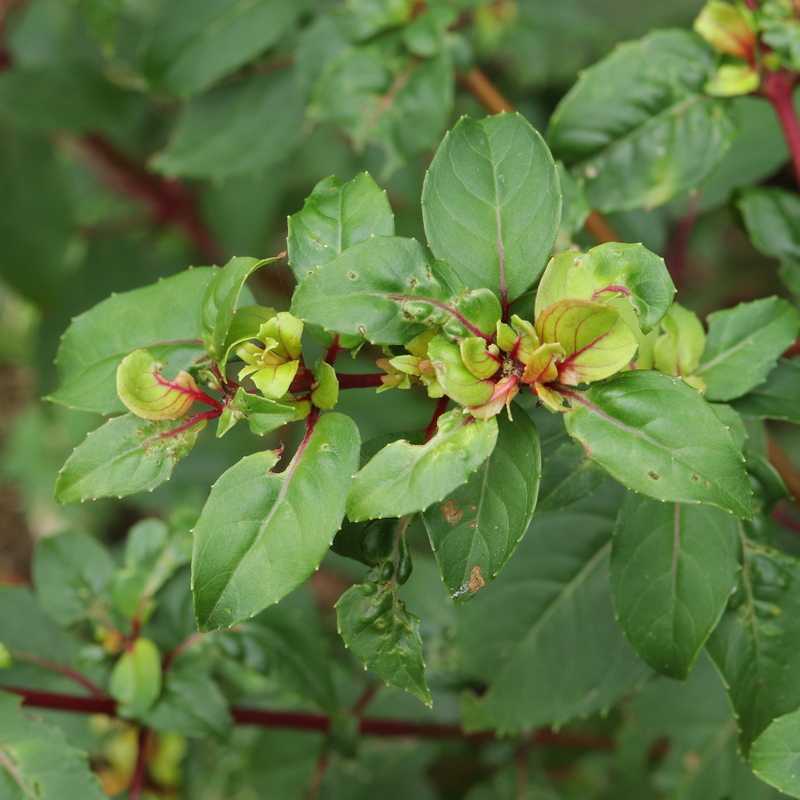
For the last couple of years the capsids have been joined by flea beetles. Fuchsia flea beetles are about 5mm long and glossy blue-black. They jump when disturbed, hence the name. Their larvae are greenish and feed on the underside of the leaves, leaving the top surface intact but doing extensive damage. It’s not clear to me where the capsid damage finishes and flea beetle damage begins. Shoot tips are killed, new growth stopped or stunted, flower bud formation severely curtailed. The worst problems seem to be in one smallish area in the middle of the garden but I don’t understand why.
We used to have a lot of conifers in the garden. There is now only one. They were never troubled by pests or diseases, just outgrew where they were and gradually got removed. They were never replaced with the same or a different conifer, always with something entirely different. I foresee the same thing happening with Fuchsias; badly infected plants getting removed, plants dying from old age, none getting propagated and all gradually being replaced with something other than Fuchsias. Perhaps time will prove some varieties to be immune, perhaps with far fewer of them it will be easier to manage as a pest. I hold out no hope of anyone coming up with a cure. Perhaps there are breeders out there who are working to produce immune varieties but that will be a long term solution at best.
The RHS website has a short list of varieties “noted as being les susceptible”, but it is too short to form the basis for replacing a decent collection. They are ‘Baby Chang’, ‘Cinnabarina’, ‘Miniature Jewels’, ‘Space Shuttle’, Fuchsia microphylla subsp. hidalgensis, Fuchsia thymifolia and Fuchsia venusta.


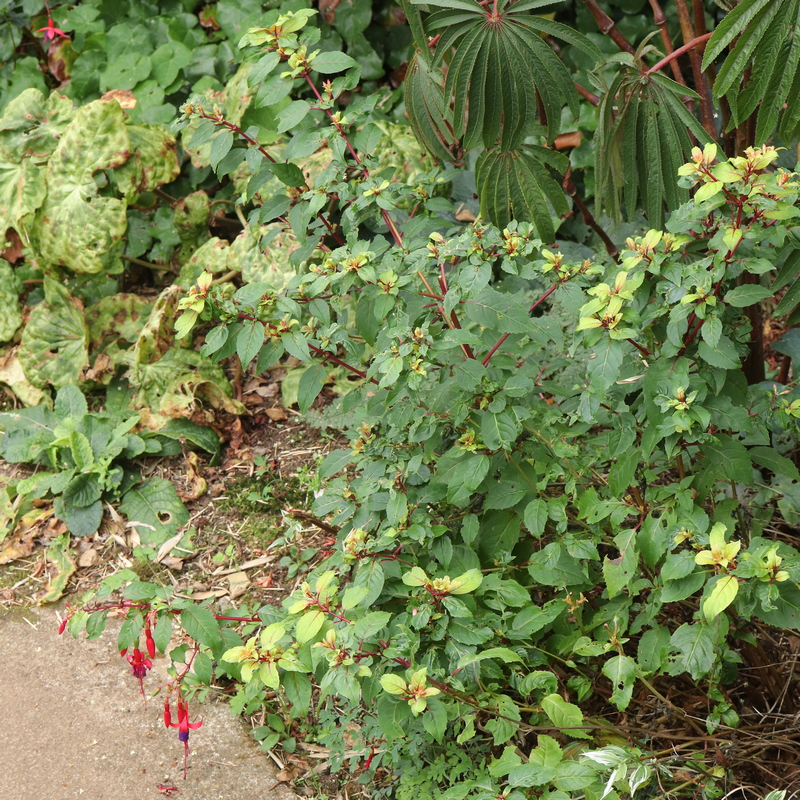

F. ‘Nunthorpe Gem’ badly affected by flea beetle. 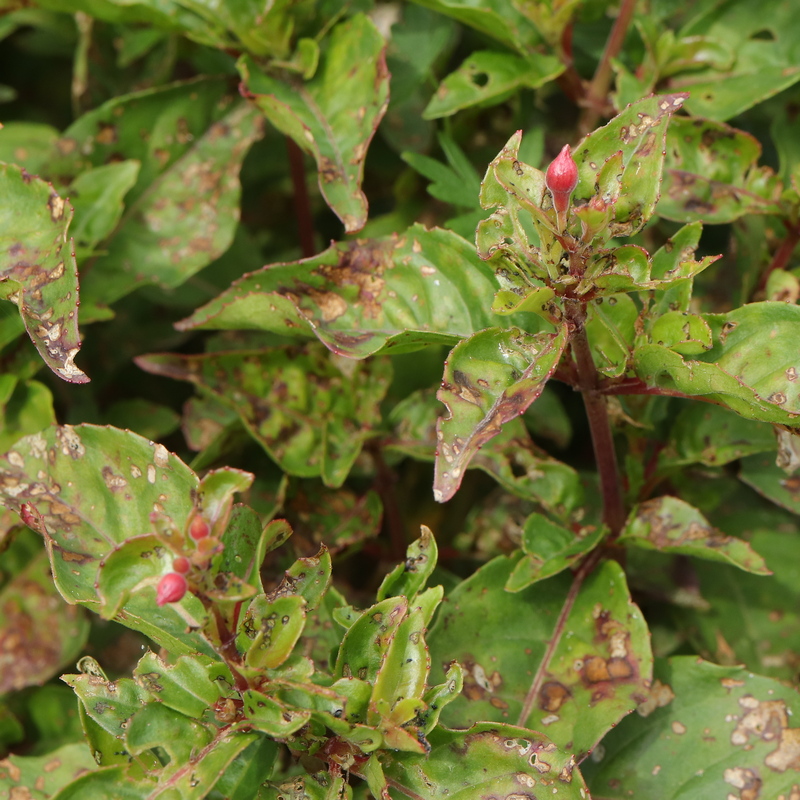
F. ‘Nunthorpe Gem’ badly affected by flea beetle. 
Fuchsia flea beetle adult. 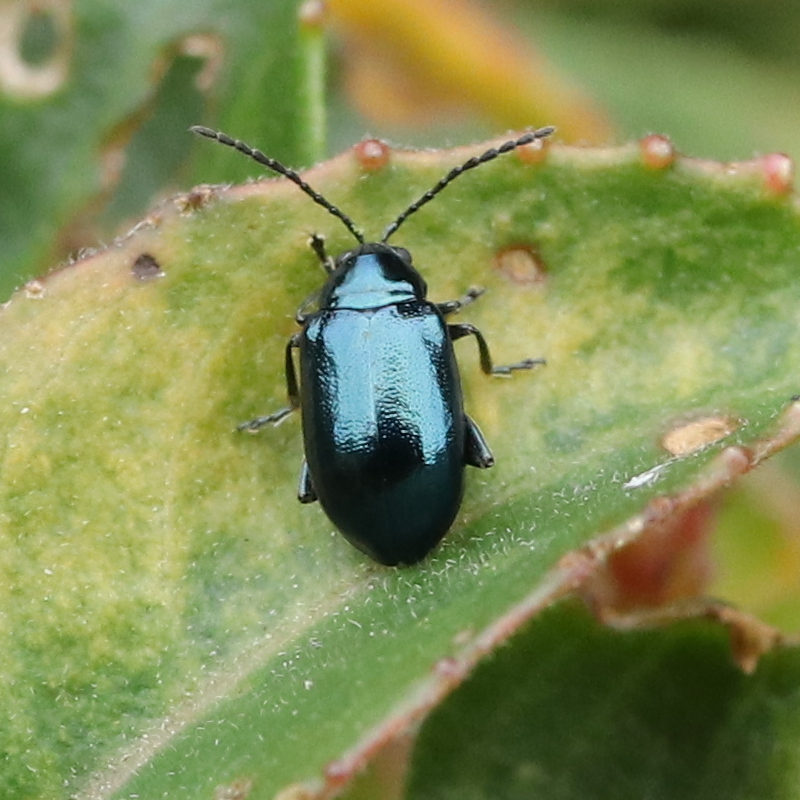
Fuchsia flea beetle adult. 
F. colensoi showing flea beetle damage on top of leaves. 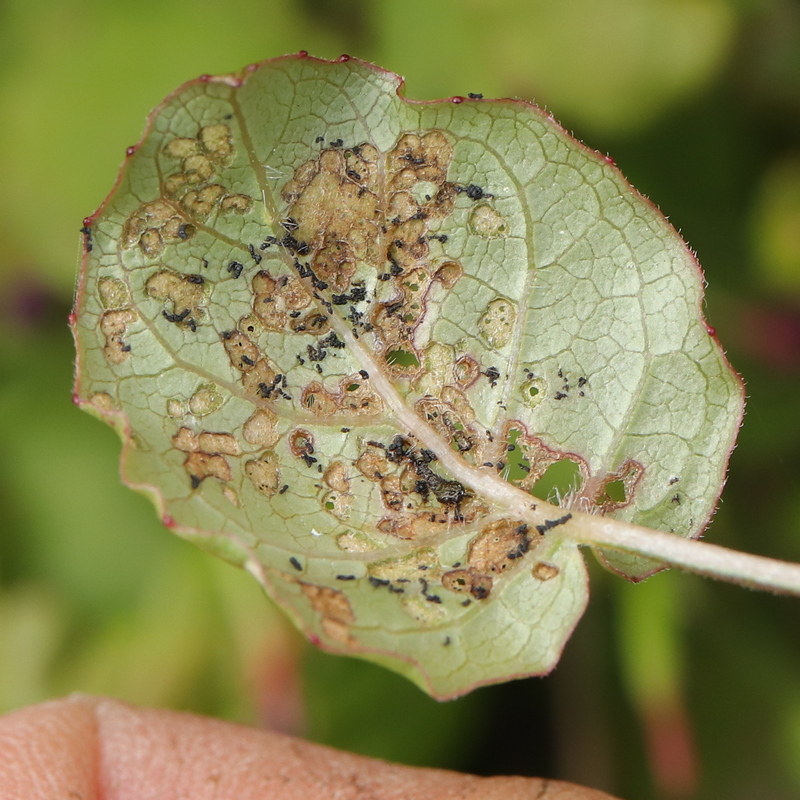
F. colensoi showing flea beetle damage on underside of leaves. 
Fuchsia flea beetle larva feeding on lower surface of F. colensoi leaf.



 garden ruminations
An interesting piece Jim. I saw some damage a couple of years back, this year it is the drought that has got to them. They are such beautiful plants but your flea beetle damage is quite serious.
LikeLike
It’s possible the drought has favoured the pests and a more normal year might see less problems, but who knows?
LikeLike
Gee, I’ve seen it all. Well, at least I’ve seen the symptoms. I do not bother to look too closely to see which is worse for any particular season. No matter how bad it gets, fuchsias still perform reasonably well for most of their season. I just expect that they will look shabby by the end of autumn, and then cut them back at the end of winter. This year, they seem to be slowing down a bit early, although the process is slow. On the coast, fuchsia likes the damp weather, but would likely prefer a bit more warmth. Farther inland, they appreciate the warmth, but would likely prefer a bit more humidity. They like well watered and lush gardens there. Unfortunately, because fuchsias get cut back annually now, they do not get as big as they used to. Some of the older specimens are eight feet tall. They get cut back to the same knuckles every winter, like pollarding, so never get more than eight feet tall. Newer specimens do not get the chance to develop a tall trunk. I suppose that they could with a bit of effort. Nonetheless, the big fuchsias that I remember are now quite rare.
LikeLike
I suppose I should take some comfort from the fact that Fuchsias are still being grown reasonably successfully with you, given you’ve had gall mite far longer than we have. We’ve never had very many very large bushes, our winters are cold enough to ensure that in most places.
LikeLiked by 1 person
Antonelli Begonia Garden in Capitola used to grow some excellent specimens. I never purchase mature plants, but would be tempted if they were still available. Although Fuchsias are not my favorite, I do miss how they used to look. I know that they can still look like they used to, but they are not as popular as they used to be, so no one bothers. There are some here, but I prefer to cut them back rather than contend with the pathogens. I know I should be so lazy about it. I should be in Los Angles within a month or so, so will likely notice how well they are doing there.
LikeLike
They’ve always been a very useful late season splash of colour here and are happy enough to have naturalised in places, so losing them would leave a significant gap in the inventory.
LikeLiked by 1 person
I sort of miss their style. They look like something from the early 1970s.
LikeLike
Sadly I look like something from the early fifties, which is what I am.
LikeLiked by 1 person
Oh my! Well, that is a completely different topic; but at least you can remember the early 1970s more accurately than I can.
LikeLiked by 1 person