We look set for a lot of weather this weekend and with a Met Office amber warning hanging over us I am getting a little nervous. I write these things on Friday evening and by the time it goes out Saturday morning I will probably know whether that nervousness was well founded or not. We’re not in the worst bit, that’s a bit further north.
As much as it was a bit of a struggle to find six things for this week, next week is certain to much harder. It seems a little futile, but if any non-contributary reader out there were to think this a good week to join in, then it’s the same message as ever; welcome and if you need to know what it entails, there’s a participants guide to help. Perhaps six garden calamities would be a runner.
One.
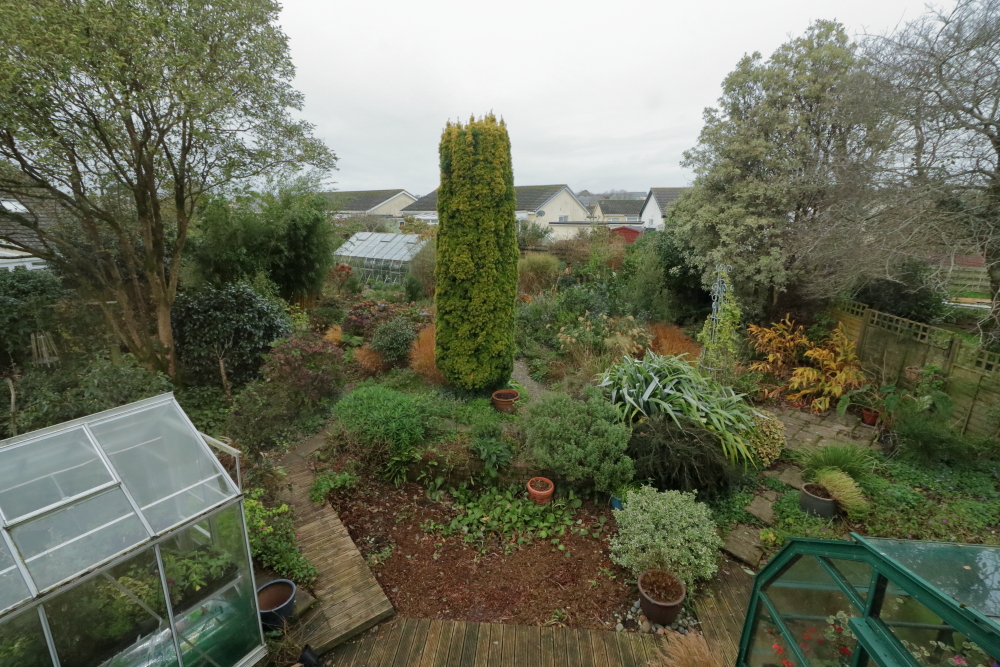
It seemed to me as I wandered around this morning that even without big flowering highlights the garden could have looked far worse. I went back inside and took a picture from upstairs, then out again just looking for the best bits to photograph with the minimum of dross.
Two.
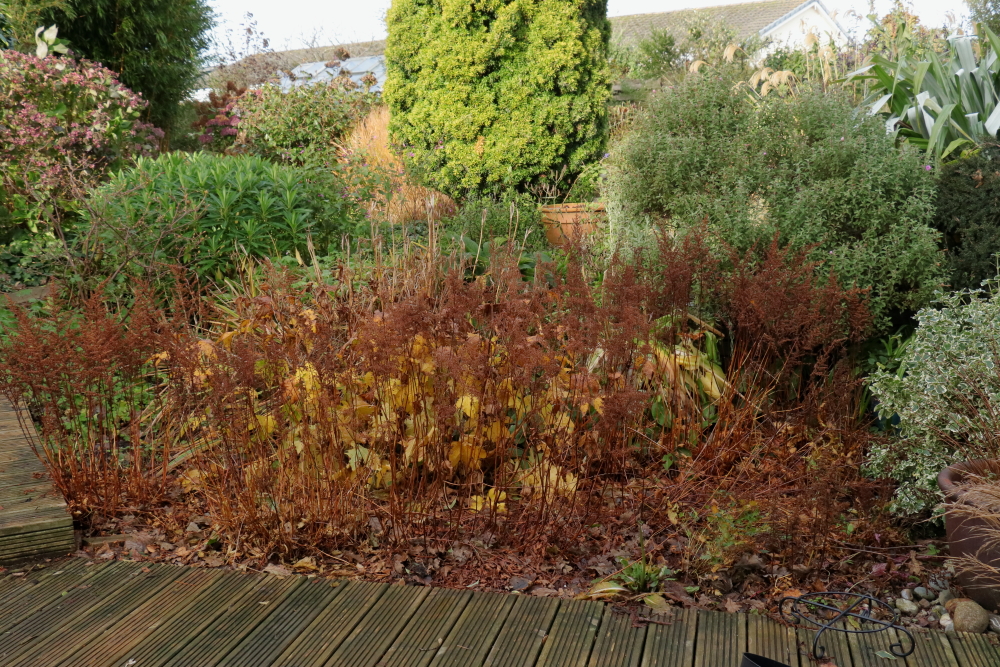
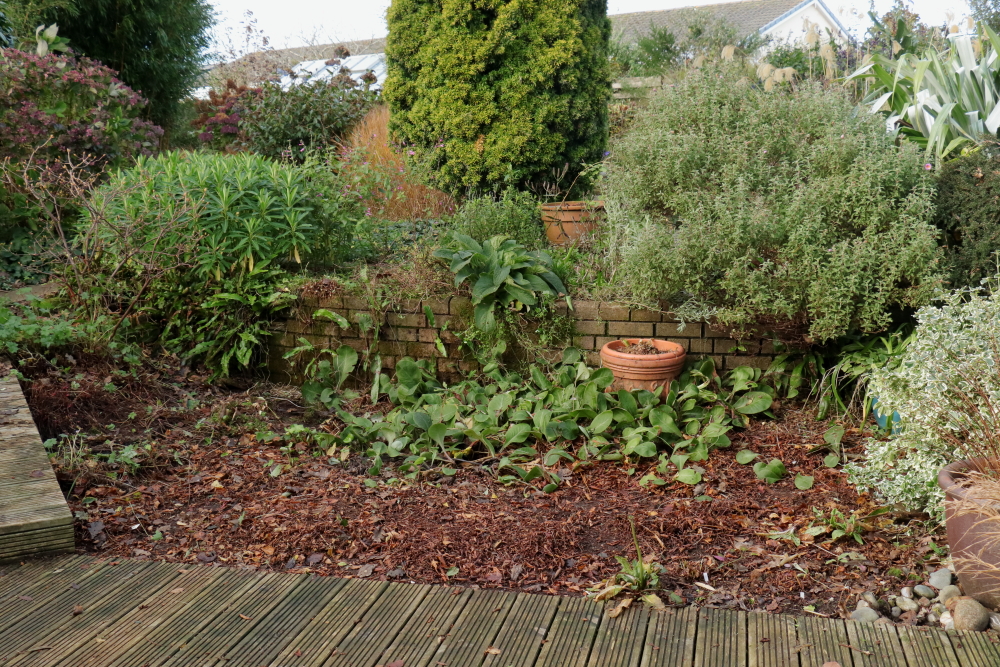
The bed in the foreground of the picture above was a pond, long since filled in. In a spirit of “brown is a colour too” I’d left it longer than usual before cutting it down earlier this week. I shredded everything and spread it back as a mulch. The plant at the back is Chrysoplenium macrophyllum, which will no doubt feature in flower in January or February. It is happily hidden below Astilbes and Filipendula all summer, knowing its time will come.
Three.
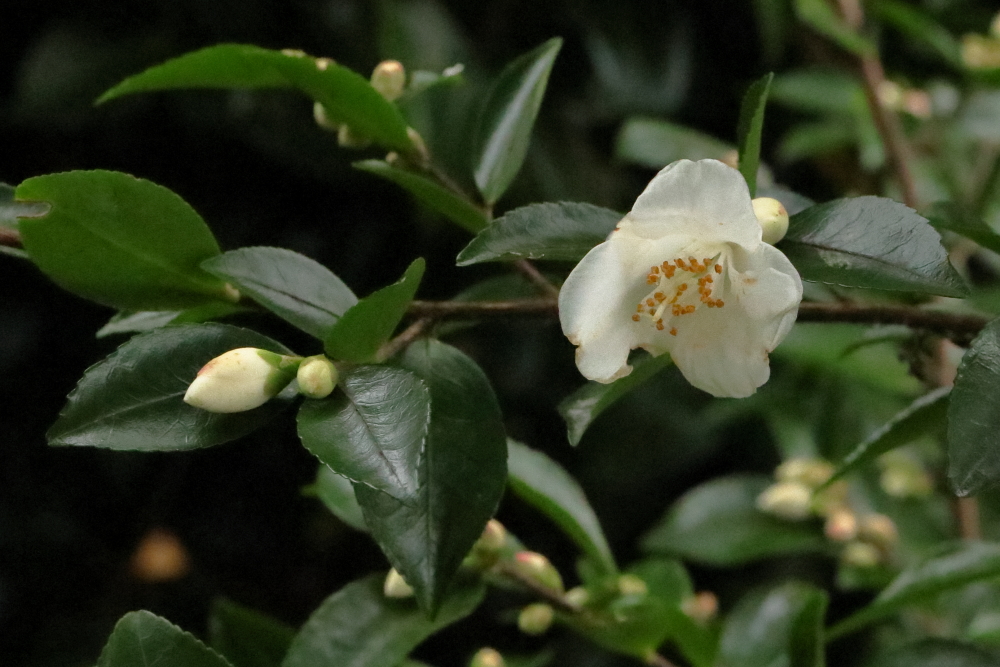
I have another Camellia just starting to flower. It’s a species, Camellia transnokoensis, and I really must look up the differences between it and C. lutchuensis, which I put in a six a couple of weeks back. They are all but identical, as far as I can see.
Four.
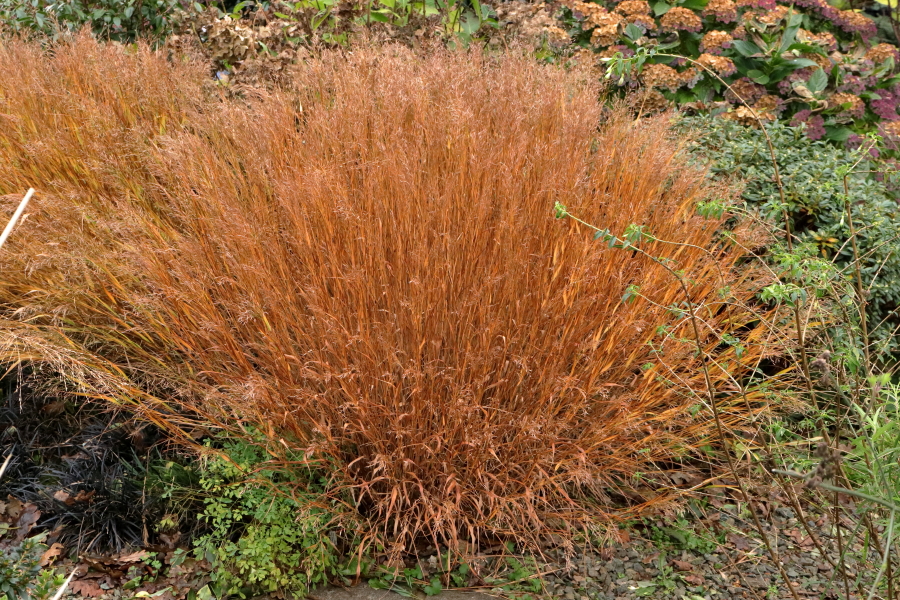
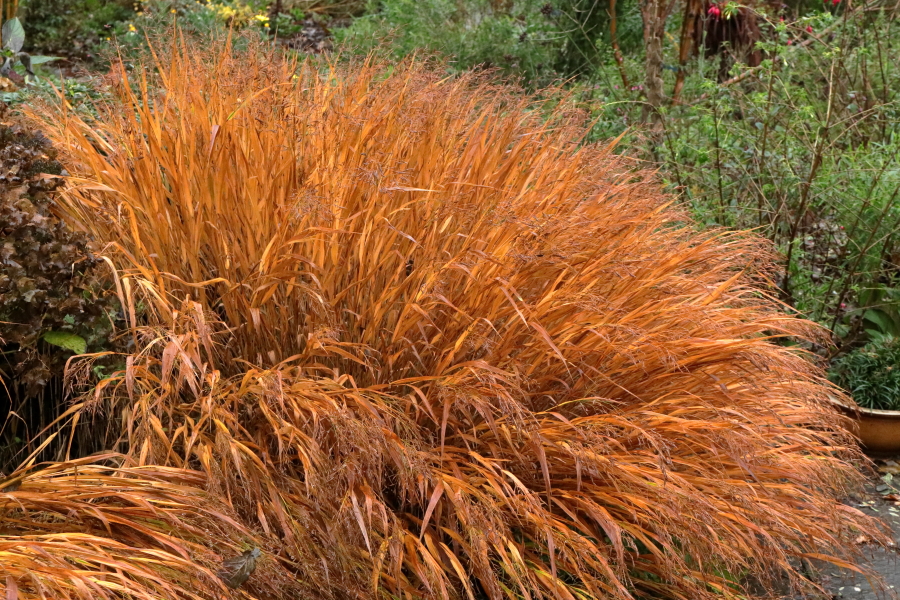
As usual, the brightest colour in the garden, at least on a scale to be seen from a distance, comes from Japanese forest grass or Hakone grass, Hakonechloa macra in its various forms. They all do the autumn colour thing but ‘Albostriata’ is the most resilient and will usually keep going until the end of February before collapsing or disintegrating. On the fairly rare occasions when we get a few dry days in succession their leaves roll up and they look comparatively dull, but they open up as soon as it turns damp.
Five.
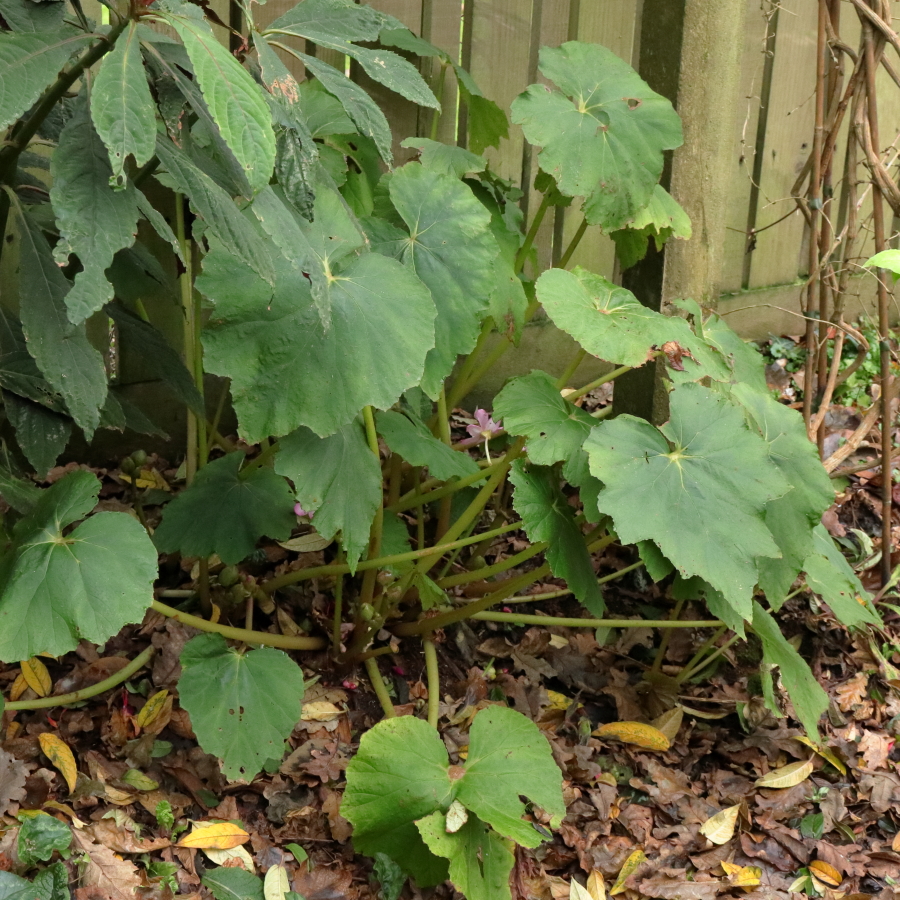
Begonia emeiensis has proved fully hardy in my garden, untroubled by being left exposed to the elements for at least four winters. It wants shade and moist or very moist soil but is otherwise unfussy. The leaves are big and round, the flowers 2-3cm across, produced somewhat sparingly and largely hidden by the foliage in November and December, unless the plant has been cut down by frost before then. In summer a swelling develops at the point where the leaf blade attaches to the stalk, getting to be 2cm diameter globular structure that falls to the ground as the leaf collapses around it. New plants develop from these structures in the spring, making it very easy to propagate.

Six.
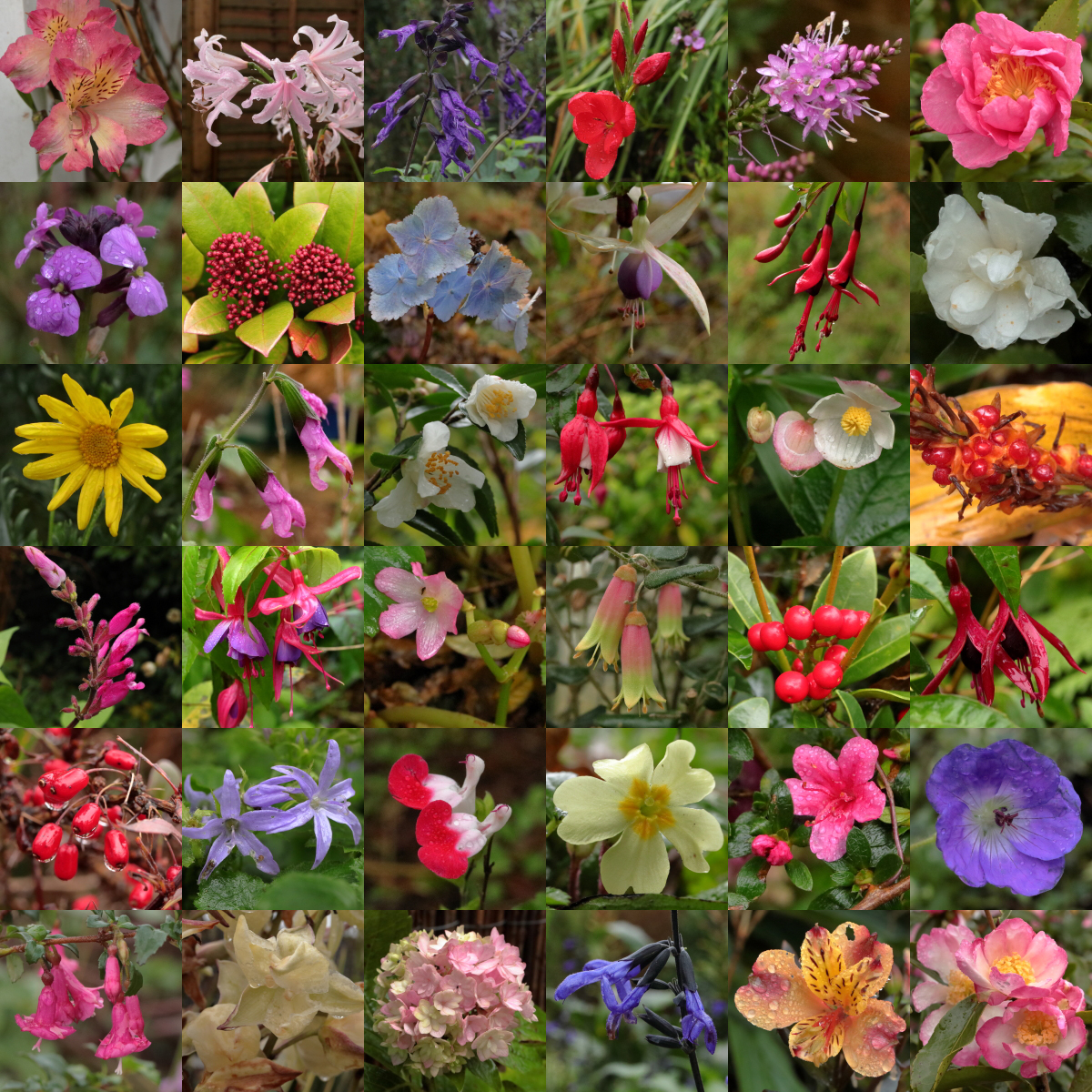
A month ago I posted a six by six montage of flowers from around the garden. Not wishing to make myself hostage to fortune, I didn’t commit to making it a regular monthly feature and I’m not going to do so now, with January and February coming up. Maybe I could do winter foliage? Yesterday was when I went looking for this lot, all but one growing outside, just the Correa under cover for the winter. Compared to a month ago, the distance between camera and subject will have shrunk considerably. It did force me to really look though.
That’s your lot. 10pm Friday and we haven’t blown away yet. I shan’t mind if it isn’t as bad as forecast, that would be a dumb thing to complain about.

 garden ruminations
What a beautiful montage of blooms…and the foliage and other photos are fabulous, too. I wish I could grow Camellias, but my winters are too harsh. I sure do enjoy your photos, of the Camellias and everything else!
Beth@PlantPostings.com
LikeLiked by 1 person
William Ackerman, who worked at the U.S. National Arboretum, spent over forty years researching and breeding camellias that would thrive down to USDA Zone 5b. His book ‘Beyond the Camellia Belt’, is very informative. I don’t know where you live or whether many of his varieties are available in your area but I have experience of several of them in the UK and most of them are excellent.
LikeLike
Another delightful post full of humorous things! I couldn’t pick just one.
LikeLiked by 1 person
I hope the storm didn’t hit too badly. I love the photo from inside, your garden looks great!
LikeLiked by 1 person
I’ve not been out to see if there’s any damage; I’m not expecting anything serious.
LikeLike
I hope the weather missed you by now. The waiting is the worst part with wind… I like browns in season. I have a begonia today I am wondering if you have seen? Thanks for hosting. https://theshrubqueen.com/2024/12/07/six-on-saturday-winter-color-2/
LikeLiked by 1 person
I would have been disappointed not see a camellia, you seem to have a huge collection. I have retired from the storm into my conservatory today.
Six on Saturday. In the Conservatory. | The Blooming Garden
LikeLike
I’ve just done a walk round the garden in my head and counted 24 Camellias in the ground. There are always a few more knocking about in pots but they’re usually just passing through.
LikeLike
Everything is suffering from whiplash here today. My poor camellia in a container is on the floor. If only I could find a sheltered place for it. Practically everything else is denuded now, but at least the patio has been cleared of leaves!
Love the collage 💕
LikeLike
Sounds like some people had a decent hit from your storm. Hope you fared well. We had near blizzard conditions last week, but the winds were so strong that the snow all blew away to the east. Temperatures were below -7 C but today will be a balmy 8-10 C.
Been busy finishing up with my class and looking forward to a month off or so before the next one, so no pictures. Everything new on my phone are random pictures mostly of radioactive waste (My work phone, maybe less off-putting than some of the pictures from when I was still a researcher).
I especially like the full garden view and enjoy the restful muted colors as we move closer to winter. The delicate pink begonia is lovely too. I think that I should make a mosaic of flowers like yours and use it as a computer background as I become starved for color these next few months! So bright and pretty!
Hope those of you in the path of the storm stay safe and fare well!
LikeLike
Aah, Jim you have the hak mac picture that I hoped to post. Instead my offering is soggy and windswept. But then, that is how the garden is today. A beautiful camellia.
Here’s my link https://n20gardener.com/2024/12/07/six-on-saturday-the-winter-garden/
LikeLike
Still as beautiful the euphorbia mellifera! Very pretty photomontage with this collage, ideal for a gloomy day. Here is my link: https://fredgardenerblog2.wordpress.com/2024/12/07/six-on-saturday-08-12-24/
LikeLike
Your camelias are lovely, and this white one looks very delicate. I was amused that on the week you write about your beautiful Hakonechloa and astilbe, all I can say mine were too, but now I have cut them back as I realised the storm would distribute their foliage all round the garden. Here are my six:https://noellemace.blogspot.com/2024/12/six-on-saturday-6-december-2024.html
LikeLiked by 1 person
‘Albostriata’ looks wonderful and the colourful collage was a welcome lift on a day like today https://onemanandhisgardentrowel.wordpress.com/2024/12/07/six-on-saturday-7-december-2024/
LikeLiked by 1 person
I reckon Hak mac ‘Albostriata’ performs for at least 10 months of the year, one of my top ten for sure.
LikeLiked by 1 person
Amber Alert?! I had to look that one up. Why could it not be an Orange Alert? After all, that is the color between yellow and red. Here, an Amber Alert is for a child abduction. It typically comes with a description of the child who was abducted, the person who abducted him or her, and the description of a vehicle that they would likely be travelling in. It is named for Amber Hagerman, who was abducted in Arlington in Texas in 1996. You can understand how unexpected a mention of an Amber Alert is within the context of your Six on Saturday!
Camellia transnokoensis is one that does not sound at all familiar. If we grew it, I do not remember the name. Botany has gotten so complicated, with so many variety names replacing their species names. What I mean is that this could be a variety of Camellia lutchuensis.
Anyway, I get carried away. These are my Six.
https://tonytomeo.com/2024/12/07/six-on-saturday-a-week-of-flowers/
LikeLiked by 1 person
Our traffic lights are red, amber and green; I suppose it derives from that. Camellia transnokoensis is better known here than C. lutchuensis, but neither is common. One botanist, Ming, has lumped the two species, but C. lutchuensis comes from the Riu Kiu islands of Japan and C. transnokoensis from comparatively high altitude in Taiwan. Hey, what do I know?
LikeLiked by 1 person
Camellia lutchuensis is rare here also, and when we grew it, almost no one wanted it. Only collectors purchased the very few specimens that we could provide, and that is not good for business. I would retain stock plants in the arboretum, but discontinue production. Traffic lights here are red, yellow and green, and they were invented here. However, the amber color seems to be interchangeable with yellow. Old American cars had yellow turn signals while import cars, whether made here or not, had amber turn signals. Weirdly, turn signals of Japanese cars were more yellow than the relatively more amber turn signals of my old cars. They might all be yellow now.
LikeLiked by 1 person