The American Begonia Society maintains a list of unidentified species of Begonias in cultivation, allocating each a number consisting of the letter U followed by three digits. The whole number should be italicized, turning Begonia U614 into Begonia U614.
U614 was originally introduced to cultivation by the late Michael Wickenden, then proprietor of Cally Gardens in Scotland, who found it in the Mishmi Hills in north-eastern India. I am told that he collected seed then put a selected seedling and its progeny into the Cally Gardens catalogue.
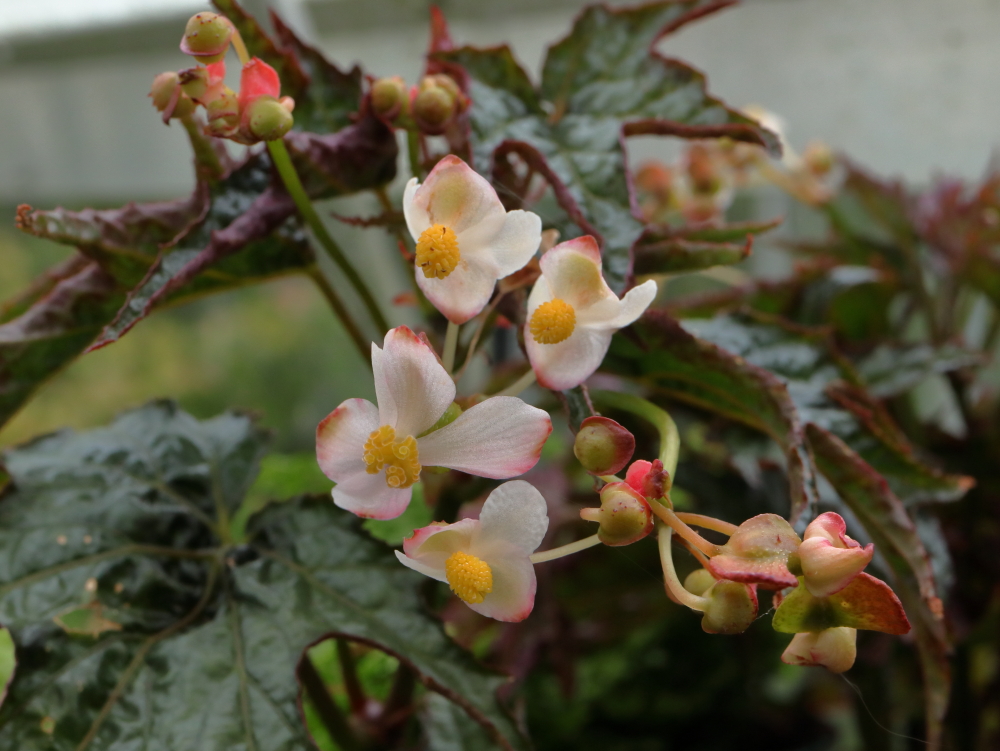
My original plant was given to me by a work colleague who told me it was hardy. I planted it and left it out in its first winter, unprotected but in a sheltered position in my Cornish garden. It very nearly died but I managed to salvage a small piece and grow a new plant which in its second year I planted out for the summer then lifted and brought under protection for the winter. After a couple of years of such treatment I split it in two, planted half in the ground permanently and kept the other half in a pot. The plant in the ground has been covered with a thick layer of leaves for winter protection. It starts into growth very early, before the risk of frost has passed, and I have removed, then replaced the protection as weather has demanded. It is growing a little larger each year but not by much. The half that was kept in a pot is more or less evergreen and is now much bigger than its planted out twin. Both flower late in the year, producing a moderate number of white or pink flushed flowers from September to November.
As it turned out, I’d missed a bit when I first rescued it and that small piece is still there, having been left in the ground, unprotected, through all the subsequent winters. It is still only as big as the original plant had been when planted; it dies down for winter, comes up very late, in June, and barely makes enough growth to get back to the size it was the previous year before winter sends it back into hibernation.
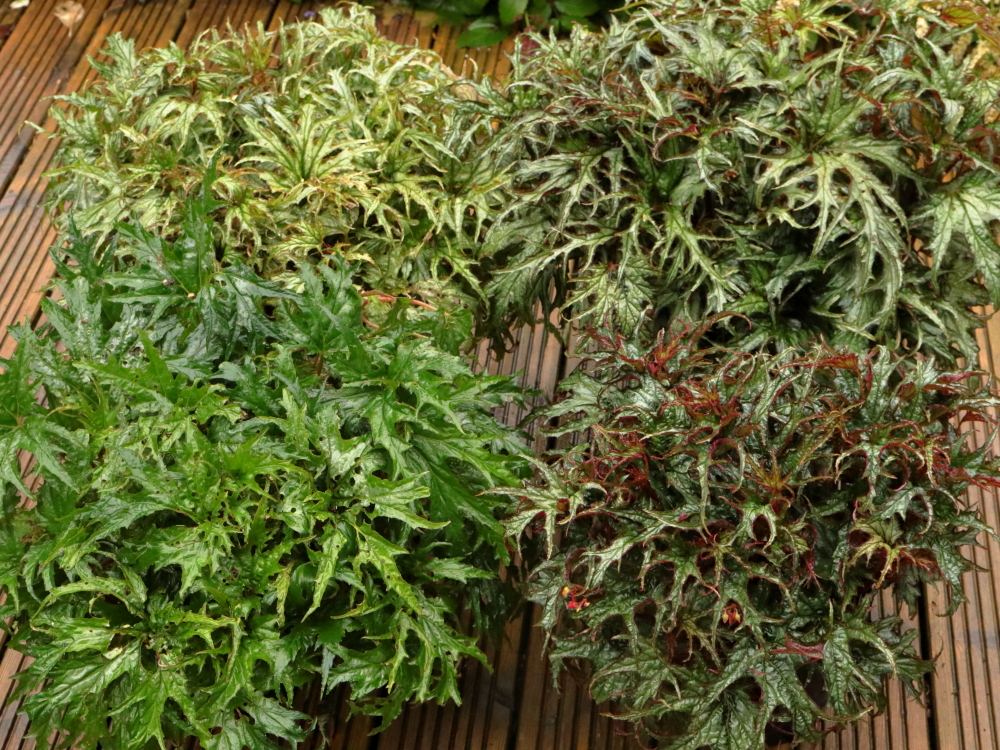
In 2020 one of my plants flowered and set seed which I collected very late in the year and sowed in March 2021. From that I selected four seedlings which covered the range of variation in foliage colour that was evident in the seedlings. I gave them the catchy working names of U614-1, U614-2, U614-3 and U614-4.
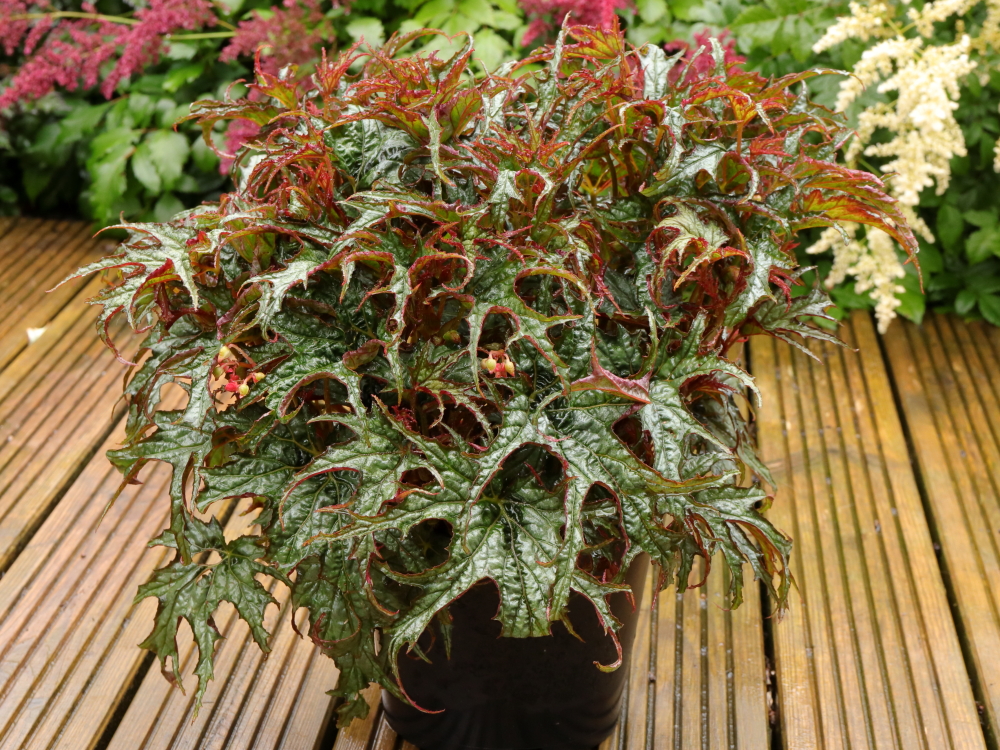
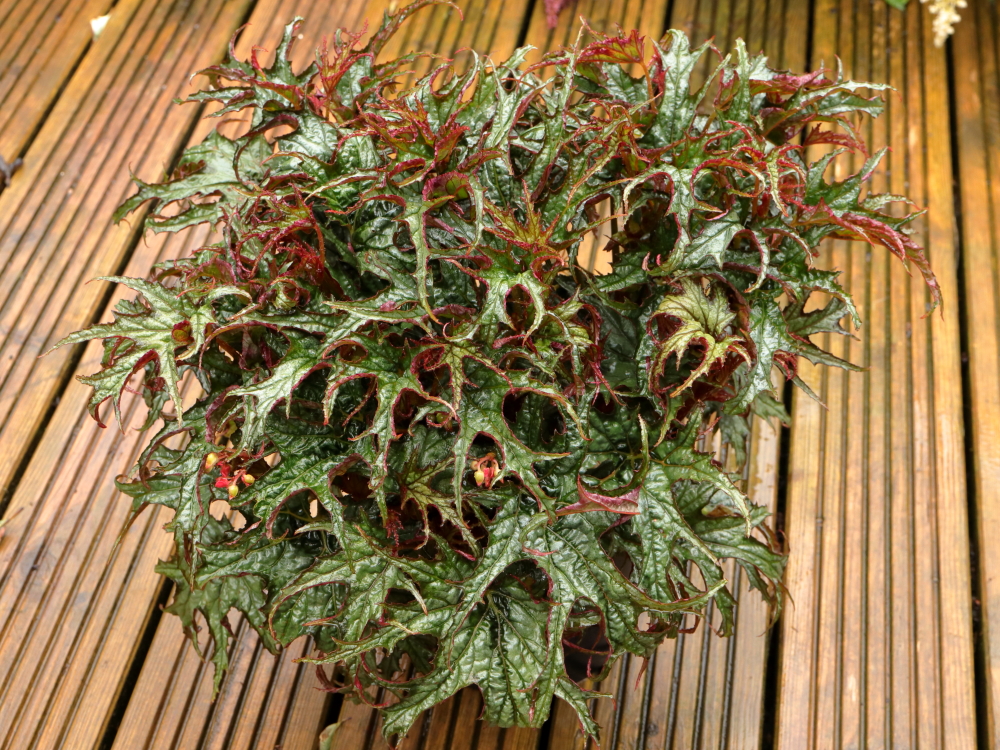
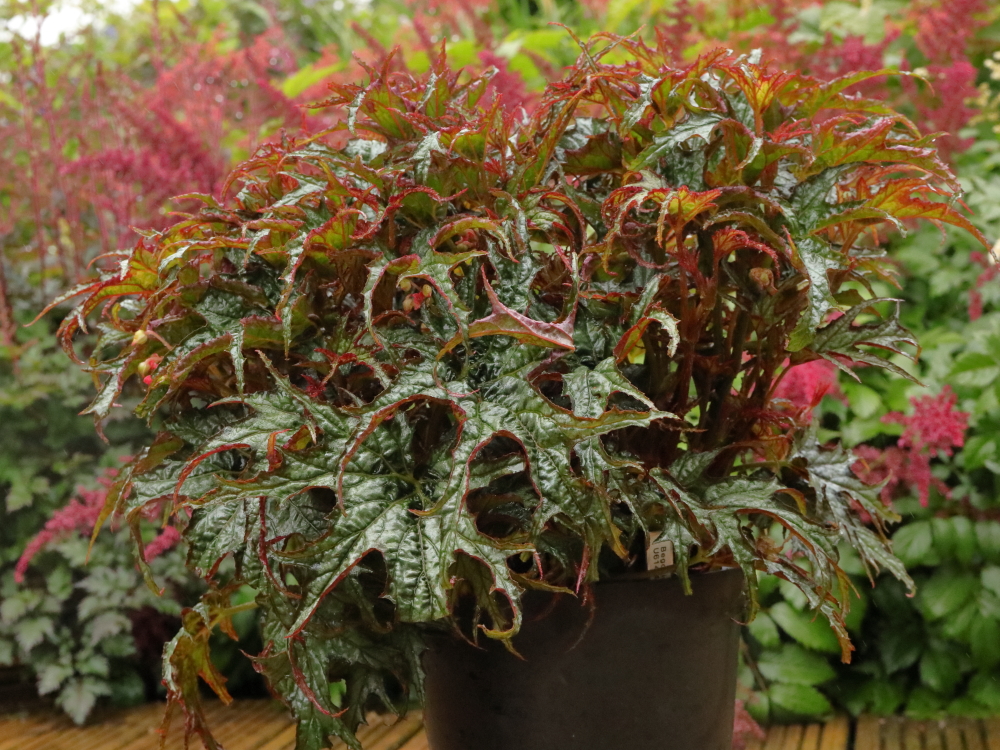
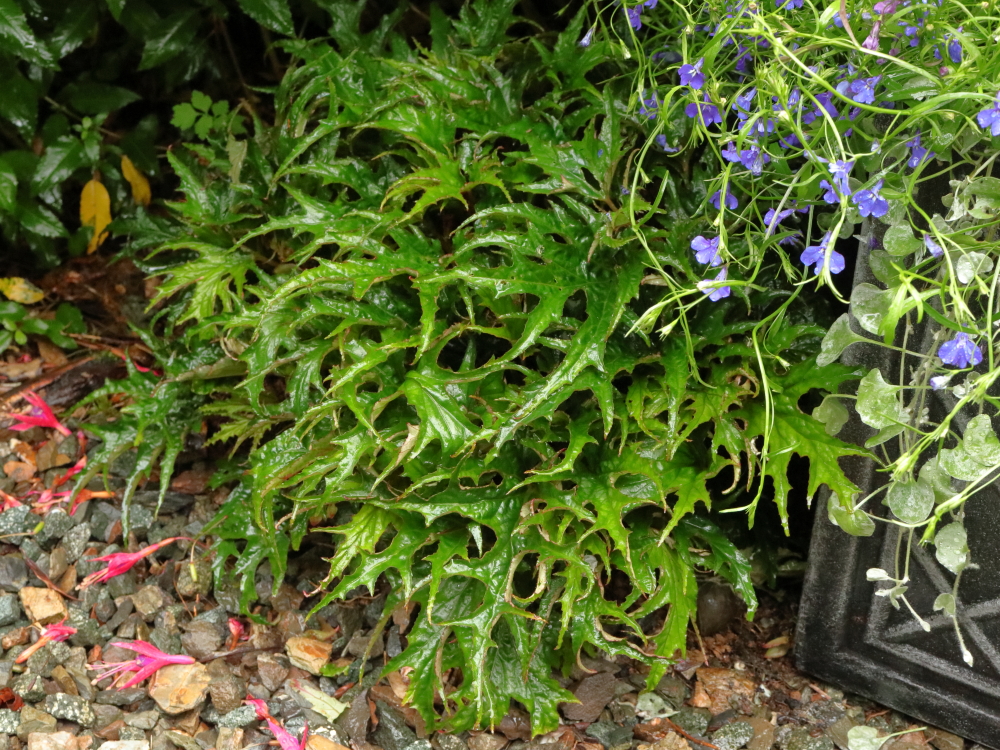
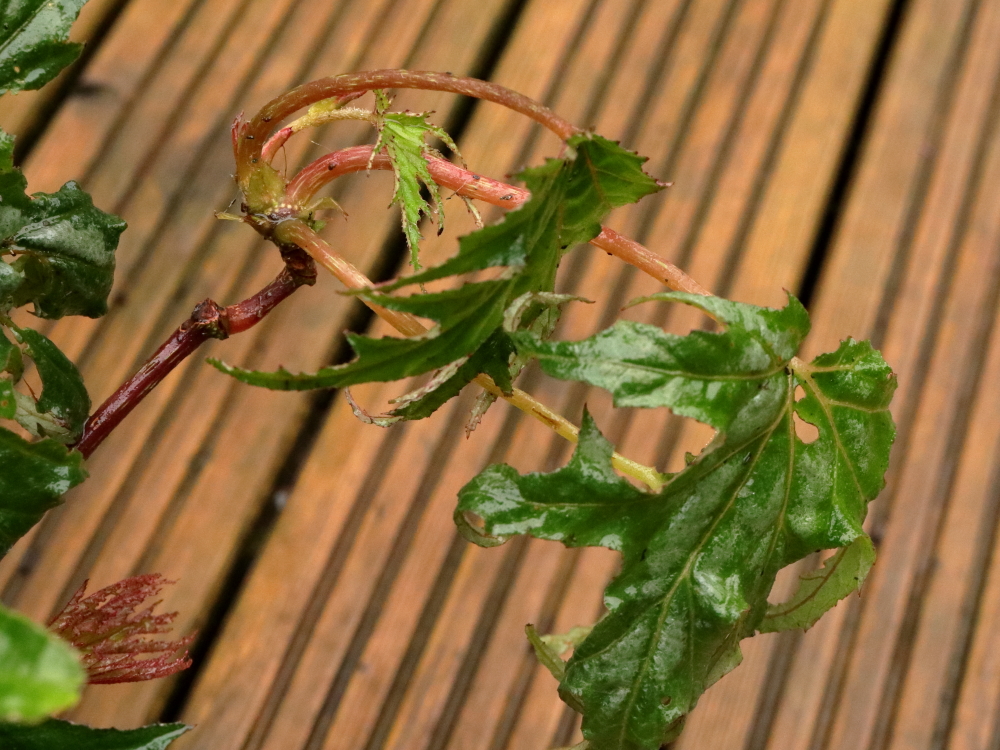
The best of them, in my opinion, is U614-4. The basic leaf shape and colouring are very similar to its parent but the leaf margins are much more upturned, affording glimpses of the deep red underside of the leaves. It also shows signs of being earlier into flowering than its parent, though that may reflect the growing conditions it has had rather than any more substantial difference. The species is rhizomatous but the rhizomes are short and congested with closely packed shoots coming up from them. Some of these will kink and form a bulbil like swelling with very close internodes, part way up the stem, affording an easy way to propagate small numbers of the plant.
It appears to me that it takes three or four years for the leaves to develop their full size and maximum degree of indentation, so it may be that the best of U614-4 is yet to come. It has grown a little slower than its siblings.
U614-1 is plain green with no red pigment above or below the leaves. So far it has shown no particular merit.
U614-2 is plain green with silvery markings making it appear much paler than the other forms.
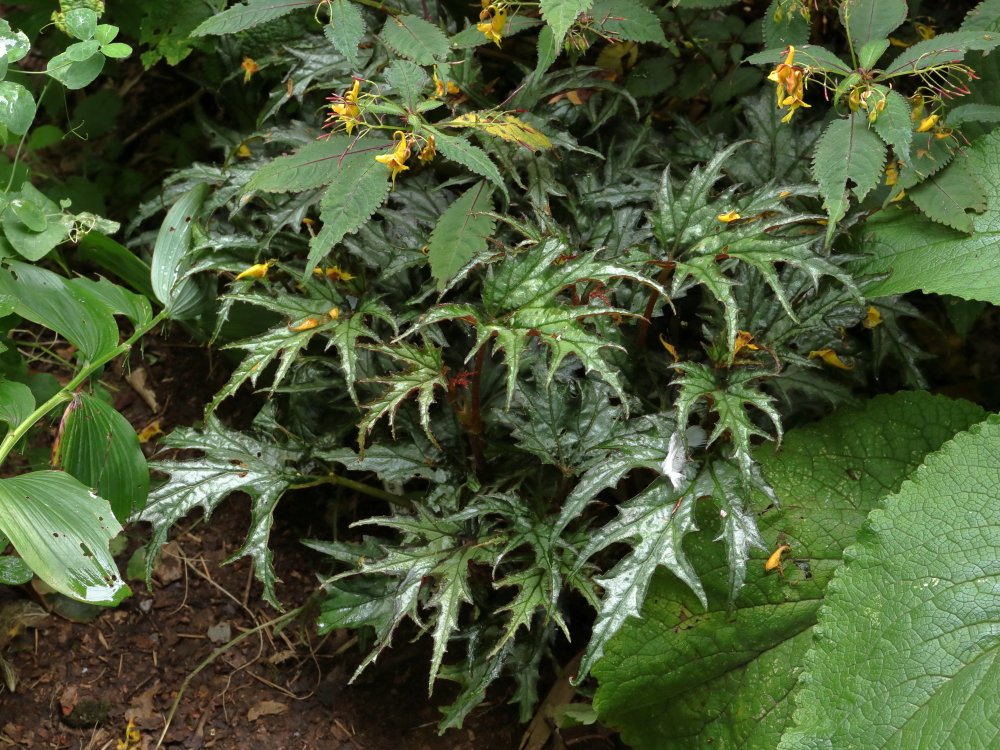
U614-3 has been planted in the garden where it is doing well, resisting slug damage and growing in a lot of shade. It is a darker glossy green with a very fine red edge to the leaves.


 garden ruminations
How cool!
LikeLike